

#CreativeWriting

Baring Faith to Uproot Belief: Agenda for Religious Reversions
A compelling case for the Muslim converts to revert to the religions of their forbears.
That the jihadi Islam, to paraphrase in Telugu, has become the chaapa kinda neeru (stealthily spreading water under the mat) and its fidayeen lurk in every nook and corner of the globe, is a common knowledge for long. But yet, the non-Muslim world, despite the outsider advantage, remains clueless to confront, much less contain, this unremitting scourge. That is in part, geopolitics apart, is owing to an inadequate appreciation of this debilitating Islamic phenomenon, and this is but an attempt to address that lacunae.
So as to have the measure of this Islamic menace, one may gauge it through the mindset of Ijaz Khan Hussein of Pakistan, who survived the American military campaign against the Taliban in Afghanistan.
“We went to the jihad filled with joy, and I would go again tomorrow,’ he said. ‘If Allah had chosen me to die, I would have been in Paradise, eating honey and watermelons and grapes, and resting with beautiful virgins, just as it is promised in the Quran. Instead, my fate was to remain amid the unhappiness here on earth.” (The New York Times report cited by M.J. Akbar in his book The Shade of Swords) However, the power of the jihadi brainwash lies in the ironical fact that many a fidayeen happen to be virgins themselves, unexposed thus to the joys of sexual intercourse! The unusual sexual obsession of the believers, bordering on mania, is dealt with later in this piece.
It was Napolean, who purportedly proclaimed, “Give me forty men who are not afraid of death, and I will conquer the world”, but Muhammad dextrously perfected the psychic route to metamorphose his folks into fidayeen on Islam’s jihadi path. Though he did so in order to make them cement his political lanes, the mullahs allude the same as Allah-perfected Islamic path to paradise. Whatever, Muslims fail to realize that the Quran they revere was no more than Muhammad’s means to meet his ends that is despite Ayesha’s firsthand account, “I feel that your Lord hastens in fulfilling your wishes and desires."
Hence, it is incumbent upon the others to alert the believers that the Quranic ayahs, no matter whether they were Allah’s revelations, or Muhammad’s innovations, were the latter’s self-servings that forever bedevil their and their progenies lives. That is possible like never before in our information age but one needs a proper understanding of the Machiavellian tactics adopted by Muhammad to serve his selfish ends at the cost of his followers’ lives.
This is how it was.
After his flight to Medina, nay Yathrib, so as to sustain the nascent Islamic faith in his limited band of followers in the face of its ridicule by the neighbourhood Jews and Christians, he had set to turn the former against the latter in ayahs umpteen such as,
“The Jews and Christians say: We are sons of Allah and His loved ones. Say: Why then doth he chastise you for your sins? Nay, ye are but mortals of His creating. He forgiveth whom He will, and chastiseth whom He will. Allah’s is the Sovereignty of the heavens and the earth and all that is between them, and unto Him is the journeying.”
“O ye who believe! Choose not for friends such of those who received the Scripture before you, and of the disbelievers, as make a jest and sport of your religion. But keep your duty to Allah if ye are true believers.”
Just the same, not stopping at that, he stooped to set his greedy eyes on the wealthy Jewish hamlets to ravage which, the Spoils of War were good enough for him to egg his brigands, prompting Gibbon to dub Islam as a profitable religion. But it was when the mighty Meccans began to menace his Medina existence that he needed the dying to die ‘Napolean forty’ besides a new Quranic narrative to suit.
To start with, when his followers were a hapless bunch of seventy, his Quran in Mecca Surah, Ta Ha, 55.20, seemingly promised a promising afterlife right here,
“Thereof We created you, and thereunto We return you, and thence We bring you forth a second time.”
However, Medina’s changed circumstances made it imperative for him to downplay the inadequacies of life here and extoll the abundances in the hereafter that is besides substituting the premise of rebirth with the promise of permanence in the Paradise.
Hence, the Quranic stress,
“Naught is the life of the world save a pastime and a sport. Better far is the abode of the Hereafter for those who keep their duty (to Allah). Have ye then no sense?”
And then the Muhammadan chorus,
“O god, no good is but the good hereafter
So help the Helpers and the Emigrants.”
Not only that, not leaving the Hereafter to the limited imagination of his deprived folks, it was evocatively described in ways varied, such as,
"But those who believe and do deeds of righteousness, We shall admit them to Gardens under which rivers flow (i.e. in Paradise) to dwell therein forever. Allah's promise is the Truth; and whose words can be truer than those of Allah?"
Well, in Muhammad’s medieval period, maybe all this could have been an irresistible incentive but why should Muslims of the day deprecate their lives here that are better than the one pictured in Islamic paradise, is the puzzle.
Nevertheless, having altered the Islamic character of life and death, Muhammad rewrote its jihadi grammar thus:
“Warfare is ordained for you, though it is hateful unto you; but it may happen that ye hate a thing which is good for you, and it may happen that ye love a thing which is bad for you. Allah knoweth, ye know not.”
“Think not of those, who are slain in the way of Allah, as dead. Nay, they are living. With their Lord they have provision.”
So be it, but hypothetically speaking, can the followers of the other faiths be motivated to become martyrs based on the above premises, with their scriptures being what they are?
The answer would be an emphatic nay, and herein lies Muhammad’s ingenuous cunning in preparing the carnal ground for the fidayeen.
Well, Quran had unambiguously positioned him,
“Verily in the messenger of Allah ye have a good example for him who looketh unto Allah and the Last Day, and remembereth Allah much.”
And Quran hath it that Muhammad had given vent to his unbridled libido, laying bare his innate sexual urge that was after the aged Khadiza’s demise, resulting in multiple marriages culminating in the keeping of Mariyam. So, it is no wonder that sexual indulgence has endured as Islamic chivalry in the Muslim psyche. If anything, Allah allures the martyrs to His paradise thus,
“Enter the Garden, ye and your wives, to be made glad.”
“Reclining on ranged couches. And We wed them unto fair ones with wide, lovely eyes,”
And for the rest of his part, Muhammad further whetted the Islamic appetite for martyrdom by fixing the quota of these houris at seventy-two per head. What’s more, to make the heavenly bountiful meaningful to the sexually sceptical, he granted each one of them the strength of hundred men!
No denying, all that worked well for him in hoisting the Islamic flag in Mecca and the rest of the Arabia, and sadly, for much of the humanity, its latter-day flagbearers coerced many a cultured nation into its coarse order. What’s worse, overtime, the ummah came to be so structured as to make Islam ironclad that its hostility towards the others is perpetuated, sans scope for retraction and space for accommodation. And that made the cult a cureless virus to the world.
Nevertheless, with the laudable objective of modernizing this regressive cult that undeservedly acquired the religious tag, India’s Prime Minister, Narendra Modi had mooted the idea of the Madrasas with Muslim kids holding the Quran in one hand and a computer, an emollient replacement of the Islamic Sword, in the other. Well-meaning though, given the Quranic affect, in effect, it would be immensely damaging, as it could usher in multitudes of technically savvy fidayeen, leading to large scale manslaughters, aptly reminded by the flydubai episode. The fact that this fanatic cult strives to make all religion for Allah and aims to bring the world under a Caliphate, if ignored by the non-Muslims, it is bound to be catastrophic to the humanity at large.
So, it is high time to give up on ‘moderate’ Muslim hogwash of, Islam is a religion of peace, terrorism has no religion, all Muslims are not terrorists, Ummah is the worst victim of terrorism etc., and get real to the Quranic reality that it won’t let the believers live in peace and allow the others to live in harmony. However much the left-liberals wish, there can never be a via media in Islam – either one is a believing Mumin or a sceptical munafiq, with no in between moderate. Given that banning the Quran is academically implausible (restricting it in Masjids and Madrasas is eminently possible), baring the Islamic faith to uproot the Quranic belief is a viable proposition. Needless to say, all non-Muslims should join hands to lend their voices for exposing the Islamic inanities that give rise to Muslim abnormalities. Eventually, the body of munafiqs that such a campaign creates within the Ummah can be expected to bring the hegemony of the mullahs to a welcome end.
Just the same, the idea is not to make way for the evangelists into the Munafiq arena to harvest the disaffected Muslim souls but for them to return to Gibbon’s pre-Christian order of “the facility with which the most different and even hostile nations embraced, or at least respected, each other’s superstitions.” So, the agenda of religious reversions is for the potential renegades to revert to the religio-cultural dispensations of their respective progenitors, say, the subcontinental category to Sanatan Dharma and the Iranian variety to Zoroastrianism.
Author’s ‘Puppets of Faith: Theory of Communal Strife’ is a free ebook in the net.

SC ‘n ST (Prevention Of Atrocities) Act, Or A Political Ploy of the Cynical Minds
Though for a long while, the dalits and the janjatis, aka SCs and STs, were wont to get the rough end of the social discriminatory stick, yet it was only forty years after independence that Rajiv Gandhi occasioned the SC and ST (Prevention of Atrocities) Act 1989, but not for any holistic reasons. It was but a cynical idea to stem the growing political mobilization of the dalits outside his congress umbrella that ensued the weakening of their traditional support to it from the early eighties. That was precisely because, by then, their social awakening, political empowerment and educational advancement, coupled with the country’s growing urbanization, made them assertive as a class and aggressive in their manners.
If anything, the ill-motivated SC and ST (Prevention Of Atrocities) Act that ironically came into force a year later on January 30, Gandhi’s death anniversary, in a way, gave the unscrupulous among the SC-STs the license to kill, not literally that is, just not in self-defense. It’s thus, the cynical law has squarely put the boot is the other leg, so to say, with statistical backing.
The official data pertaining to the complaints under the lopsided law and the convictions thereunder reads as under:
In 2022, while 57,569 cases were preferred by SCs, the ST count was 10,064 (put together 67,633); and the convictions during the year (including the ongoing trials from previous years) was 34.1% and 28.1% respectively that is 31.1% in all. So, some 70% of the SC-ST complaints fell by the wayside, being unproven!
Likewise, in 2023, whereas 57,766 cases pertained to SCs, the ST proportion stood at 12,959 (70,725 combined) and so also the convictions during the year (reckoning the pending cases of previous years) added up to 32.4% and 24.6% respectively, put together at 28.5%. So, again, 71.5% of the SC-ST accusations remained unsubstantiated!
Similarly, the case count for 2024 was, 55,685 of SCs and 9,961 of STs, together adding up to 65,646, a drop of 5,079. However, the conviction rates during the year(accounting for the previous years’ cases) came to 33.9% for SCs and 33.2% for STs, averaging 33.6% for both the categories. Thus, about 66.4% of the SC-ST cases did not result in conviction, although this represented an improvement in the conviction rate over the previous year.
However, as the average conviction rate in the three recent years came to 31%, it can be said without any contradiction that nearly 7 out of 10 SC-ST allegations failed to find traction in the country’s courts. What’s worse, while many of the innocent seven rotted in gaols for varied periods, for no fault of theirs, their accusers smiled all the way to their banks to collect the Sarkari ransom for their atrocities against the innocents!
All that is in the public domain but as they say, the devil is in the small print, and this is no exception.
As per the last census (2011), the SCs formed 20.14 crore and the STs, 10.42 crore of the country's total population of 121 crores, which means, they respectively made up 16.6%, and 8.6% of the populace, and together a quarter of it. So, by extrapolation, for the lack of an intervening census, in the 2022-24 period, they together would have made up some 60 crores out of the 140-crore envisaged population.
Just the same, the social dynamics are different in that out of 60 crore SC-STs, on an average, only 68,001 of them complained in each of the said three years that is a miniscule 0.113% of their ilk! What is more, given that only 31% of the SC-ST complaints led to convictions, the alleged atrocities against them would have been no more than 0.003% of their folks!! If it’s not making a caste mountain out of a social molehill, what else is this SC and ST (Prevention of Atrocities) Act? But therein lies the catch-22 of the Indian electoral politics.
Be that as it may, It is seldom appreciated that the atrocious media coverage of these odd complaints to the saturation levels has the inimical effect of othering these communities besides infusing a sense of victimhood in them. So, willy-nilly, it is as if to set up the conversion stage on the SC-ST ground for the proselytizers to poach the disgruntled into the alien faiths to nurture them in India’s Sanatan bosom.
And making it a double jeopardy for the Hindu society, as most of these complaints turn out to be false and fabricated, it’s but natural that the affected sections get further alienated from SC-STs as communities. If anything, that these politically pampered sections are being allowed to make money by dubious means completes the social schism, which is not in the national interest. But, sadly for our country, the moral cynicism has become the electoral compulsion of our political parties – they collectively alienate them from the rest even as they severally court them for political favours, for they form a quarter of the franchise.
If anything, the recent SC fiasco in IIT-Bombay has brought the devious Act’s dubious character to the fore like never before. Now, it is very much in the public domain that the morally corrupt as well as the legally savvy among SC-STs have been milking the State exchequer with profitable FIRs. Well, the notoriety the SC-ST ‘business model’ gained may ensure a plethora of new startups to the chagrin of the rest of the society. As for the political parties, it’s a case of ‘he who rides a tiger is afraid to dismount’. Maybe, VS Naipaul would have as well summed it up thus - India: A Million Miseries Now. So, it is imperative that India should apply its collective mind to nurse its ‘affected quarter’ to normal health, in the short term as well as in its long course.
So, the need of the hour is a multi-member high-power committee of eminences from the representative sections with the nationalist mindset and a pragmatic outlook, majority of them belonging to SC-ST communities, to come up with an equitable SC - ST Progression Act that is after taking the altered ground realities in the rural and the urban India into account. This is the short run, but to cover the long course, this author’s essay in the internet, Dali as Deva, à la Black is Beautiful can come in handy. Here under is an excerpt from it.
“Though the dalit tag affords political clout to its desperate classes as a whole, it had failed to buttress the self-worth of its disparate caste groups for in the Indian cultural calculus, caste is intrinsic to the social-worth of its members. Thus, it is imperative to cast a sense of caste-worth in the dalit fold in the ‘Black is Beautiful’ mould for the collective moral upliftment of its member castes. But self-belief being the by-product of the zeal to strive and not a corollary of plucking low-hanging fruits, the system of reservations has effectually given a go-by to the zeal to excel, a vital ingredient of personality development. It is thus, the doles of the state inadvertently, but effectually, came to harm the dalit cause in the long run, and what’s worse, even the genuine dalit achievements entail a diminished stature for they come under the shadows set by low performance bars, thereby precluding their due social recognition at large. The way out, while yet retaining their quotas is for the dalits to volunteer to get their reservation bar raised to touch the prevailing positions.
“What's in a name? That which we call a rose
By any other name would smell as sweet,”
said Shakespeare but what he left unsaid was
‘And alike it makes any other name as rosy.’
Likewise, had the lexicologists named the Lord in the skies as Sod and an annoying guy on planet earth as God, the former name would’ve acquired divine connotations and the latter, a taboo word. Thus, it may be appreciated that a name is ‘worth neutral’ in its essence but becomes exalted or gets diminished depending on the object it’s associated with, which, in turn, is the subject of our subjective attributions. And the same applies to the caste names that came to represent the ascending steps of the Hindu social ladder for the demeaned Mala indeed sounds better than the exulted Brahmin, the denigrated Madiga is easy on the ear than the extolled Maratha, the dismissed Chamar is more sonorous than the domineering Choudhary et al. Hence, for an Indian variant of Black is Beautiful movement, it is essential for the members of the depressed castes to begin taking pride in their respective castes and suffix their caste name to their social name with the same sense of pride as Yadavs, Reddys etc. resort to. Indeed, as Manda Krishna Madiga of Madiga Reservation Porata Samithi , so to say, has given the lead in this direction, the other castes in the dalit fold should follow suit wearing their caste worth on their sleeves.”

Semitic Faiths ‘n Sanatan Dharma: A Simple Study of Contrasts
While Christianity and Islam are hostile to the Jews but not to Judaism per se, their followers are antagonistic towards Hinduism, the Sanatana dharma of the Hindus, and for a good reason. Judaism being the father of the Abrahamic faiths, denouncing it amounts to theological self-deprecation but as Hinduism is outside their monotheistic Semitic fold, running it down runs no such risk. Besides, weakening its polytheistic hold on a billion souls would soften the path of harvesting them for their bottomless religious granaries.
Even taking their proselytising urge in good faith – the Christian belief that without faith in Jesus, people stand condemned and the Islamic relief of a final truth to guide humanity - are their religious credos any better than the Sanatana dharma that postulates ekam sadviprā bahudhā vadanti (what is right is One only, describe it wise variedly) is the question that needs to be addressed for any rational study of contrasts among these diverse dispensations. Whatever, if Hinduism is a ‘Way of Life’, as ruled by India’s apex court, then it can be said that Christianity and Islam are the by-lanes of Moses’ Semitic Path, and to comprehend the former, one has to go through the latter. However, it’s not much known that the oft-quoted "seeing is believing’ is the rational part of clergyman Thomas Fuller’s full quote, “seeing is believing, but feeling is the truth," that underscores this simple study of their contrasts.
To begin with, when the Ten Commandments were first proclaimed, Jehovah spoke audibly to Moses from Mount Sinai amid smoke, fire, thunder, and lightning, so that the assembled Israelites heard His voice. When the people saw the thunder and lightning and heard the trumpet and saw the mountain in smoke, they trembled with fear. They stayed at a distance and said to Moses, “Speak to us yourself and we will listen. But do not have God speak to us or we will die.” Then Moses said to the people, “Do not be afraid. God has come to test you, so that the fear of God will be with you to keep you from sinning.” Though this Biblical account is not up to Fuller’s seeing is believing, the Jewish belief about its happening makes them hold Jehovah’s diktats in dread. Whatever, in their God’s scheme of rewards and punishments there was no provision for recompense from sins through repentance.
But even when it comes to hearing, it’s one thing for Jesus himself to claim to be the Son of God, that he never did, and yet another for his apostles to proclaim so, what with the innovative immaculate conception, added much later after his demise. So also, Jesus’ teachings, including the Sermon on the Mount as well as his “Go specifically to the lost sheep of Israel; don't enter Gentile, Samaritan towns” during his ministry and “Go and make disciples of all nations, baptizing them and teaching them” that was after his resurrection (what did change in the meantime for his change of mind!), as cited in Mathew 10 and 28 respectively, have no evidentiary value whatsoever. It's thus, the entire Biblical legend of Jesus that is the fulcrum of the Christian faith is totally based on hearsay or improvement, as the case may be, but yet, the belief of the Christians in this regard is the gospel truth.
When it comes to the Islamic narrative, Gabriel, in incognito, met Muhammad in a cave of Mount Hira and made him say after him: “Recite in the name of thy Lord who created! He createth man from a clot of blood etc.” But as he fled from the cave in panic and was half-way down the hill, he heard a voice from above, “O Muhammad, thou art the Messenger of God, and I am Gabriel.” So, for his followers, Muhammad’s word became the basis of their devotion for him and eventually the truth of Islam. Not only that, the guidance he said he received from Allah, the Arabic avatar of Jehovah, became the ayats of the Quran to forever rule the minds of the Musalmans, for good or bad.
Just the same, it is this Semitic dogma that became its dictum; ‘the God’ revealed to their prophet the right ‘path of life’ for them to unquestioningly follow so as to stand the believers in good stead on the Day of Judgment. Besides, but for Judaism, in its religious offshoots of Christianity and Islam, the messiah is believed to be endowed with the power of intercession on behalf of the faithful on that Fateful Day. It’s thus, intended or otherwise, the prophet became the fulcrum of the faith as well as the icon of the Christian and the Islamic religious credos, relegating the otherwise haughty God to the fringes, never mind the pretence to the contrary.
It's another matter though that the Christians became antagonistic to Jews on the grouse that they were collectively responsible for Jesus’ death resulting in their persecution over the ages, culminating in the holocaust. That apart, so as to keep his flock together in the face of the Jewish mocking at his prophethood, Muhammad incited them against his detractors, the God’s chosen people. Not only that, so as to insulate his followers as well from the Christians, the acolytes of His son, he ordained them to keep away from the latter on the pretext that he (Jesus) sought to partner with Him along with Mary, his mother. Whatever, it is ironical that while the Unitary God had divided his flock into three mutually antagonistic factions, the Hindu gods and goddesses amalgamated the amorphous Sanatana societies in their dharmic fold!
So, what of the peerless Hindu phenomenon, which the monotheists dismiss as idolatrous polytheism, that too even as the crosses with Jesus and his baby self in Mary’s arms abound in the Churches, and the Hajis fall over each other to kiss Hajar al-Aswad (Black Stone) at the Kabbah! If only the uninitiated realise, what they mistake as Hindu idol worship in essence is an obeisance to the deities in their distinctive vigrahas, in which their gods and goddesses get manifested (pranaprathista) through Vedic rituals, formulated in enchanting Sanskrit mantras.
Set aside their credos, what if we measure these four on the scale of gender justice that today’s man’s world pretends to hold dear. Whereas the Semitic dispensations are dictated by the Lord God (as already seen, Christianity had added Mary and Jesus in its pantheon to the chagrin of Islam), the Sanatana dharma is governed by spouse gods galore. Not only that, while the Semitic God is stern and aloof, Vishnu, the sustainer, (the creator Brahma and the destroyer Shiva being the others in the Trinity) in his avatars on earth, mingled with the Hindu folks. Won’t that fulfil Fuller’s twin criteria of seeing is believing, and feeling is the truth. What’s more, in respect of cultural aspects, while the solemn, even sombre, Semitic events, centred around the God and his prophets, for the most part that is, can almost be counted on the fingers of one hand, the numerous Hindu festivities, with mirth and music, associated with the gods and goddesses, nearly need a calculator to account for. And for those who experience it, that’s life, the blessed one at that.
All the same, for the discerning minds, the vital difference between the Sanatana dharma and the Semitic faiths lies in the concurrent philosophical stream of the former and the abject absence of the same in the latter that the Roberto Baggio episode amply underscores. Inconsolable at letting down Italy in that FIFA world cup final with his over-the-crossbar kick in the penalty shootout against Brazil, that too as its captain, and not finding any solace in ‘Jesus shedding his blood to save sinners’, he turned to Buddhism, a spiritual offshoot of Hinduism, for good effect.
What is amusing is that Christians and Muslims, whose God is not clear about the creation of man (see the tailpiece) seek to emancipate the Hindus whose progenitors had propositioned that it’s man who created the god, in theories many, as expostulated in the Brihadāranyaka Upanishad, composed around 700 B.C.E. Here’s is an excerpt from Valerie J. Roebuck’s The Upanisads, just to cite one such.
“He knew: “I am creation, for I created all this.” So he became creation. Whoever knows this, come to be in this, his creation.”
“When they say, “Sacrifice to that one!”, “Sacrifice to that one!”- some god or other, that is his varied creation, and he himself is all the gods.
Then he created from seed whatever is moist, and that is Soma. All this is just food and the eater of food. Soma is food, and Agni is the eater of food.
This is the higher creation of Brahma, since he created gods who are better than he: and also because, being mortal, he created immortals, it is his higher creation. Whoever knows this, comes to be in this, his higher creation.”
That’s not all; the Hindus have the Bhagavad-Gita, which according to the Prussian philosopher, William von Humboldt, “is the most beautiful, perhaps the only true philosophical song existing in any known tongue.” The author’s translation in verses, Bhagvad-Gita: Treatise of Self-help, is in the public domain that can be perused as free ebook, the essence of which is –
“The Supreme Spirit through Nature causes the birth of all beings. Thus, the indwelling spirit in the beings is a divisible part of the same Indivisible Supreme Spirit. The spirit lying within beings is subject in degrees to virtue, passion and delusion, the three attributes of Nature. It should remain the human endeavor to free the indwelling spirit from these nature-induced influences. This, however, is not possible for any in a single birth, and indeed, it would take the sustained effort of lot many births for that. Thus, in the end, the soul could be tended towards that state of purity, which matches with that of the Supreme Spirit. As and when this happens, the indwelling spirit merges with the Supreme Spirit which is nothing but moksha.”
It's thus, the god is truly within man (aham brahmasmi) so also the so-called Satan, the salvation is not as simple as being or becoming a Christian or a Musalman, and the entry into heaven or the hereafter, as the case may be, is not based on the intercession of the messiah on the Day of Judgement. So, one may wake up and smell the coffee.
The Tailpiece
Clueless Creation,
A Satirical poem by the author.
Told God man In Genesis One
Him He created in form of His
Not when asked as how He did
Thought He fit in Genesis Two
To tell He used the dust for that
But to change tack after that,
So in time Muhammad told
Made Jibrail recite him
In the name of One who makes
Man on earth from clot of blood,
Failed as he then to enquire
Wherefrom He gets all that blood
And since God hath sealed His mouth
Knows not man the true roots of his.

A Word To Milords
Seldom, if at all, do the proponents as well as the opponents of the vexed collegium system delve much into the antecedents of its coming into being.
So, here we go; first, in pursuance of a committed judiciary, it was Justice AN Ray’s elevation, by the supersession of three senor most Supreme Court judges in 1973, followed by the side-lining of Justice HR Khanna in 1977 for having been the sole defender of the citizen’s right to life and liberty during India’s infamous internal emergency. Then, adding insult to injury was the 1980 direct induction of Justice Baharul Islam, the jurist-politician, on the vaunted bench, all orchestrated by the dictatorial daughter of the autocratic Nehru. Yet, when Indira was alive, the successive justices conceded her executive right to appoint the judges, though in consultation with the Chief Justice (First Judges case, 1981). It was only a decade after her death that the judiciary made bold to wrest the initiative from the executive with the Second Judges case (1993). But with the disarray of successive central sarkars thereafter, in 1998, the emboldened Milords through the Third Judges Case became the Lords unto themselves in their Collegium Rings. That is fencing themselves from the executive arm, once and for all.
Now that they had long avenged their slights and had the last laugh too a decade back in negating the NJAC Act, it’s time for Milords to take stock of the untenable situation in which our judiciary has come to lay, and this word is meant just to be an aid. And what is their argument against the unanimous NJAC – the mere presence of the Union Law Minister in the selection committee of five would impinge upon judicial independence! LOL. So, by the same logic, the selected judges should be toeing the judicial line drawn by the collegium Milords, right. Oh, how specious, but they are gray-haired enough to know that independence of mind and living by the principles are the characteristics of spirited men and women, but that is just an excuse to hold on to their usurped power to further their nepotistic causes.
With around one lakh cases lying on their own benches and sixty-five lakhs in high courts under their watch and ward, not to speak of over five crores in the so-called lower courts, if it’s not the time for the collegium lords to self-introspect, then it has only to be at the calamity. It’s but natural that their judicial time leaves not much time for attending to the herculean task of finding the right judges to adorn the higher benches, made difficult by the prevailing state of our compromised polity. So, lacking the wherewithal to venture into the discovery channel besides being hard-pressed to dispense justice in time, is like falling between two stools. Surely, Milords cannot be unaware of the fact that they have bitten off the judicial cake more than they could chew. Why, they are even incapable of filling around thirty percent of their high court benches, not to speak of speeding up PMLA proceedings! Whatever, they could not be insensitive to the abysmal state of the judicial affairs, taken as a whole, hamstrung with mundane ailments one too many.
So, the question that naturally arises is why won’t they untangle themselves from the tangled collegium web for personal relief as well as for the public good. Well, judges are human too, and power intoxicates them no less, made worse by our extra selfish times. If, by chance, Milords have read thus far to develop second thoughts, then they may go through further for a welcome denouement.
"Ay, sir. To be honest, as this world goes, is to be one man picked out of ten thousand"- Hamlet to Polonius.
That was then, and if Shakespeare were to revise it now, Hamlet would’ve said ‘out of hundred thousand’.
So to say, the clue to the honesty drop of our times was provided by Andy Hargreaves, “There is no morality without temptation; otherwise it is just lack of opportunity”.
However, be it in the world of yore with limited opportunities or in the modern times with unlimited avenues, the honest are few and far between but the Bard of Avon wouldn’t have meant that the rest of the multitudes were patently dishonest. The master’s intent would’ve been that rarely are men innately honest but the vast majority of them lack the conviction to be upright, regardless. In other words, the bulk of the people by nature are character-neutral and by disposition are fence-sitters. It’s thus, the ethos of an organization comes to be shaped by the upright or deviant, as the case may be, and that counts.
It is in this context that the exceptional thinking of the much-maligned Joseph Goebbels, expressed in his ‘Addendum to Adolf Hitler's Testament’ that brings forth another Shakespearean dictum , ”Virtue itself turns vice, being misapplied, / And vice sometime by action dignified", becomes eminently relevant.
“The Führer has ordered me, in the event of the collapse of the defense, to leave the Reich capital Berlin and to participate as a leading member in a government appointed by him.
For the first time in my life I must categorically refuse to obey an order of the Führer. My wife and my children join me in this refusal. Otherwise—quite apart from the fact that for human reasons and reasons of personal loyalty we could never bring ourselves to leave the Führer alone in his most difficult hour—I would regard myself for the rest of my life as a dishonorable renegade and a contemptible scoundrel, who, together with his self-respect, would also lose the respect of his people, which would have to be the prerequisite for any further service by me in shaping the future of the German nation and the German Reich.
Amid the delirium of betrayal that surrounds the Führer in these critical days of the war, there must at least be some who stand by him unconditionally and unto death, even if this contradicts a formal order, however well-founded, that he expresses in his political testament.
I believe that by doing this I am rendering the best service to the German people for its future, because in the difficult times that lie ahead, examples are more important than men. There will always be men who show the nation the way to freedom. But a reconstruction of our national life would be impossible if it did not develop on the foundation of clear examples comprehensible to everyone.
For this reason, together with my wife and in the name of my children, who are too young to express themselves but who, if they were of the necessary age, would unreservedly join in this decision, I declare my irrevocable determination not to leave the Reich capital even if it falls, and rather to end a life at the Führer's side that has no personal value for me if I cannot devote it in the service of the Führer and at his side.
Given in Berlin, 29 April 1945, 5:30 a.m.
Dr. Goebbels” [Emphasis supplied]
What examples the collegium benches had set for the judges it inducts into the judicial system – Not one but two Chief Justices went judicial overboard to protect a notorious woman of judicial pedigree from being prosecuted for her wrongdoings though their brother judge said that she should be hauled up as a fraudster. While some bails have become the instruments of favour, the ideological biases emanating from some of the benches even foul the country’s atmosphere. So to say, in all such cases, miscarriage of justice is not only done but is seen to be done, without any remorse or shame, not even later-day regret. But on the contrary, the fear to face the truth grips the ultimate bench in that save the honourable Justic Gogoi exception of the Ram Janma Bhoomi litigation, it is dead scared of dispensing justice in case of Kashi, Mathura etc. That successive CJIs should lack the courage to resolve the country’s cultural vexations speaks for the lack of character and the absence of conviction in the collegium benches.
Given that our society has become grossly corrupt, by and large that is, it is a matter of segregating the honest grain from the dishonest chaff that is bound to be beyond the narrow collegium vision as that is possible only through a broad NJAC search. If anything, the scandal of the burning bundles underscores this well and true – how come Justice Verma was so unabashedly unashamed is the question. Why not; he could only be cursing his bad luck that burnt all his ill gains (is it so); how fair it is to expect him to forego whatever might be in his retirement store, especially as much of his biradari continues to make merry, without let or hindrance that is.
However, I for one believe that Justice Surya Kant is better than most of the collegium-era Chiefs and as I dedicate this word to him as it’s a product of his address in the recent Ram Jethmalani Memorial Lecture, I urge him to grasp the Goebbels moment of his destiny to change our country’s judicial course. That’s by bringing the curtains down on the ugly collegium drama that is being staged for far too long. Maybe, he can give a thought to it as it comes from the maternal grandson of the upright C. Kameswara Rao, author of ‘The Law of Damages and Compensation’ among others, who was wont to advocate only the just causes that tended the Judges of the District Court in Kakinada, where he had practiced, to pre-judge their merit.

Hindus ‘n Hebrews – Contrasting Parallels (A Case for Hindu Rashtra)
Desa-mante matti-kaadoi, desa-mante manushu-loi (nation is not (its) soil, nation is but (its) people), wrote Gurajada Appa Rao, a noted Telugu playwright and poet, and Hindus and Hebrews, aka Jews, validate him, though differently.
True, all peoples and nations have their unique attributes but few, if any, had such travails and tribulations as Hindus and Hebrews as peoples, and India and Isreal as nations, remarkably with peculiar parallels and compelling contrasts.
So to say, more than any, it is the aftermath of India’s independence and Isreal’s formation that highlights the lack of Hindu hindsight and the expansive Jewish foresight. The Hindus made their part of the sundered land, a no-man’s land, in effect a dar al-harb (abode of war) for the unobligated Musalmans that stayed back in their millions. The Hebrews, on the other hand, turned the reacquired part of their promised land into a Jewish State, despite its considerable Arab Muslim habitation. While an exhaustive study of the contrasting parallels of the Hindus and the Hebrews, indeed, India and Israel, is a tome in the waiting (maybe a joint venture), this piece is but a prelude to set its tone.
Much before Moses led the Jews to their promised land of Israel, the Devas enabled Hindus to make Bharat, their karma Bhoomi. Maybe by divine design to make them proportional to their populations, the former was shaped a tiny enclave, and the latter a subcontinent (Bharata Khanda). In Bharat, while its rishis and munis evolved the Sanatana dharma, aka Hinduism, the acharyas and gurukuls made it the seat of learning, visited by the seekers from all nations. Likewise, the chosen ‘Jewish’ people, nursed their promised land to shape its heritage, that’s narrated in the Torah, needing no repetition.
However, as if to prove that good things do not last forever, both these ancient people, in historical course, fell on bad times, first the chosen ones, and later, the blessed ones.
Being among the oldest non-proselytizing entities, they had to survive the proselytizing onslaught, from within and without: Hinduism from Buddha’s revolt, reform if you please, tumultuous Islamic assaults and the insidious Christian intrusions. Likewise, Judaism from Jesus’ rebellion, clothed in the Sermon, Muhammad’s personal animosity, crystalized as Islamic hatred, not to speak of the despicable anti-Semitism of the Christian world.
In case of Jews, first, it was the Assyrians that drove some of the them out of their land, and then the Babylonians, not only destroyed their First Temple in Jerusalem but also exiled many of them. Even their subsequent resettlement that Cyrus the Great facilitated came to naught as the Romans destroyed the Second Temple they rebuilt, and what’s worse, accentuated their diaspora, resulting in their dispersal all over. Well, that’s the price the Jews had to pay for the lack of geographic depth that still puts them on their toes in their regained State of Isreal.
As regards the Hindus, their first brush with the Islamic invasions was in the outlier Sindh that Muhammad ibn al-Qasim subdued at the dawn of the eighth century, and his brief foray thereafter into Gujarat to loot its famed Somnath shrine. However, it was three hundred years later that they had their first dish of Islmic savagery, served by ‘marauder’ Mahmud Ghazni in the sacking of the refurbished Somnath. Call it the Hindu misfortune or its cultural resilience, the cycle of Islamic destructions and Sanatana reconstructions continued, over centuries, at Somnath (five each); the in situ marvel is built, post-independence.
Whatever, had Hindus developed shatrubodh (enemy awareness) after Ghazni’s buthshikhani (idol breaking) in Somnath, maybe there would never have been even an Islamic chapter in the Indian history. Though badly mauled by Prithviraj Chauhan in the First Battle of Tarain, as Muhammad Ghori returned for the second one, a year later, had the fellow Hindu rulers joined hands with the former, the latter could not have established the Delhi Sultanate, the harbinger of India’s Islamic rule. Needless to say, it was a horrendous five-hundred-year medieval period for the Hindus thereafter that only ended after Aurangzeb’s vicious reign came to an end, and that hastened the decline and the downfall of the Mughal Empire.
However, whereas the Jewish physical toll the anti-Semitism took in the Christian world by way of pogroms, exacerbated by the holocaust of six million of them, is rightly remembered by the perpetrators, as a means of atonement of their sin; the Muslim slaughter of medieval Hindus was pushed under the carpet of collective consciousness of the world. That is even after American historian Will Durant in his book The Story of Civilization affirmed that the medieval Muslim conquest of India was "probably the bloodiest story in history", with varying genocidal estimates between eighty to hundred million dead, not to speak of the unspeakable atrocities against women. It’s as if the Hindu lives do not matter, even to the ‘civilized’ minds.
So be it, but when the Jews were forced out of their hearth and home, as some of them came to them, the Hindus welcomed them with open arms, making them feel at home ever after. Not Just that, during the World War I, fighting on the Israeli soil to liberate its Haifa from the Ottomans, scores of Hindu soldiers laid down their lives. (It goes to the credit of the Jewish people that they have not forgotten these Hindu gestures). So to say, it’s but a demonstration of their innate fighting spirit that never waned, for some of their kings were unceasing in causing military headaches to the Islamic invaders. Even in the British Raj, though the enervated princelings acquiesced to the throne, free-spirited from all sections, more so the tribals, tended to indulge in insurgencies against the colonial masters, throughout India’s length and breadth that is, for years on.
Nevertheless, whereas the Islamic invaders upset the Indian social order of yore, the British colonizers undermined the Hindu minds to their eternal detriment.
It was Lord Macaulay that established a cult of deracinated Hindus as “a class of persons Indian in blood and colour, but English in tastes, in opinions, in morals and in intellect” that rules the roost even eight decades after British had left the Indian shores for good, that was after looting whatever they could. (I too was a decedent member for long). Surely, his legacy can lay claim to prophethood. So be it, but as if to leave an inviolable mark of their colonial rule, the British partitioned India to carve out Pakistan, as a homeland for the intransigent Musalmans. It’s another matter though that having insisted that they cannot live with the Hindus, the raison d'être of partition, yet 80% of them stayed put in the 80% land allotted to the Hindus that is Bharat. But in stark contrast, the very British allotted 55% of the contested land to 33% Jews, leaving the Muslim majority with their minority share. However, owing to their religious-hate-driven military misadventure, the Muslims lost more of their meagre land as spoils of wars to Isreal. Why, the Jews know their enemy well, and it shows.
It's thus, they came to define their new State of Isreal as ‘Jewish and Democratic’, though governed by secular laws, but without a written constitution. It’s another matter that even if Moses’ Laws were enforced, the Abrahamic Arabs would have more than welcomed them but unlike Musalmans, the Jews had long since moved away from their untenable mores of yore. What is more, as if to keep their nascent nation in a wait and watch mode, they had evolved the concept of Basic Law. And for their part, the Arab Israelis, privy to the Jewish resolve to not to let anyone mess up with their promised land, not only fell in line but also fall at the front along with their Jewish mates. Whatever, the Jews, who are privy to the Islamic credos more than any, understand the consequences of a constitution that enables the Muslims to perceive Isreal as a dar-al-harb for what it is, the abode of war for the Musalmans. Hence, "the realization of the right to national self-determination in the State of Israel is exclusive to the Jewish People” formed the Basic Law, adopted by the Knesset in 2018, true, 2018.
Juxtaposing it, the Hindus gave themselves a hotchpotch constitution that declared India as a sovereign democratic republic, however, governed by communal laws in civil matters, mostly Sharia-compliant at that! That’s not all, it granted freedom of religious propagation (read Christian and Muslim proselytization) that too in the immediate wake of the country’s partition on religious lines. What a memory! So, in other words, it’s nothing but an instrument of Hindu hara-kiri; yet that they think no end of it speaks for their intellectual bankruptcy. Think that their progenitors wore Upanishadic wisdom on their sleeves and Kautilya gave them Artha Sastra that, anyway, has been collecting dust for long!
So, by design or by default, the Indian constitution was designed for the unfettered growth of the Semitic faiths of Christianity and Islam in India and their adherents too have not been found wanting in making the best of its provisions that serve as their proselyting tools. Well, at this rate, given their secular foolhardy, the Hindus, over time, by way of curing the Muslim headache they themselves bought for Bharat, could be conceding Islamic States in Assam, Bengal and Keralam, and part with part of their land in other parts of it as Sharia-compliant Autonomous Muslim Areas, a could be Islamic innovation. But would the Christians lag behind in demanding their share of the Hindu spoils. Why should they, as they already have most of the Seven Sisters in the Northeast under their Christian belt.
If that were not to be Bharat’s scary future, how the common Hindu-Hebrew fate came to be forked into differing India, Israeli destinies thus, is the subject that should engage the former for timely redressal.
While the unquestioning faith in Jehovah keeps the Jews united in the Judaic fold, the unshakeable belief in their promised destiny makes them persevere no end, and that at once affords them the feeling of oneness and a sense of purpose. It’s thus, in spite of the unceasing pogroms against them all over Europe, they kept intact their hope of returning to their promised land. Thus, it was this resolve to make it a reality that gave rise to Zionism, a political and nationalist movement with the goal of establishing and supporting a Jewish national homeland in Palestine. Indeed, Israel came into being, nine months after India became independent, and the rest is history - of the Jewish resolve to live for and die for every inch of their hard-fought land, and of the Hindu ineffectiveness in not retaining even India’s unfair share, resulting in the further loss of over 50k sqkm land to its enemies, not counting Gilgit-Baltistan.
However, for the Hindus, the Sanatana ethos of ekam sadviprā bahudhā vadanti (what is right is One only, describe it wise variedly) is no sticking glue to hang on regardless. If anything, the pristine varnashrama dharma that in the later-days degenerated into the caste conundrum, has come to irrevocably divide the Hindu socially, and became detrimental to it in every which way. Besides, Bharat’s varied regionality with distinctive languages and sub-cultures, in spite of its Hindu homogeneity, deprives it of an emotional coherence, rendering it into a sort of nation of nations. Thus, unlike the Hebrews, the Hindus have no like passion for their karma Bhoomi; maybe, its subcontinental vastness also makes it psychologically unwieldy for physical possessiveness.
Be that as it may, if the fate of a nation is the state of its politics, the mettle of its leaders is the spirit of its people. So, it was no coincidence that Ben-Gurion came to lead the Zionist insurgency against the British in Mandatory Palestine and Gandhi became the fountainhead of the Hindu passivity, at home with peaceful protests, dubbed satyagraha (just anger). That was despite Netaji Bose revealing the revolutionary path to oust the British. Not just that; Ben-Gurion, for over thirteen years, helped the nascent Israel acquire the character of the Jewish State, but the self-serving Gandhi thrust Nehru, his weakness, upon India, brushing aside Patel the capable, to govern its destiny. And what Nehru did for nearly seventeen years, speaks as much about him as the Hindus, for they rooted for him with their votes, in poll after poll. Just to illustrate: having shunned Israel’s hand, running after Islamic grooms, he suffered no qualms in making India its mistress, when in Chinese distress. It’s a shame that his legacy became India’s foreign policy until Modi and Bibi accorded it legitimacy.
So, what now for Hindus, and India?
Before all else, they should learn to ignore the western validations of them and their desi endeavours.
“No country but India and no religion but Hinduism could have given birth to a Gandhi,” so proclaimed London Times, the day after his death. Then, “Oh, India, dare to be worthy of your Gandhi,” pontified Pearl S. Buck, adding that he said, “Resist to the very end, but without violence. Of violence the world is sick.” Really! It’s rich, given her own country’s domestic history, not to speak of its warmongering foreign policy. Obviously, her advice was not meant for fellow Americans. So, it’s about time Hindus realized that the western praises of Gandhi are but ruses to keep the Hindu minds in pacifist mode even as they clamour for Dismantling Global Hindutva!
Likewise, the left-libs that romanticise Che Guevara, confine Netaji Bose on the margins of revolution, and with a purpose that our Macaulay-putra fail to grasp. Why, it’s not hard to see that Satyajit Ray is celebrated in the racist west as much for his cinematic worth as for his popularization of Hindu poverty. Oh, the Booker books tell their own story. So also, the Pulitzer Prizes, Magsaysay Awards and such.
The one thing Hindus should learn from Jews is to do what is right for their nation regardless of what others think of them, which is their real strength.
But in the Hindu majority ‘secular’ India, supposedly Bharat, the shoe is on the Muslim foot, notwithstanding the left-Islamist contra propaganda that anyway the living Hindu experience belies. If anything, Hindus prove that the peculiar strength of Islam is the indifference of those it seeks to destroy. Just the same, as the purpose of this piece is not about debunking the falsities of the detractors but to alert the indifferent Hindus, there is no detailing the same that is anyway evident to the discerning.
However, it is seldom appreciated by the Hindus (for the lack of shatrubodh) that the Muslim religious conditioning lies in nursing the twin aspirations of ‘all religion is for Allah’ and all the world is for Islam (dar al-Islam). Besides, it’s an article of faith for them in that wherever they are in minority, dae al-harb, they should strive to make it dar al-Islam, Ghazwa-e-Hind in India’s case. Given that the Indian constitution has enough and more to nurse their Islamic hope and provides ample scope besides, for fulfilling their dar al-Islam aspirations, they have no reason not to be religiously aggressive in pursuit of the same. So, the remedy for India’s Muslim problem lies in removing that Islamic hope from its midst, like Israel did in its State, by turning Bharat into a Hindu Rashtra.
Anyway, for the doubters, by way of an analogy, what Art 370 was doing in Jammu & Kashmir was effectively nursing the Muslim hopes of separation from India. But once it was revoked, it dawned on the Kashmiris that with it gone was the scope for their azadi, for all times to come. And that altered the Muslim behavioural pattern, if not forged an emotional bond with Bharat, that, anyway, Islam would never allow to happen. But what really matters from the national perspective is that they have started behaving themselves, more or less that is. Thus, wiser by the Kashmiri experience, if Bharat were to declare itself as a Hindu Rashtra, ruled by raja dharma, then that would usher in Rama Rajya, a synonym for fairness.

Islamic Assault ‘n Christian Retreat
In what could probably be the most ironical ‘irony of silence’, the mighty Western world, in the face of the Quranic assault against its Christian faith in the mosques, madrasas and mohallahs that too on its own soil, had come to adopt the mute mode! Not only that, the redoubtable Pope of the day, in the Supreme seat of the Catholic power, whose predecessors ushered in the crusades against Mohammedans to recover their Holy Lands in Middle East, remains a mute spectator even as Islamist immigrants have been aggressively asserting their faith all over Europe these days.
Just for the uninitiated, here are a few samples of the Quranic assaults against the Christians, and Jews as well, from Muhammad Marmaduke Pickthall’s The Meaning of the Glorious Quran.
“They indeed have disbelieved who say: Lo! Allah is the Messiah, son of Mary. Say: Who then can do aught against Allah, if He had willed to destroy the Messiah son of Mary, and his mother and everyone on earth? Allah’s is the Sovereignty of the heavens and the earth and all that is between them. He createth what He will. And Allah is Able to do all things.”
“They surely disbelieve who say: Lo! Allah is the third of three; when there is no God save the One God. If they desist not from so saying a painful doom will fall on those of them who disbelieve.”
“O ye who believe! Take not the Jews and Christians for friends. They are friends one to another. He among you who taketh them for friends is (one) of them. Lo! Allah guideth not wrongdoing folk.”
“They long that ye should disbelieve even as they disbelieve, that ye may be upon a level (with them). So choose not friends from them till they forsake their homes in the way of Allah; if they turn back (to enmity) then take them and kill them wherever ye find them, and choose no friend nor helper from among them.”
And ominously, “All they who disbelieve and deny our revelations, such are rightful owners of hell.”
“We shall cast terror into the hearts of those who disbelieve because they ascribe unto Allah partners, for which no warrant hath been revealed. Their habitation is the Fire, and hapless the abode of the wrong-doers.”
Besides, Jehovah, in His Islamic avatar as Allah, was no kinder either to the Jews, His Chosen People:
“The likeness of those who are entrusted with the Law of Moses, yet apply it not, is as the likeness of the ass carrying books. Wretched is the likeness of folk who deny the revelations of Allah. And Allah guideth not wrong doing folk.”
“Say (O Muhammad): O ye who are Jews! If ye claim that ye are favoured of Allah apart from (all) mankind, then long for death if ye are truthful.”
“But they will never long for it because of all that their own hands have sent before, and Allah is Aware of evil-doers.”
“Say (unto them, O Muhammad): Lo! the death from which ye shrink will surely meet you, and afterward ye will be returned unto the Knower of the invisible and the visible, and He will tell you what ye used to do.”
However, it is another matter that having all along castigated the Christians for having made Jesus and Mary partners to Allah, Muhammad, in Quran’s ninth sura that proclaims the immunity from obligation towards the idolaters, had himself partnered Allah by way of “Freedom from obligation (is proclaimed) from Allah and His messenger toward those of the idolaters with whom ye made a treaty”! Surely, power corrupts and absolute power corrupts absolutely.
Be that as it may, the evangelists, who lay great store on the Christian path of salvation and prowl all over the planet earth to snare the so-called heathens into the fold of Jesus, fail on their very own Christian turf to silence the mullahs and maulvis, who ridicule their faith. Though this may appear strange, actually it is easy to comprehend for wittingly or unwittingly, Muhammad, with the following Quranic links, had ensured that any criticism of Islam by the Jews and the Christians would undermine their own faith thus:
“Lo! We did reveal The Torah, wherein is guidance and a light, by which the Prophets who surrendered (unto Allah) judged the Jews, and the rabbis and the priests (judged) by such of Allah’s Scripture as they were bidden to observe, and thereunto were they witnesses. So fear not mankind, but fear Me. And barter not My revelations for a little gain. Whoso judgeth not by that which Allah hath revealed: such are disbelievers.”
“And We caused Jesus, son of Mary, to follow in their footsteps, confirming that which was (revealed) before him, and We bestowed on him the Gospel wherein is guidance and a light, confirming that which was (revealed) before it in the Torah – a guidance and an admonition unto those who ward off (evil).”
“Say: O People of the Scripture! Ye have naught (of guidance) till ye observe the Torah and the Gospel and that which was revealed unto you from your Lord. That which is revealed unto thee (Muhammad) from thy Lord is certain to increase the contumacy and disbelief of many of them. But grieve not for the disbelieving folk.”
So, as disputing the Quran would tantamount to debunking the Torah and the Gospel, more so as the nature of their God is the same, as under, so to say, Muhammad’s one-upmanship had pushed his Semitic cousins and the Gentile converts into a catch-22 situation, much before Joseph Heller came up with it.
“And We prescribed for them therein: The life for the life, and the eye for the eye, and the nose for the nose, and the ear for the ear, and the tooth for the tooth, and for wounds retaliation. But whoso forgoeth it (in the way of charity) it shall be expiation for him. Whoso judgeth not by that which Allah hath revealed: such are wrong-doers.”
It’s thus a theological silence prevails in the evangelical world to its own detriment what with the Western Christians in numbers are embracing Islam that is regardless of its terror tag.
However, when it comes to Hindus, they suffer from the bliss of ignorance, for somehow (God knows how!) they have come to assume that the precepts of all religions could not be but noble, never mind the ignoble practices of some of their followers. But in effect, they, sans the Semitic exclusivist religious baggage, are the best placed to engage with Islam that has become a scourge of humanity by way of impressing upon the ummah that while the Mecca suras make Quran the noblest of scriptures, its egregious Medina suras, meant to serve Muhammad’s mundane mission, not Musalman’s spiritual needs, being period, should be treated as such.
[More on the Islamic ethos in Puppets of Faith: Theory of Communal Strife, a free ebook in the public domain, including this site- https://g.co/kgs/18bpdY]

Marketing strategies that work for self-published fiction authors.
Marketing strategies that work for self-published fiction authors.
Chuck Morgan, Crime Fiction Author
Over the years, self-published fiction authors like you have discovered that effective marketing strategies can significantly enhance your book's visibility and sales. Understanding the nuances of your target audience, leveraging social media, and optimizing your online presence are just a few tactics that can propel your writing career forward. In this blog post, you’ll uncover various marketing strategies tailored for self-published authors, helping you navigate the competitive landscape with confidence and purpose.
Understanding Your Audience
A deep understanding of your audience is crucial in effectively marketing your self-published fiction. By identifying who your readers are, what they enjoy, and where they spend their time, you can tailor your promotional efforts to resonate with them. This knowledge not only enhances your marketing strategies but also enables you to create content that speaks directly to their interests and needs.
Identifying Target Readers
Along your journey as an author, it’s important to pinpoint your target readers. These individuals are the ones most likely to enjoy and appreciate your work. Consider factors such as age, gender, reading preferences, and even their favorite genres. Engaging in research through surveys or social media interactions can reveal valuable insights into who your ideal readers are, helping you tailor your approach.
Creating Reader Personas
Around the foundation of understanding your audience lies the creation of detailed reader personas. These fictional representations of your ideal readers capture demographic information, preferences, and pain points. By developing multiple personas, you can visualize different segments of your readership, enabling you to craft specific marketing messages that appeal to each unique group.
And when you create these reader personas, you give yourself a powerful tool for targeted marketing. Start by outlining their interests, challenges, and what drives their reading choices. You can use this information to inform your book descriptions, cover designs, and even social media content. Tailoring your outreach to speak directly to these personas will not only enhance your engagement but also foster a loyal reader base that feels understood and connected to your work.
Building an Author Brand
Any self-published fiction author must focus on building a strong author brand to stand out in a competitive market. Your brand encompasses your writing style, the themes you explore, and how you interact with your audience. Establishing a clear identity creates a cohesive image that resonates with readers, enhances your marketing efforts, and fosters loyalty among your fanbase.
Establishing a Unique Voice
Your unique voice sets you apart from other authors between the genres you write and the themes you explore. It shapes how readers perceive your work and connects them to your stories on a deeper level. Focus on consistency in tone, style, and subject matter to ensure your voice remains recognizable across your portfolio.
Visual Branding Elements
Besides your unique voice, visual branding elements play a significant role in reinforcing your author brand. This includes your book covers, website design, and any social media graphics you use. Consistency in colors, fonts, and images will help create a visual identity that readers can easily associate with your work.
A cohesive visual branding strategy should reflect your genre and personal style while appealing to your target audience. For example, if you write dark fantasy, deep colors and gothic imagery may be appropriate. Ensure your book covers grab attention and represent your stories accurately, while your website and social media profiles should include visual elements that make navigating your content easy and enjoyable, fostering a strong connection with readers.
Leveraging Social Media
You have a powerful tool at your fingertips for promoting your self-published fiction: social media. Platforms like Facebook, Instagram, Twitter, and TikTok can help you reach a wider audience, showcase your personality, and connect with readers on a personal level. By creating engaging content that resonates with your audience, you can foster a loyal community and enhance your book's visibility.
Platforms for Authors
At your disposal are various social media platforms that cater specifically to authors. Twitter is great for connecting with other writers and industry professionals, while Instagram allows you to share visually appealing content about your books. Facebook groups can help foster community engagement, and TikTok has become a hotspot for book recommendations through inventive short videos.
Engaging with Readers
To effectively engage with your readers, focus on building relationships rather than simply promoting your work. Share insights into your writing process, seek feedback, and participate in conversations that reflect your interests and values. This two-way interaction not only humanizes you as an author but also creates lasting connections that encourage readers to follow your journey.
Readers appreciate authenticity and a personal touch. By sharing behind-the-scenes content, such as your writing routine, character inspirations, or even snippets of your work-in-progress, you create opportunities for more meaningful interactions. Polls, Q&As, and giveaways are fantastic ways to encourage reader participation and keep your audience engaged. The more you interact with your followers, the more invested they will become in you and your writing.
Developing a Website
Building a website is an important step for self-published fiction authors to establish their online presence. A well-designed site acts as a central hub for your marketing efforts, where readers can find information about your books, learn about you, and engage with your content. Your website should reflect your unique voice and brand, making it easier for potential readers to connect with you and your work.
Essential Features
With a focus on key elements, your website should include an author bio, book listings with purchase links, a blog for updates and insights, and contact information for reader engagement. You might also consider a newsletter signup option to build your mailing list, as this can be a valuable tool for keeping your audience informed and engaged with your writing journey.
SEO Best Practices
Before you launch your website, you’ll want to incorporate SEO best practices to enhance your visibility in search engine results. This includes optimizing your content with relevant keywords, using descriptive titles and meta descriptions, and ensuring your site is mobile-friendly and fast-loading. By doing this, you increase your chances of being discovered by potential readers searching for genre-specific content.
Further, engaging with SEO can significantly improve your online presence. Start by researching keywords that resonate with your genre and audience, then integrate them naturally throughout your website content. Regularly updating your blog with fresh, relevant material will not only showcase your expertise but also signal to search engines that your site is active. Building backlinks through guest blogging and collaborations can also boost your authority, increasing the chances of attracting organic traffic to your website.
Using Email Marketing
After establishing your presence as a self-published author, email marketing serves as an invaluable tool to connect with your readers. By communicating directly with your audience, you can build lasting relationships, share updates about your work, and drive sales—all while maintaining a personal touch. Email marketing enables you to reach dedicated fans who eagerly await your content, ensuring that your voice is heard beyond social media algorithms.
Building an Email List
List the potential readers who would enjoy your writing by actively building an email list. This can be accomplished by offering incentives such as free samples, exclusive content, or special discounts for signing up. Promote your signup forms on your website and social media profiles, ensuring that your target audience knows they can access unique material through your newsletter.
Crafting Effective Newsletters
Below are several tips for crafting effective newsletters that engage your readers. To capture your audience's attention, focus on delivering valuable content that resonates with their interests. Be concise but informative, using an appealing layout and eye-catching images. Personalize your messages and consider including a call to action that encourages your readers to interact with your work, such as purchasing your latest novel or participating in a giveaway.
Email is an excellent platform for storytelling. You can share behind-the-scenes insights into your writing process, updates on forthcoming projects, and personalized recommendations based on your readers' preferences. A well-crafted newsletter not only maintains engagement but, fosters a deeper connection between you and your audience, turning casual readers into dedicated fans who eagerly await your next release.
Exploring Online Advertising
To effectively reach potential readers, exploring online advertising can be a powerful tool for self-published fiction authors. With various platforms available, including social media and search engines, you can create targeted campaigns that resonate with your audience. The right online advertising strategy not only boosts your visibility but can also lead to increased book sales and reader engagement.
Paid Promotion Options
By investing in paid promotion options, you can enhance your book's visibility across various platforms. Popular choices include Facebook ads, Amazon Marketing Services, and BookBub advertisements. Each platform offers unique features and targeting capabilities, allowing you to design campaigns that effectively appeal to your specific audience.
Targeting Your Audience
Above all, understanding your target audience is imperative in creating impactful advertising campaigns. By analyzing demographics, interests, and reading habits, you can tailor your ads to attract the right readers. This not only increases the chances of attracting more sales but fosters a loyal reader base that engages with your future works.
Paid advertising options allow you to analyze specific interests and behaviors associated with your target audience. Start by establishing clear criteria based on your book’s genre, themes, and character types. Using tools available on advertising platforms can help you generate insights into your audience's preferences. This granular targeting enables you to reach people who are more likely to appreciate your work, making your advertising efforts more effective.
To wrap up
Following this, you should now understand the best marketing strategies for promoting your self-published fiction. Focus on building your online presence through social media, engaging with readers, and using email marketing. Don’t underestimate the power of book reviews and collaborations with bloggers or influencers to reach a broader audience.
https://chuckmorganbooks.com
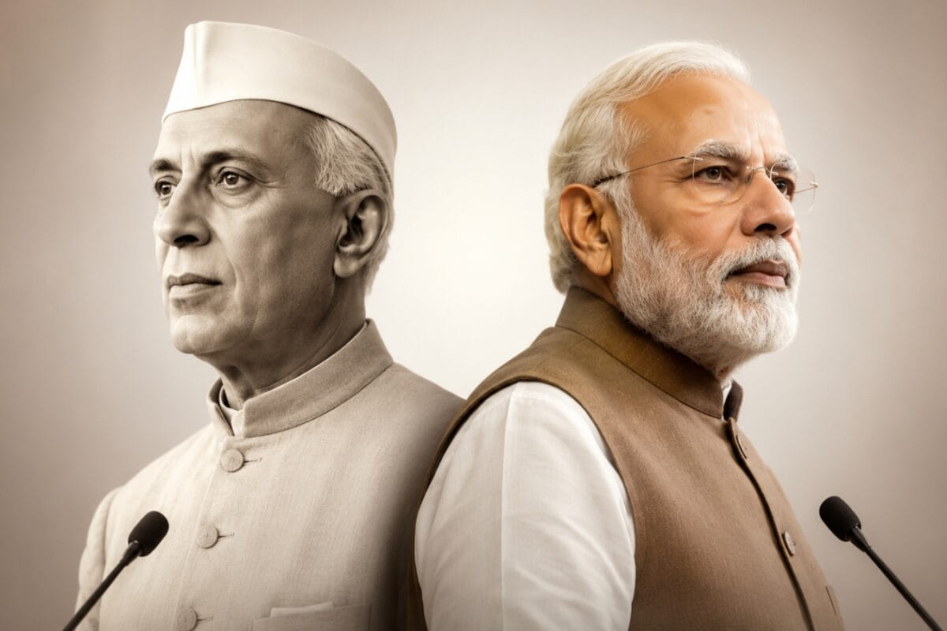
Had Nehru been a Nationalist, Or If Modi were the First One
A hypothetical ‘Twist’ to Nehru's 'Tryst with Destiny'
Mistaking it as some sort of an accolade by one of Modi’s so-called ‘andh bhakts’, the skeptics shouldn’t skip this for his mere presence in the subtitle. Whatever, as a matter of fact, the historical facts vindicate his choice for this hypothetical venture, rather than that of Netaji Bose or Sardar Patel. It’s true, contrary to propaganda, Netaji caused the British-exist from India, confirmed by none other than Clement Atlee, the one who led them out. But given the turbulence of that time, he was not destined to become Azad Hind’s first prime minister. As for Patel, the people’s choice for the premier position, instead of shouldering the nation at its most critical juncture, he catered to maverick Gandhi’s wicked whim, to put its fate in the ill-equipped hands of the fallible Nehru. So, that makes Modi, who proved himself as a nationalist to the core, in thoughts, words and deeds, as the right choice to man this piece, more so, as he just overtook Nehru’s uninterrupted stint as the country’s elected prime minister.
It is pertinent to note that in his 15 Aug 1947 midnight ‘Tryst with Destiny’ address to India’s constituent assembly, Nehru had stated at the very outset - “Long years ago, we made a tryst with destiny; and now the time comes when we shall redeem our pledge, not wholly or in full measure, but very substantially”. Well, for all intents and purposes, if it’s not an exhibition of his utter lack of ambition to lead India to its once-held preeminent position in the world, what else. Just contrast his limited thinking with Modi’s audacious vision of Vikasit Bharat and his energetic approach to realise that. So, hereunder is India’s hypothetical tryst with destiny, had Nehru been a nationalist, or if Modi were in his position as the first prime minister. [Emphasis supplied]
“Dear Bharatiya:
No denying that on this august occasion, though it is tempting to indulge in grandiose posturing, I would rather resort to plain speaking to outline my thoughtful vision for the eternal good of our new Bharat in the making.
I, for one, believe that there is no cause for celebrating our long-denied freedom for which we paid the price of partition, of our precious land. Besides, I dare say that we cannot remain oblivious to the fact that the spirit of our people, the soul of our karma bhoomi, came to be stymied under the alien regimens that lasted for a thousand years. Thus, at this historic juncture, as our resolve should be to lead our once-redoubtable country to the new frontiers of excellence, in the not-so-distant-future that is, so we must reckon this as a substantive moment, not a symbolic event.
Hence, it is incumbent upon us to apply our minds to nation-building, for which, first of all, we must, above all else, imbibe that spirit and induce it in the minds of our people, which Alberuni in 1030 CE characterised thus: "The Hindus believe that there is no country but theirs, no nation like theirs, no kings like theirs, no religion like theirs, no science like theirs." Thus, it is the onerous duty of all of us that happen to hold the positions of influence and power at this critical time, to reinvigorate that sense of pride in our people, with a resplendent past, distant though. So, let us all strive to create the Bharat Varsha of Swami Vivekananda’s dreams in which his Sanatani, garv se kaho hum hindu hai (proudly proclaim that we’re Hindus), refrain is on every lip.
No mistaking that for this ancient land has historically been the Hindustan, and if anything, with the creation of Pakistan for the Muslims, the India today is unequivocally Hindu, by its composition, culture, custom and character. Thus, for some delusionary applause from within and without, I see no point in singing paeans to the mythical ganga-jamni tehjeeb, which, anyway, the partition on the Hindu-Muslim fissures made fallacious. So, in the national interest, what is needed is a hard talk to deal with the ugly reality of the faith-driven Muslim disaffection of the Hindus, conceitedly called kafirs. Strangely though, having whole-heartedly subscribed to the Muslim League’s two nation theory, based on the premise of “Hindus and Muslims were two distinct nations with separate religions, cultures, and values”, over a third of the enthusiastic believers of the same, chose to remain in the Hindu India! Is it mere hypocrisy?
Whatever, it should not be lost on them that Hindus, having been forced to cede one-fourth of their land for a Muslim homeland, did not insist upon their repatriation to it but instead, hosted them in their midst. If anything, that Hindu gesture alone, in the normal human course, is cause enough for these Muslims to rescind their separatist mindset to become the emotional ingredient of our national character. But the hitch, as pinpointed by my erudite brother, Dr. BR Ambedkar, is that “Islam can never allow a true Muslim to adopt India as his motherland and regard a Hindu as his kith and kin”, and I’m certain that he would love to be proved wrong on both counts. More so, as the onus is on the Muslims to become worthy of the Hindu magnanimity, it pays them to realize that the prejudices of their alien faith render them into square pegs in the round holes of Bharat that is India. And for that, it’s essential for them to understand that the inimical content of their faith, shaped by the alien tribal mores of the dark ages, has become redundant in these altered times, more so in the multi-religious societies like ours.
However, lest the Muslims should feel singled out on the dogmatic front, we must caution the mistaken Christians that their urge to convert the vulnerable Hindus, ostensibly for their supposed salvation, is grossly injurious to Indian social harmony, national unity and demographic health. So, they would be well-advised to desist from their ill-founded evangelism for unlike the prophet-centric prejudices of their, and the other Semitic faiths, the philosophy of Sanatana dharma has evolved through the ages, by the sages. Whatever, it is a travesty of enlightenment in that these dogmatic Semitic orders, sans philosophy, sworn to outrageous diktats of their intolerant gods, should have at all gained their cultish grounds in our land of the Upanishads. Oh, how they visualized that it’s man, who created gods, not the other way round! It’s another matter though, sadly over time, the Sanatani wisdom gave way to the Hindu superstitions, resulting in India’s intellectual decline.
Be that as it may, we must admit that Hindus have to blame only themselves for the Semitic mess in their midst for they disregarded the Sanatana ethos of Vasudhaiva kutumbakam (holds world all in one household) to denigrate part of their ilk as lesser souls, and, what’ worse, branded some others as untouchables. Sadly, though understandably, that make them all the easy prey of the evangelist poachers, equipped with false religious assertations and fake social postulations. However, wonder why it doesn’t ever dawn on the proselytizers of either dispensation that the manner in which they go about luring the others into their lot, in essence, is a dubious way of spreading, what they propagate as a noble religion, or the God’s straight path, or whatever! However, it goes without saying that before demanding the adherents of the alien faiths to imbibe Bharatiyata, the Hindus themselves must bring their sidelined ilk into the Sanatana fold, in both letter and spirit.
Last but not the least is our onerous task to reweave our tattered moral fabric, which, once, as noted by ancient Chinese pilgrims, was ethically pure in an economically prosperous setting. Why, for that matter, even at the end of the rapacious Islamic regimes, the forerunners to the exploitative British colonial rule, our GDP was over one-fourth of the global one, which sadly stands at a meagre three percent of it now. Just the same, without delving too deep into the myriad causes of our moral decay and the economic decline, suffice it say that as corruption is the source of our social scourge that plagues our country in every which way, it can be affirmed without any contradiction that it is treason by another name. It’s thus, unravelling the well-entrenched graft from independent Bharat can only be our vande mataram in its true sense.
Just the same, the problem with a problem is that until one admits that it exists, one cannot address it, and unless it is addressed, it persists. So, let’s honestly confess the problems our country faces, and sincerely strive to evolve feasible solutions to effectively address the same, collectively that is. Given the impeccable pedigree and innate genius of Bharat, I’m quite certain that our people and their progeny, sooner than later, would scale it to the formidable heights, at which our progenitors once positioned it. So, it is with that conviction, I commend this occasion as the beginning of the end of a millennial eclipse for our nation to regain and retain its resplendence for all times to come. Let’s trust our people for that.
Vande mataram.”
Now, from the hypothetical nationalism, back to the ‘Tryst with Destiny’ of the “Englishman by education, Muslim by culture, and Hindu by birth” Nehru, propped up by Gandhi, lo, for being “the most English among us all”, for the comparative record. It’s no wonder then that in its editorial, ‘India: another tryst with destiny’, The Guardian of England, opined that “Today, 18 May 2014, may well go down in history as the day when Britain finally left India”, and that was the day when its 15th Lok Sabha was dissolved to make way for Narendra Damodardas Modi to be sworn in as its 14th Prime Minister later, on 26 May 2014.
And for record, the following is the rest of Nehru’s ‘tryst’:
“At the stroke of the midnight hour, when the world sleeps, India will awake to life and freedom. A moment comes, which comes but rarely in history, when we step out from the old to the new -- when an age ends, and when the soul of a nation, long suppressed, finds utterance. It is fitting that at this solemn moment we take the pledge of dedication to the service of India, and her people, and to the still larger cause of humanity.
At the dawn of history, India started on her unending quest, and trackless centuries are filled with her striving and the grandeur of her successes and her failures. Through good and ill fortune alike, she has never lost sight of that quest or forgotten the ideals which gave her strength. We end today a period of ill fortune and India discovers herself again.
The achievement we celebrate today is but a step, an opening of opportunity, to the greater triumphs and achievements that await us. Are we brave enough and wise enough to grasp this opportunity and accept the challenge of the future?
Freedom and power bring responsibility. That responsibility rests upon this assembly, a sovereign body representing the sovereign people of India. Before the birth of freedom, we have endured all the pains of labor, and our hearts are heavy with the memory of this sorrow. Some of those pains continue even now. Nevertheless, the past is over, and it is the future that beckons to us now.
That future is not one of ease or resting but of incessant striving so that we might fulfill the pledges we have so often taken and the one we shall take today. The service of India means the service of the millions who suffer. It means the ending of poverty and ignorance and disease and inequality of opportunity.
The ambition of the greatest man of our generation has been to wipe "every tear from every eye." That may be beyond us, but so long as there are tears and suffering, so long our work will not be over.
And so we have to labor and to work, and work hard, to -- to give reality to our dreams. Those dreams are for India, but they are also for the world, for all the nations and peoples are too closely knit together today for any one of them to imagine that it can live apart.
Peace has been said to be indivisible; so is freedom; so is prosperity now; and so also is disaster in this one world that can no longer be split into isolated fragments.
To the people of India, whose representatives we are, we make appeal to join us with faith and confidence in this great adventure. This is no time for petty and destructive criticism, no time for ill will or blaming others. We have to build the noble mansion of free India where all her children may dwell.”
Now, the rest is for your contemplation

How Can Book Reviews Propel Your Self-Published Fiction to New Heights?
How Can Book Reviews Propel Your Self-Published Fiction to New Heights?
Chuck Morgan, Crime Fiction Author
It's imperative for you as a self-published author to understand the impact of book reviews on your fiction's success. Positive reviews can significantly enhance your visibility and credibility, drawing in potential readers who rely on the opinions of others. In this post, we’ll explore how you can leverage reviews to build a strong reputation and ultimately boost your sales, helping your literary work reach new audiences and achieve greater recognition. Your self-publishing journey can thrive with the right strategies for cultivating and using book reviews effectively.
The Importance of Book Reviews
The significance of book reviews in the self-publishing realm cannot be understated. They serve as social proof, helping to validate your work in the eyes of potential readers. When someone encounters a positive review, it can reassure them of your book's quality and entice them to give it a chance, ultimately assisting you in reaching a wider audience and achieving greater success.
Building Credibility and Trust
Along with attracting readers, book reviews help you establish credibility in a saturated market. When previous readers endorse your work through honest reviews, it enhances your author brand and makes you more trustworthy. This trust can ignite word-of-mouth promotions, where satisfied readers share your book with their circles, further expanding your reach.
Enhancing Visibility and Discoverability
Between various online platforms, having reviews of your book can significantly elevate its visibility. Search algorithms often factor in the number and quality of reviews when determining a book's ranking, making these reviews necessary for discoverability. A higher profile means more potential buyers are drawn to your self-published work, ultimately boosting your sales.
Another key element to consider is that book reviews not only impact your book’s immediate visibility but also contribute to its long-term discoverability. As readers post their thoughts on various platforms and social media channels, your book can surface in search results and recommendations, leading to ongoing interest. By consistently gathering reviews, you create a lasting impression that can continue to attract new readers long after your book's launch.
Types of Book Reviews
One of the best ways to leverage book reviews is by understanding the different types available to you:
- Professional Reviews
- Reader Reviews
- Editorial Reviews
- Peer Reviews
- Amazon and Goodreads Reviews
You can choose the type of review that best suits your self-published work for maximum impact.
| Type | Description |
| Professional Reviews | Reviews written by literature critics or established authors. |
| Reader Reviews | Reviews posted by general readers, often on platforms like Amazon and Goodreads. |
| Editorial Reviews | Reviews provided by editorial teams of book retailers or magazines. |
| Peer Reviews | Reviews from fellow indie authors or writing groups. |
| Amazon and Goodreads Reviews | Feedback from readers on e-commerce and social platforms. |
Professional Reviews
Besides gaining exposure, professional reviews lend credibility to your work. These reviews typically come from established critics who can provide insightful critiques and praise that resonate with your target audience. Having a few high-quality professional reviews can enhance your book's reputation and encourage more readers to take a chance on your writing.
Reader Reviews
To reap the benefits of reader reviews, focus on encouraging your audience to share their thoughts. These reviews can significantly influence potential readers and are often perceived as more authentic than professional critiques. Positive reader feedback can enhance your visibility, helping you attract more readers and boost your sales.
At the heart of reader reviews is their grassroots nature, making them invaluable for marketing your self-published fiction. Engaging with your audience through social media, book signings, and email newsletters can motivate readers to leave reviews. Their personal touch often resonates more with potential readers, establishing a community around your book and helping to create a buzz that propels your work forward.
Strategies to Gain Book Reviews
Any aspiring author knows that attracting book reviews is imperative for their self-published fiction. To effectively gain these reviews, consider implementing diverse strategies that resonate with your target audience. By actively seeking feedback and building relationships with readers, you can create a community eager to support your work. In this chapter, discover actionable approaches to garner those all-important reviews.
Engaging with Beta Readers
Between completing your manuscript and launching it to the public, engaging with beta readers is a beneficial step. These individuals provide valuable insights and share their opinions on your story, characters, and writing style. By nurturing these relationships, you can secure enthusiastic readers who will post reviews once your book is published.
Using Social Media and Platforms
Engaging with social media and relevant platforms can significantly expand your reach when acquiring book reviews. Establish your online presence by connecting with readers, authors, and influencers in your genre. Share insights, engage in conversations, and promote your book while inviting honest feedback. This interaction not only cultivates relationships but can also encourage readers to share reviews on their platforms, increasing your book's visibility.
To leverage social media effectively, consider joining genre-specific groups and forums where potential readers gather. Use platforms like Instagram, Facebook, and Goodreads to interact with your audience by sharing sneak peeks, discussing your writing process, and inviting opinions. Hosting giveaways or challenges where participants can receive a copy of your book in exchange for a review can also be a great way to reward reader engagement. By fostering an active presence on these platforms, you enhance your chances of garnering reviews that will propel your self-published fiction to new heights.
Crafting an Effective Review Request
To maximize your chances of receiving meaningful book reviews, it’s crucial to craft an interesting review request. This involves communicating the value of your work, providing potential reviewers with crucial details about your book, and outlining the type of feedback you seek. A well-structured request can grab attention and encourage recipients to engage with your story, ultimately leading to more impactful reviews.
Personalization and Professionalism
Above all, addressing your reviewers personally and showing professionalism can significantly enhance your request. Rather than sending out a generic template, take the time to research your potential reviewers and tailor your message to resonate with them. A personalized approach shows that you respect their opinions and are genuinely interested in their thoughts on your work.
Follow-Up Etiquette
Follow-up communications can be effective in prompting reviewers, but they must be handled with care. Ensure you balance persistence and respect by allowing a reasonable timeframe before reaching out again. Your follow-up should express appreciation for their time, gently remind them of your request, and offer to provide any additional information they might need.
Understanding the importance of follow-up etiquette can enhance your relationship with book reviewers. A considerate approach reflects well on your professionalism and can make reviewers more inclined to respond and write a review. If they haven’t gotten to your book yet, your thoughtful follow-up could spark their interest, making them more eager to share their insights on your fiction.
Leveraging Reviews for Marketing
Despite the common belief that writing a great book is enough to succeed, using book reviews effectively can elevate your marketing strategy. Reviews serve as social proof that your work resonates with readers, allowing you to build authenticity around your brand. By featuring reviews prominently on your website, social media, and promotional materials, you can attract new readers and engage your audience more effectively.
Using Reviews in Promotional Material
By integrating reviews into your promotional materials, you can enhance your book's appeal by showcasing positive feedback. Consider using snippets of reviews in ads, newsletters, and on your book cover. Highlighting endorsements from respected critics or readers will not only catch the attention of potential buyers but also reinforce the quality of your work, prompting others to take a closer look.
Encouraging More Reviews
Between publishing and engaging with readers, garnering reviews can be ongoing. Actively encourage your audience to share their thoughts, whether through social media, newsletters, or book signings. Building a community centered around your work invites more conversations and increases the likelihood that readers will leave reviews, contributing to your overall credibility.
Even after the initial launch, continue to foster relationships with your readers. Engage them through thank-you notes or personalized messages when they leave a review. You can also host giveaways or contests motivating reviews, making it a fun experience for your audience. Such strategies not only encourage more feedback but also cultivate a loyal reader base eager to support your future projects.
Handling Negative Reviews
For self-published authors, negative reviews can be challenging to navigate, but they are often an inevitable part of the journey. Instead of viewing them as a setback, consider how they can provide valuable insights into your work. Each review holds the potential to enhance your writing skills and shape your future projects, so approach them with an open mind and a willingness to learn.
Constructive Criticism as a Tool for Growth
Constructive criticism serves as a powerful tool for your growth as a writer. When readers take the time to provide thoughtful feedback, it can illuminate areas where your storytelling may need improvement. Embrace these insights as opportunities to hone your craft, develop richer characters, and strengthen your narrative structure.
Responding Gracefully
Handling negative reviews gracefully shows your professionalism and willingness to engage with your audience. Instead of reacting defensively, approach the feedback with curiosity and appreciation. By acknowledging the reviewer's perspective, you show that you value their opinion and are committed to growing as a writer.
It is vital to maintain a composed demeanor when addressing any negative feedback. Take a moment to process your feelings before responding, as a well-considered reply can leave a lasting impression. Thank the reviewer for their insights and ask for clarification on specific points. This not only shows your professionalism but can also foster a connection with your audience, turning potential critics into loyal readers.
To wrap up
By leveraging the power of book reviews, you can significantly enhance your self-published fiction's visibility and credibility. Positive reviews attract potential readers but also build trust and encourage word-of-mouth recommendations. Engaging with reviewers and using their feedback can further refine your work and foster a community around your writing. Ultimately, prioritizing reviews in your marketing strategy can open doors and elevate your self-published journey to new heights.

Understanding Algorithms: A Simple Guide for New Fiction Authors
Understanding Algorithms: A Simple Guide for New Fiction Authors
Chuck Morgan, Crime Fiction Author
If you’re a new fiction author, you’ve probably heard people talk about “the algorithm” like it’s some mysterious force controlling your book’s fate. An algorithm is just a set of rules a computer uses to decide what to show people.
And here’s the good news: once you understand what algorithms look for, you can work with them instead of feeling like they’re working against you.
What an Algorithm Actually Is
An algorithm is a recipe.
It takes in information, follows steps, and produces a result.
On book platforms and social media, algorithms decide things like:
· Which books appear in the search results
· Which books get recommended
· Which posts show up in someone’s feed
· Which videos go viral
They’re not judging your writing. They’re reacting to signals.
The Three Things All Algorithms Care About
No matter the platform, Amazon, TikTok, Facebook, Goodreads, they all focus on the same three things.
1. Relevance
Does your book match what the reader is looking for?
Algorithms look at your:
· Cover
· Title
· Description
· Keywords
· Categories
If your book looks and sounds like the genre readers want, the algorithm knows where to place it.
2. Engagement
Are people interacting with your book?
This includes:
· Clicks
· Purchases
· KU page reads
· Reviews
· Ratings
· Time spent reading
More engagement = more visibility.
3. Consistency
Are people interacting with your book over time?
Algorithms love steady activity, not one‑day spikes.
How Amazon’s Algorithm Works (Plain English)
Amazon’s goal is simple: show readers books they’re likely to buy.
It watches:
· What readers click
· What they buy
· What they read
· How fast they read
· What they search for
Then it recommends books that match those patterns.
The most important part of Amazon’s system is the recommendation engine—the “Also Boughts,” “Recommended for You,” and “Top Picks” sections. Most sales come from these, not from search.
If your book attracts the right readers, Amazon will show it to more of them.
How Social Media Algorithms Work
Social platforms reward content that keeps people watching, reading, or interacting.
They boost posts that:
· Get quick engagement
· Spark conversation
· Match a user’s interests
· Keep people on the platform
They bury posts that feel like ads or get ignored.
For authors, this means:
· Authentic beats salesy
· Storytelling beats shouting “Buy my book”
· Consistency beats randomness
You don’t need to go viral. You just need to show up regularly.
How Goodreads’ Algorithm Works
Goodreads recommends books based on:
· Shelves
· Ratings
· Reviews
· Lists
· Book clubs
· Reading activity
The more readers interact with your book, the more Goodreads spreads it.
So early reviews matter.
The Most Important Rule: Clear Signals Win
Algorithms don’t guess. They follow the signals you give them.
Strong signals:
· A cover that fits your genre
· A clear, genre‑specific title
· A description that uses reader‑friendly language
· Keywords readers actually search for
· Categories that match your book
· Steady sales or page reads
· Early reviews
Weak signals:
· A cover that confuses readers
· A vague description
· Misleading keywords
· Random categories
· Sales spikes followed by silence
· No reviews
Strong signals tell the algorithm, “This book belongs here.”
How to Work With Algorithms as a New Author
Here are simple steps that make a big difference.
1. Match your genre
Your cover, title, and description should instantly tell readers what kind of story you’re offering.
2. Use real search terms
Think like a reader:
· “small‑town romance,”
· “serial killer thriller,”
· “cozy mystery with cats,”
Not like a marketer.
3. Pick the right categories
Choose categories where your real readers browse—not tiny categories just to hit #1.
4. Encourage early engagement
Ask early readers to:
· Leave reviews
· Add your book to Goodreads
· Share it with friends
This teaches the algorithm who your audience is.
5. Stay consistent
Algorithms reward steady activity:
· Regular posts
· Small, ongoing ads
· Predictable release schedules
Slow and steady beats big bursts.
Final Thoughts
Algorithms aren’t magical or mysterious. They’re predictable once you understand what they look for: relevance, engagement, and consistency.
If you:
· Present your book clearly
· Aim it at the right readers
· Encourage early interaction
· Stay active over time
The algorithms will help readers discover your work.