

Author Life

WHY DO WE EAT TURKEY ON THANKSGIVING?
WHY DO WE EAT TURKEY ON THANKSGIVING?
Chuck Morgan, Crime Fiction Author
So, in keeping with the spirit of Thanksgiving, I thought I would step away from my usual weekly blog about self-publishing fiction books and ask a question that many people might be thinking this morning.
WHY DO WE EAT TURKEY ON THANKSGIVING?
We are all aware of the story of the first Thanksgiving that we are taught in school. The pilgrims and the indigenous people and the feast they shared. Now, whether you believe the whole story, the question remains. Why do we eat turkey now?
Earlier this week the Vice President asked a military gathering. Who likes turkey? Most of the crowd raised their hands. Some because they like turkey and some because it was the Vice President asking the question. When they lowered their hands, the Vice President told them they were full of shit. Nobody likes turkey. That might be a bit of an overstatement because I think there are some people who actually like turkey, but he had a point. I have never agreed with anything the VP has said, but he may be on to something. So, after a discussion around the dinner table yesterday, we came to the same conclusion. Most of us don't really like turkey. So why do we eat it?
Turkey is a pain in the butt to be honest. No matter your choice of cooking methods, turkey is dry and has little taste. It takes too long to cook and takes up too much room in the refrigerator. And we seem to have leftovers for weeks. I'm sure my family is a lot like yours. We eat the same food every week. Steak, chicken, pork chops, pizza, pasta or some variation. No one ever asks if we can have turkey for dinner, to change things up. And let's look at the sides. Stuffing can be made in 5 minutes and comes out of a box, yet we never have stuffing for a change of pace. Cranberry sauce is available year-round on the grocery store shelves. My son loves cranberry sauce. He ate almost an entire can yesterday, by himself, yet we never buy it for a change of pace, and he does the grocery shopping. Then we come to Green Bean Casserole. I find it hard to believe that anyone in the world likes green bean casserole. How often do you make green bean casserole other than Thanksgiving? I'll bet not much, yet green beans are available all year round.
So, on a holiday, when we are supposed to be thankful for everything and everyone we have in our lives. Why do we eat food we don't eat at other times and probably don't really like?
I think we have been programmed from birth, by generations of parents and grandparents that eating turkey on Thanksgiving is what we do, and we don't really think about it. It's almost patriotic. By eating turkey, we are honoring our forefathers and the sacrifices they made. I'm not sure I buy that. I think it's more primal. I think we eat turkey and all the fixings because we believe we have to. That not eating turkey would violate some secret rule that no one has ever seen, but we all know exists. Because our parents said so.
Turkey is a $4 billion industry, with about $1billion in sales occurring over Thanksgiving. If you look at those numbers, a lot of people must be eating turkey during the rest of the year. But who are they? The industry even makes it simple for us. You don't need to buy the whole bird. You can buy breasts, wings, thighs or legs. All individually wrapped and ready to defrost and cook. It couldn't be simpler, but in my family. We don't do it.
Many people go to festivals and events and walk around all day chewing on a turkey leg. Why? I think it has to do with our ancient ancestors. When we see a roasting turkey leg at a festival, our tiny speck of Neanderthal gene kicks in and takes over the rest our gene pool. It's our chance to go caveman and we chow down. Besides, who can resist a pretty girl or a tall strapping guy in a period costume munching on a huge turkey leg and knowing that we can be part of the club?
Bottom line, it comes down to us. What do we want? Do we want to eat turkey because we always have and it's what we are supposed to do or do we want to eat something we are truly thankful for. Our conclusion. Next year we are probably going to go Italian.
Happy Thanksgiving.
**Oscar J. Starr III: Revolutionizing Storytelling for the Modern World**
**Oscar J. Starr III: Revolutionizing Storytelling for the Modern World**
Storytelling isn’t just an art form—it’s a vehicle for change, connection, and transformation. Oscar J. Starr III has mastered this vehicle, steering it into new and uncharted territories. With vision, courage, and passion, Oscar is setting a new gold standard for what it means to be an author in today’s rapidly evolving world of publishing.
Oscar isn’t here to write stories; he’s here to ignite movements. Through **NCIA**, he has built a thriving community where independent authors unite to share ideas, collaborate, and thrive. This is not just a network—this is the heartbeat of creativity and innovation that pushes authors to dream bigger and create fearlessly.
And Oscar doesn’t stop at just writing books. He turns pages into experiences, adapting his works into captivating podcasts, exploring the magic of movie adaptations, and embracing interactive media. Why? Because storytelling should inspire and engage on every possible level, and Oscar is a relentless champion of that belief.
But that’s not all. Oscar knows how to make stories stand out—before readers even turn the first page. He sees the book cover as the first chapter, the first moment to captivate and spark curiosity. With expertise in branding, he helps authors shape visual identities that aren’t just eye-catching—they’re unforgettable.
And let’s talk about authenticity. Oscar is the real deal. He shares his journey—his struggles, his victories, his passion—with unflinching honesty. Through resilience and determination, he has built his brand as a symbol of empowerment. This is storytelling with heart and soul, and Oscar J. Starr III lives it every single day.
The **Oscar J. Starr III Signature Brand** represents more than just his work—it’s a promise. A promise to empower, uplift, and innovate. It was born from his unwavering belief in the power of stories to inspire change and connect us all.
So, if you’re ready to experience a new era of storytelling, look no further. Oscar J. Starr III isn’t just redefining what it means to be an author—he’s reshaping the way we connect to stories and to each other.
✨ **Oscar J. Starr III is more than an author—he’s a movement.** ✨
The Vision Behind the Oscar J. Starr III Signature Brand: My Journey to Empowerment and Excellence
**The Vision Behind the Signature Brand: Oscar J. Starr III's Journey to Empowerment and Excellence**
In a world where individuality often gets lost in the noise, Oscar J. Starr III has emerged as a beacon of authenticity and innovation. Through the creation of the Signature Brand, he has redefined what it means to leave a lasting impression—not just as an entrepreneur, but as a visionary leader committed to empowering others.
The Signature Brand is more than a logo or a tagline; it is a philosophy. For Oscar, it represents the culmination of his journey as an entrepreneur, author, and mentor. It is a testament to his belief that every individual and business has a unique story to tell, and that story deserves to be told with clarity, elegance, and purpose.
The Inspiration Behind the Brand
Oscar's journey to creating the Signature Brand was deeply personal. As someone who has navigated the challenges of entrepreneurship and creative expression, he understands the importance of standing out in a crowded marketplace. His own experiences taught him that a signature is not just a mark on paper—it is a symbol of one's identity, values, and aspirations.
This realization inspired him to create a brand that would help others articulate their own unique identities. Whether it's through crafting compelling book covers, designing impactful branding strategies, or mentoring independent authors, the Signature Brand is Oscar's way of giving back to the community that has supported him.
A Commitment to Excellence
At the heart of the Signature Brand is a commitment to excellence. Oscar believes that a well-crafted brand is not just about aesthetics; it is about authenticity and trust. This is why the Signature Brand focuses on creating personalized experiences that resonate deeply with its audience. From entrepreneurs looking to build their businesses to authors seeking to share their stories, the Signature Brand offers tailored solutions that empower individuals to achieve their goals.
Transforming Storytelling
One of the most innovative aspects of the Signature Brand is its focus on storytelling. Oscar has always been passionate about the transformative power of stories, whether they are told through books, podcasts, or even movie adaptations. The Signature Brand embodies this passion by helping clients turn their visions into compelling narratives that captivate and inspire.
A Legacy of Empowerment
Ultimately, the Signature Brand is about more than just business; it is about building a legacy. For Oscar, success is not measured by accolades or profits, but by the impact he has on others. Through the Signature Brand, he aims to inspire a new generation of creators, entrepreneurs, and leaders to embrace their authenticity and make their mark on the world.
In a time when authenticity is more valuable than ever, Oscar J. Starr III's Signature Brand stands as a powerful reminder that our stories—and our signatures—are what truly set us apart.
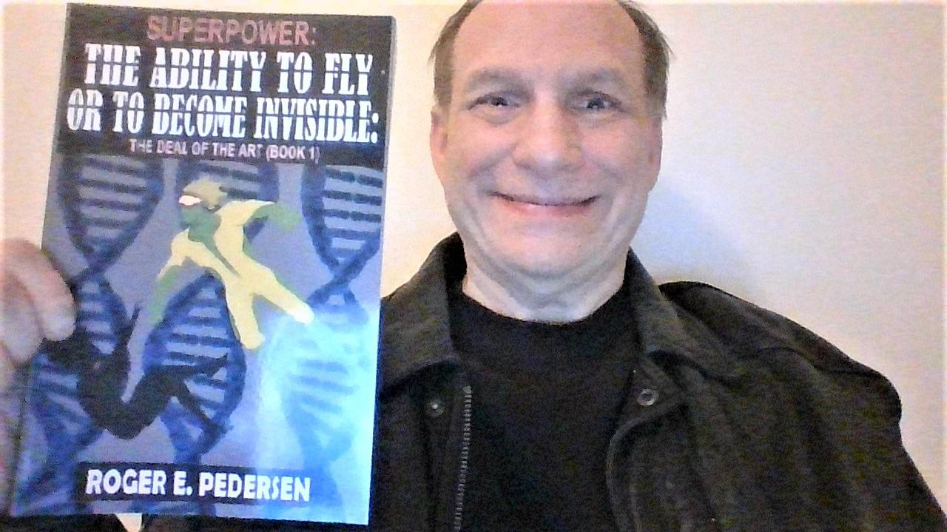
Roger E. Pedersen’s “SuperPower: The Ability to Fly or to Become Invisible: The Deal of the Art”
SUPERPOWER WEBSITE: PSIPUBLISH.COM
The book is for anyone interested in exploring the depths of human nature, the complexities of morality, and the potential for transformation. Roger E. Pedersen masterfully puts together elements of suspense, ethical inquiry, and personal growth, creating a narrative that is both engaging and deeply relevant.
Roger E. Pedersen’s “SuperPower: The Ability to Fly or to Become Invisible: The Deal of the Art” is a compelling exploration of human courage, ethical dilemmas, and the deep impact of extraordinary abilities. Through the gripping tales of Brett Summers and Paul Spence in the book, he invites readers to raise important questions about morality, survival, and the essence of human nature.
At its core, the novel is about resilience. Brett Summers, a character who faces a series of devastating setbacks job loss, divorce, homelessness personifies this theme. His life takes a dramatic turn when he discovers his power of invisibility. This newfound ability opens doors he never imagined possible, leading him into both dangerous and rewarding ventures. Brett’s story is a proof to the human spirit’s capacity to adapt and persevere, even in the face of overwhelming adversity.
The book delves deeply into the ethical implications of possessing SuperPowers. Brett’s invisibility allows him to steal food to survive and later, to steal evidence to help a lawyer escape legal consequences. These actions raise important questions: Is it justifiable to commit illegal acts if they are born out of necessity or desperation? How far would one go to alter their fate? Through Brett’s journey, readers are prompted to reflect on their own moral compass and the choices they might make in similar circumstances.
Whereas, Paul Spence’s storyline further complicates the moral idea. Tasked with a mission involving risk art theft, Paul uses his invisibility to scout the Metropolitan Museum of Art. His plans require freeing a skilled hacker from prison, adding layers of intrigue and ethical quandaries. Paul’s actions challenge readers to consider the boundaries of right and wrong, and the potential consequences of crossing those lines.
In today’s modern world, often riotous world, the themes explored in his novel are highly relevant. The feeling of being unseen or undervalued, represented by Brett’s invisibility, connects with many who struggle for recognition and respect in their personal and professional lives. The story’s exploration of ethical dilemmas mirrors real issues, where individuals and societies grapple with complex moral decisions.
Moreover, the novel’s portrayal of strength is particularly important in an era marked by economic uncertainty and rapid change. Brett’s and Paul’s stories serve as reminders that even in the darkest times, there is potential for transformation and hope. Thus, the readers should not loose hope and work towards their goal.
His novel invites readers to engage in an interesting exercise: How would you handle the power of invisibility or flight? Would you use it for personal gain, to help others, or perhaps both? This interactive element encourages readers to place themselves in the characters’ shoes, developing a deeper connection to the narrative and its themes.
One of the most impactful quotations from the novel captures the essence of Brett’s realization: “We are all in the same boat, fighting Mother Nature and Father Time! Resistance is truly futile.” This statement captures the universal struggle against forces beyond our control, highlighting the shared human experience of facing life’s challenges.
The book is for anyone interested in exploring the depths of human nature, the complexities of morality, and the potential for transformation. Roger E. Pedersen masterfully puts together elements of suspense, ethical inquiry, and personal growth, creating a narrative that is both engaging and deeply relevant. As readers follow Brett and Paul’s journeys, they are invited to reflect on their own values and the power of resilience in their lives.
In a world where we are constantly confronted with moral choices and challenges, his novel offers valuable insights and a compelling narrative that will connect long after the last page is turned.

On Attitude to Money
While a conflict of interest, be it in life or in fiction, can bring about self-introspection, strange though it may seem, a casual encounter could lead to self-discovery. So it happened with me in the wake of my rebuff to a dogged tempter, “money is not my weakness” and his “what is your weakness” repartee; for the record, either I had been a straight purchase officer or a strict loss assessor, occupations amenable to monetary mischief.
However, the idea of this article is not to gloat over my uprightness but to present the genesis of my attitude to money and the vicissitudes of my life as a subject matter for possible research. But the caveat is that much of my growing up that shaped the same was in the times when the social pulls and the peer pressures, not to speak of the student stress, weren’t, as they have come to become of late, as emotionally unsettling. It was primarily because, as compared to the times now, in the days of yore, life tended to furrow in the tracks of karma siddhanta’s poorva janma sukrutam; the happy circumstances of one’s current life are the outcomes of the previous versions’ noble deeds. Besides keeping envy out of life’s framework for the equanimity of the haves and the have-nots alike, this karmic concept boded well for the collective social conduct buttressed by the individual hope of a bettered future life, never mind the bitter one on hand. But lest the laid back attitude should breed in societal lethargy, the dharmic work culture for a pragmatic life was formulated in v 47, ch2, Bhagvad-Gita: Treatise of Self-help, thus: “Hold as patent on thy work / Reckon thou not on royalty / With no way to ceasing work / Never mind outcome but go on.”
Given my birth in August 1948, so to say, I was conceived under the flying Tiranga and lived the first decade of my life in Kothalanka, a remote village in the picturesque Konaseema of the agrarian Andhra Pradesh. There my paternal grandfather Thimmaiah happened to hold a ten-acre paddy field and a five-acre coconut grove and as was the wont of the landed gentry in that era, he leased out all of that. It was in that rural setting, in those leisurely times, as the eldest of the third generation in a frugal household, that I have had a carefree childhood. But, when I turned ten, my father Peraiah, a remarkable man whom I sketched as A Character of Sorts in Glaring Shadow, my stream of consciousness novel, had shifted base to Amalapuram, a nearby small town, apparently for bettering my education.
And better it did for me. In the first academic year itself, I could make myself eligible for the merit-cum-means scholarship that though I chose to forego offhand and did not think much of it either to inform even my mother Kamakshi about it. But, having come to know of my ‘foolhardy act’ from my class fellows, when my grandfather questioned my strange conduct, I reminded him that it was he who told me that we are well-heeled, and he had no more to say. But, it was much later, and long after he disposed off that family silver and mismanaged its proceeds, that I realized my little eleven-year old rustic head could have instinctively figured out that our then family means made me peremptorily ineligible for the scholarship on that count. However, despite the latter-day material modesty, my attitude to money stayed course with my life and times as my youthful grasp of the ethereal value of woman’s effervescent love made the moolah inconsequential to my being as well as immaterial to my belonging, thereby ensuring that I remained immune to its lures that is notwithstanding the truism in the adage that ‘love is no more than a hackneyed expression unless backed by money’.
It’s thus, Napoleon Bonaparte’s “the surest way to remain poor is to be honest,” has been fine with me, and thankfully, with my spouse Naagamani as well. Nevertheless, the inexplicable period of penury that followed my cold shouldering a one crore bribe made me wonder whether goddess Lakshmi, feeling slighted at long last, thought it fit to punish me, the audacious errant. But, having subjected us to a four-year financial ordeal, as if to validate the Sanatana dharma’s credo, dharmo rakshati rakshita (righteousness protects the righteous persons); the goddess had finally relented by putting our life back on its modest track, so it seemed.
However, as it appears, maybe, Suresh Prabhu of my free ebook in the public domain, Jewel-less Crown: Saga of Life, has unraveled the ramifications of the moolah in its Spirituality of Materialism thus: “It’s the character of money to corrupt the ardent, tease the vacillating and curse the indifferent. That way, there seems to be no escape for man from money. You’re damned if you have it and accursed for the lack of it”. What is more, by way of showing an escape route to his bride Vidya, he cautioned her; “make money the measure and you are in for trouble dear”; it is as if he has alerted all of us to its pitfalls so that we can collectively regulate our monetary heads to make the best use of our life within our mundane means.

My ‘Novel’ Account of Human Possibility
Whenever I look at my body of work of ten books, the underlying human possibility intrigues me no end, and why not. I was born into a land-owning family in a remote village of Andhra Pradesh in India that is after the British had folded their colonial tents from there, but much before the rural education mechanism was geared up. It was thus the circumstances of my birth enabled me to escape from the tiresome chores of the primary schooling till I had a nine-year fill of an unbridled childhood, embellished by village plays and grandma’s tales, made all the more interesting by her uncanny ability for storytelling. As my maternal grandfather’s grandfather happened to be a poet laureate at the court of a princeling of yore, maybe their genes together strived to infuse the muses in me their progeny.
However, as the English plants that Lord Macaulay planted in the Indian soil hadn’t taken roots in its hinterland till then, it’s the native tongues that ruled the roost in the best part of the vast land, and in Andhra it was Telugu, the Italian of the East that held the sway. No wonder then, leave alone constructing a sentence on my own in English, whenever I had to read one, I used to be afflicted by stammer. Maybe, it was at the behest of the unseen hand of human possibility or owing to his own foresight that my father in time had shifted our family base to the cosmopolitan town of Kakinada to put me into the missionary McLaren High School in Class X. With that began my tryst with English, which, courtesy one of my maternal uncles, eventually led me to the continental fiction in translation that engaged me more, far more than the technical subjects I had to pursue for a career as a mechanical engineer.
While the Penguin classics inculcated in me a love for English language that is besides broadening my outlook of life, my nature enabled me to explore the possibilities of youth, and given that letter-writing was still in vogue then, I was wont to embellish my letters to friends and loved-ones with insights the former induced and emotions the latter infused. Clearly, all those letters that my novels carry owe more to my impulse to write them than to my muse’s need to express itself through them. Even as the fiction enabled me to handle the facts of life with fortitude, as life, for its part, chose to subject me to more of its vicissitudes, I continued tending my family and attending my job.
Fortuitously, when I was thirty-three, my mind and matter combined to explore the effect of the led on the leader, and when the resultant “Organizational ethos and good Leadership” was published in The Hindu, I experienced the thrill of, what is called, seeing one’s name in print. Encouraged, I continued to apply my mind on varied topics such as general management, materials management, general insurance, politics, and, not to speak of, life and literature resulting in some thirty published articles. But fiction was nowhere in the sight, nor I had any idea to turn into a novelist for Leo Tolstoy, Fyodor Dostoyevsky, Nikolai Gogol, Ivan Turgenev, Emily Zola, Gustav Flaubert et al are literary deities (I hadn’t read Marcel Proust and Robert Musil by then), and where was the question of a devotee envisioning himself as a deity.
But when I was forty-four, having been fascinated by the manuscript of satirical novel penned by one Bhibhas Sen, an Adman, with whom I had been on the same intellectual page for the past four years then, it occurred to me, ‘when he could, I can for sure’. It was as if Bhibhas had driven away the ghosts of the masters that came to shadow my muse but as life would have it, it was another matter that as he didn’t want to foul his novel by dragging it to ‘publishable length’, it remained in the limbo.
With my muse thus unshackled, I set to work on the skeletal idea of Benign Flame with the conviction that for fiction to impact readers, it should be the soulful rendering of characters rooted in their native soil, not the hotchpotch of local and foreign caricatures sketched on a hybrid canvas, the then norm of the Indian writing in English. Yet it took me a fortnight to get the inspiring opening sentence - “That winter night in the mid-seventies, the Janata Express was racing rhythmically on its tracks towards the coast of Andhra Pradesh. As its headlight pierced the darkness of the fertile plains, the driver honked the horn as though to awake the sleepy environs to the spectacle of the speeding train.”
From there on, it was as though a ‘novel’ chemistry had developed between my muse and my characters’ psyche that shaped its fictional course, and soon, I came to believe that I had something unique to offer to the world; so, not wanting to die till I gave it to it, I used to go to lengths to safeguard my life till I finished it with a ‘top of the world’ feeling. What one Spencer Critchley, an American critic, thought about my contribution – “It’s a refreshing surprise to discover that the story will not trace a fall into disaster for Roopa, given that many writers might have habitually followed that course with a wife who strays into extramarital affairs” - made me feel vindicated, though there were no takers to it among the Indian publishers and the Western agents.
So, I had no heart to bring my pen to any more paper (those were the pre-keyboard days) though my head was swirling with novel ideas, triggered by an examined life lived in an eventful manner. Sometime later, that was after I read a book of short stories presented to me; I had resumed writing due to a holistic reason. While it was the quality of Bhibhas’ satire that set me on a fictional track from which I was derailed by the publishers’ indifference, strangely, it was the lack of it in that book that once again spurred me onto the novel track to pursue the joy of writing for its own sake, and that led me to the literary stations of Crossing the Mirage and Jewel-less Crown. But in the wake of the hotly debated but poorly analyzed Godhra-Gujarat communal rioting in 2002, as I was impelled to examine the role religions play in social disharmony, my fictional course had taken a non-fiction turn with Puppets of Faith.
Then it was as if my muse, wanting me to lend my hand to other literary genres led me into the arena of translation, pushed me onto the ‘unknown’ stage, put me on a stream of consciousness, took me to crime scenes, and dragged me into the by-lanes of short stories. However, it was Michael Hart, the founder of Project Gutenberg, who lent his e-hand to my books in search of readers. Who would have thought that life held such literary possibilities in English language for a rustic Telugu lad in rural Andhra even in post-colonial India? The possibilities of life are indeed novel, and seemingly my life has crystallized itself in my body of work before death could dissipate it.
My body of work of twelve free ebooks, in varied genres, is in the public domain: https://g.co/kgs/sFRxS4
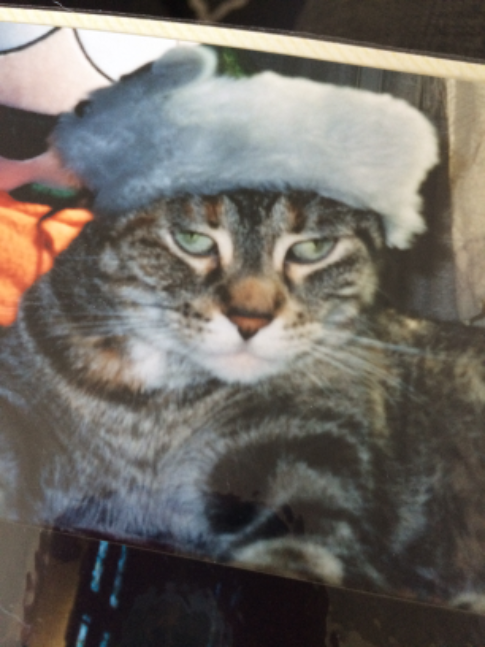
A Tribute to my Cat🐈⬛
My Ray of Sunshine
Spirit
There is a certain slant of light
That split thru my window
Into multi-colored rays
Which bounce and tumble to the floor
The bright elusive beads
Dance and tease my poor cat
Hunched up in the corner
Tense and vigilant
Eyes gleaming with triumph
She pounces on the intruder
And swallows it whole
By Prafulla Vyas
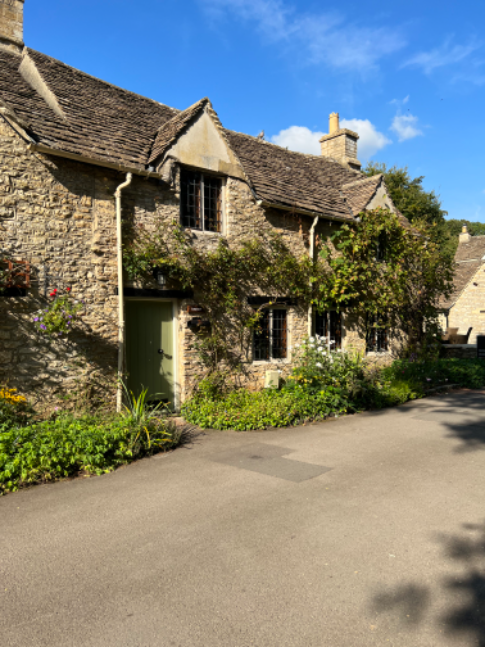
The Hidden Gem
It was buried deep inside me, the desire to write. Who has the time? Being married to a needy husband, raising children. working 24/7!
It was only after I retired and my husband passed away from cancer, that I found time to write. Life without your partner of 40 odd years, is hard. You could wallow in depression, staggering drunk or fill your lungs with smoke till they are black like a burnt piece of meat.
I had to escape! So I joined small, writing groups, looked desperately for venues where I could drown my sorry, my boredom.
And then one day I passed by an old garden, with overgrown wild rose bushes. There was a secret door, painted pale, blue and someone had scratched a message on it. Love you forever! I wondered who could have written it. What happened to these lovers?
And that’s how I discovered my Hidden Gem- my passion to write, create characters that lived in quaint, old cottages, in an old English village.
And that’s how I survived!
My cozy corner is by the window, where the sun rises and spreads it’s crimson glow over the horizon. I am happy alone, with my cup of chai and my notebook in hand.
Unlocking Creative Success: Why Mindset Matters Most for Writers
In the realm of creative writing, mindset isn't just a component; it's the cornerstone. For writers, the journey from a blank page to a masterpiece is not solely about skill or talent; it's deeply rooted in the mindset they nurture. This article delves into why mindset is everything for writers and how it shapes their path to success.
The Power of a Positive Mindset
Overcoming Writer's Block: Writer's block, the nemesis of many writers, often stems from self-doubt and fear of inadequacy. A positive mindset turns these obstacles into stepping stones. Believing in one's abilities allows a writer to view each block as a challenge to overcome, rather than a dead end.
Resilience in the Face of Rejection: The world of writing is replete with rejection. A positive mindset equips writers to see rejection not as a failure but as a learning opportunity, a stepping stone to refine their work and approach.
Continuous Learning and Growth: Writers with a growth mindset don't rest on their laurels. They constantly seek new ways to improve their craft, understanding that mastery is a journey, not a destination.
The Impact of a Negative Mindset
Conversely, a negative mindset can be a writer's downfall. Pessimism can lead to a fear of taking risks, resulting in uninspired and safe writing. Moreover, it can create a lens of harsh self-criticism where one's work is never 'good enough,' leading to a destructive cycle of doubt and dissatisfaction.
Mindset and Creativity
Creativity thrives in an environment of openness and positivity. A writer with a positive mindset is more likely to experiment with new ideas, styles, and genres, leading to more innovative and impactful writing. This experimental approach is often what distinguishes good writing from great writing.
Practical Tips for Cultivating a Positive Mindset
Set Realistic Goals: Start with small, achievable goals to build confidence.
Embrace the Process: Understand that writing is a process that involves both successes and failures.
Seek Constructive Feedback: Rather than shying away from criticism, embrace it as a tool for growth.
Practice Self-Compassion: Be kind to yourself during the writing process. Understand that perfection is unattainable and that each word written is a step forward.
Surround Yourself with Positivity: Engage with a community of writers who support and inspire each other.
Conclusion
The mindset of a writer is a powerful tool. It can either unlock the door to limitless creativity and success or barricade it. By fostering a positive mindset, writers can navigate the challenges of their craft with resilience, continually grow and improve, and ultimately, find joy and fulfillment in their writing journey. Remember, in the world of writing, your mindset isn't just part of the story; it's the author of it.
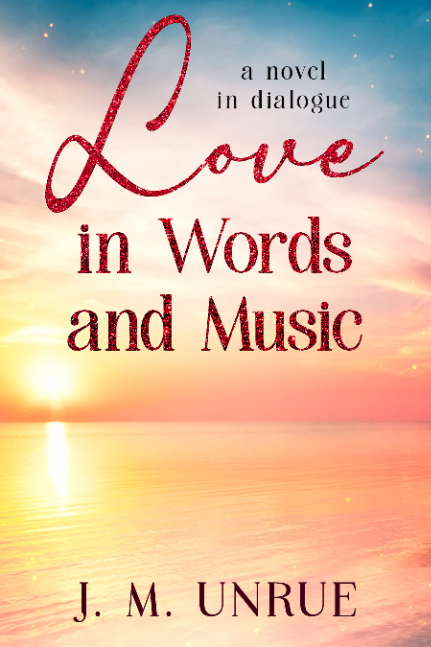
Love in Words and Music (Who I am, what I do, and oh Lord, what have I gone and done now)
I’m an old guy, a dreaded boomer, a curmudgeonly curmudgeon; someone who has seen it all and seen too much. I am a Woodstock baby, a bleeding heart, a dinosaur who doesn’t have a clue about how things should be done now. I am more wizened than wise and straddle the fine line between eccentric and obstreperous.
I hate the superficiality of social media. I hate it more that people love it. I hate it more still that people no one should know are famous for hyperbole and the superfluous use of the word epic.
I hate reality TV. My kids love The Bachelor. In my admittedly outré world, the happy couple would be forced to stay married at least ten years and work their crummy jobs while their luster faded. Should they fail, they would spend the remainder of the ten years in the same jail cell. Live and in color!
Well…
I have written eight books of fiction. No two are alike. I do not write in a single genre. I used to think this was a good thing. I have written social satire, sci-fi/fantasy, and Americana.
Despite such prescient limitations and consequent dyspepsia, I decided to write a love story, an honest-to-God, dyed-in-the-wool love story filled with hugging-and-kissing-and-houghmagandy (look it up).
I will, of course, be revealed as a sap, a quasi-whimsical romantic yearning for irretrievable youth, as opposed to the erudite elder statesman I yearn to be. So be it.
It gets even weirder.
Not only was my inclination to pen an epic tale of man-woman amour, I decided to write the whole thing in dialogue—an entire novel. Nearly 9000 lines. I recently wrote a short story collection in dialogue and had an epiphany that I was onto something—or else my Doritos came from ergot-infested corn.
I just hope Nora Roberts doesn’t puke in her oatmeal.
There you have it. Love in Words and Music. My paean to intransigence.
Ah, but what a lovely web I’ve woven, a lifelong affair filled with humor, affection, and abiding devotion. Spicy and sweet like the Honey Bar-B-Q at B-Dubs.
Ain’t life grand.
P.S. Special eBook introductory price. A buck. What a bargain! Buy it. Make an old man smile.