

#Storytelling

SC ‘n ST (Prevention Of Atrocities) Act, Or A Political Ploy of the Cynical Minds
Though for a long while, the dalits and the janjatis, aka SCs and STs, were wont to get the rough end of the social discriminatory stick, yet it was only forty years after independence that Rajiv Gandhi occasioned the SC and ST (Prevention of Atrocities) Act 1989, but not for any holistic reasons. It was but a cynical idea to stem the growing political mobilization of the dalits outside his congress umbrella that ensued the weakening of their traditional support to it from the early eighties. That was precisely because, by then, their social awakening, political empowerment and educational advancement, coupled with the country’s growing urbanization, made them assertive as a class and aggressive in their manners.
If anything, the ill-motivated SC and ST (Prevention Of Atrocities) Act that ironically came into force a year later on January 30, Gandhi’s death anniversary, in a way, gave the unscrupulous among the SC-STs the license to kill, not literally that is, just not in self-defense. It’s thus, the cynical law has squarely put the boot is the other leg, so to say, with statistical backing.
The official data pertaining to the complaints under the lopsided law and the convictions thereunder reads as under:
In 2022, while 57,569 cases were preferred by SCs, the ST count was 10,064 (put together 67,633); and the convictions during the year (including the ongoing trials from previous years) was 34.1% and 28.1% respectively that is 31.1% in all. So, some 70% of the SC-ST complaints fell by the wayside, being unproven!
Likewise, in 2023, whereas 57,766 cases pertained to SCs, the ST proportion stood at 12,959 (70,725 combined) and so also the convictions during the year (reckoning the pending cases of previous years) added up to 32.4% and 24.6% respectively, put together at 28.5%. So, again, 71.5% of the SC-ST accusations remained unsubstantiated!
Similarly, the case count for 2024 was, 55,685 of SCs and 9,961 of STs, together adding up to 65,646, a drop of 5,079. However, the conviction rates during the year(accounting for the previous years’ cases) came to 33.9% for SCs and 33.2% for STs, averaging 33.6% for both the categories. Thus, about 66.4% of the SC-ST cases did not result in conviction, although this represented an improvement in the conviction rate over the previous year.
However, as the average conviction rate in the three recent years came to 31%, it can be said without any contradiction that nearly 7 out of 10 SC-ST allegations failed to find traction in the country’s courts. What’s worse, while many of the innocent seven rotted in gaols for varied periods, for no fault of theirs, their accusers smiled all the way to their banks to collect the Sarkari ransom for their atrocities against the innocents!
All that is in the public domain but as they say, the devil is in the small print, and this is no exception.
As per the last census (2011), the SCs formed 20.14 crore and the STs, 10.42 crore of the country's total population of 121 crores, which means, they respectively made up 16.6%, and 8.6% of the populace, and together a quarter of it. So, by extrapolation, for the lack of an intervening census, in the 2022-24 period, they together would have made up some 60 crores out of the 140-crore envisaged population.
Just the same, the social dynamics are different in that out of 60 crore SC-STs, on an average, only 68,001 of them complained in each of the said three years that is a miniscule 0.113% of their ilk! What is more, given that only 31% of the SC-ST complaints led to convictions, the alleged atrocities against them would have been no more than 0.003% of their folks!! If it’s not making a caste mountain out of a social molehill, what else is this SC and ST (Prevention of Atrocities) Act? But therein lies the catch-22 of the Indian electoral politics.
Be that as it may, It is seldom appreciated that the atrocious media coverage of these odd complaints to the saturation levels has the inimical effect of othering these communities besides infusing a sense of victimhood in them. So, willy-nilly, it is as if to set up the conversion stage on the SC-ST ground for the proselytizers to poach the disgruntled into the alien faiths to nurture them in India’s Sanatan bosom.
And making it a double jeopardy for the Hindu society, as most of these complaints turn out to be false and fabricated, it’s but natural that the affected sections get further alienated from SC-STs as communities. If anything, that these politically pampered sections are being allowed to make money by dubious means completes the social schism, which is not in the national interest. But, sadly for our country, the moral cynicism has become the electoral compulsion of our political parties – they collectively alienate them from the rest even as they severally court them for political favours, for they form a quarter of the franchise.
If anything, the recent SC fiasco in IIT-Bombay has brought the devious Act’s dubious character to the fore like never before. Now, it is very much in the public domain that the morally corrupt as well as the legally savvy among SC-STs have been milking the State exchequer with profitable FIRs. Well, the notoriety the SC-ST ‘business model’ gained may ensure a plethora of new startups to the chagrin of the rest of the society. As for the political parties, it’s a case of ‘he who rides a tiger is afraid to dismount’. Maybe, VS Naipaul would have as well summed it up thus - India: A Million Miseries Now. So, it is imperative that India should apply its collective mind to nurse its ‘affected quarter’ to normal health, in the short term as well as in its long course.
So, the need of the hour is a multi-member high-power committee of eminences from the representative sections with the nationalist mindset and a pragmatic outlook, majority of them belonging to SC-ST communities, to come up with an equitable SC - ST Progression Act that is after taking the altered ground realities in the rural and the urban India into account. This is the short run, but to cover the long course, this author’s essay in the internet, Dali as Deva, à la Black is Beautiful can come in handy. Here under is an excerpt from it.
“Though the dalit tag affords political clout to its desperate classes as a whole, it had failed to buttress the self-worth of its disparate caste groups for in the Indian cultural calculus, caste is intrinsic to the social-worth of its members. Thus, it is imperative to cast a sense of caste-worth in the dalit fold in the ‘Black is Beautiful’ mould for the collective moral upliftment of its member castes. But self-belief being the by-product of the zeal to strive and not a corollary of plucking low-hanging fruits, the system of reservations has effectually given a go-by to the zeal to excel, a vital ingredient of personality development. It is thus, the doles of the state inadvertently, but effectually, came to harm the dalit cause in the long run, and what’s worse, even the genuine dalit achievements entail a diminished stature for they come under the shadows set by low performance bars, thereby precluding their due social recognition at large. The way out, while yet retaining their quotas is for the dalits to volunteer to get their reservation bar raised to touch the prevailing positions.
“What's in a name? That which we call a rose
By any other name would smell as sweet,”
said Shakespeare but what he left unsaid was
‘And alike it makes any other name as rosy.’
Likewise, had the lexicologists named the Lord in the skies as Sod and an annoying guy on planet earth as God, the former name would’ve acquired divine connotations and the latter, a taboo word. Thus, it may be appreciated that a name is ‘worth neutral’ in its essence but becomes exalted or gets diminished depending on the object it’s associated with, which, in turn, is the subject of our subjective attributions. And the same applies to the caste names that came to represent the ascending steps of the Hindu social ladder for the demeaned Mala indeed sounds better than the exulted Brahmin, the denigrated Madiga is easy on the ear than the extolled Maratha, the dismissed Chamar is more sonorous than the domineering Choudhary et al. Hence, for an Indian variant of Black is Beautiful movement, it is essential for the members of the depressed castes to begin taking pride in their respective castes and suffix their caste name to their social name with the same sense of pride as Yadavs, Reddys etc. resort to. Indeed, as Manda Krishna Madiga of Madiga Reservation Porata Samithi , so to say, has given the lead in this direction, the other castes in the dalit fold should follow suit wearing their caste worth on their sleeves.”

Semitic Faiths ‘n Sanatan Dharma: A Simple Study of Contrasts
While Christianity and Islam are hostile to the Jews but not to Judaism per se, their followers are antagonistic towards Hinduism, the Sanatana dharma of the Hindus, and for a good reason. Judaism being the father of the Abrahamic faiths, denouncing it amounts to theological self-deprecation but as Hinduism is outside their monotheistic Semitic fold, running it down runs no such risk. Besides, weakening its polytheistic hold on a billion souls would soften the path of harvesting them for their bottomless religious granaries.
Even taking their proselytising urge in good faith – the Christian belief that without faith in Jesus, people stand condemned and the Islamic relief of a final truth to guide humanity - are their religious credos any better than the Sanatana dharma that postulates ekam sadviprā bahudhā vadanti (what is right is One only, describe it wise variedly) is the question that needs to be addressed for any rational study of contrasts among these diverse dispensations. Whatever, if Hinduism is a ‘Way of Life’, as ruled by India’s apex court, then it can be said that Christianity and Islam are the by-lanes of Moses’ Semitic Path, and to comprehend the former, one has to go through the latter. However, it’s not much known that the oft-quoted "seeing is believing’ is the rational part of clergyman Thomas Fuller’s full quote, “seeing is believing, but feeling is the truth," that underscores this simple study of their contrasts.
To begin with, when the Ten Commandments were first proclaimed, Jehovah spoke audibly to Moses from Mount Sinai amid smoke, fire, thunder, and lightning, so that the assembled Israelites heard His voice. When the people saw the thunder and lightning and heard the trumpet and saw the mountain in smoke, they trembled with fear. They stayed at a distance and said to Moses, “Speak to us yourself and we will listen. But do not have God speak to us or we will die.” Then Moses said to the people, “Do not be afraid. God has come to test you, so that the fear of God will be with you to keep you from sinning.” Though this Biblical account is not up to Fuller’s seeing is believing, the Jewish belief about its happening makes them hold Jehovah’s diktats in dread. Whatever, in their God’s scheme of rewards and punishments there was no provision for recompense from sins through repentance.
But even when it comes to hearing, it’s one thing for Jesus himself to claim to be the Son of God, that he never did, and yet another for his apostles to proclaim so, what with the innovative immaculate conception, added much later after his demise. So also, Jesus’ teachings, including the Sermon on the Mount as well as his “Go specifically to the lost sheep of Israel; don't enter Gentile, Samaritan towns” during his ministry and “Go and make disciples of all nations, baptizing them and teaching them” that was after his resurrection (what did change in the meantime for his change of mind!), as cited in Mathew 10 and 28 respectively, have no evidentiary value whatsoever. It's thus, the entire Biblical legend of Jesus that is the fulcrum of the Christian faith is totally based on hearsay or improvement, as the case may be, but yet, the belief of the Christians in this regard is the gospel truth.
When it comes to the Islamic narrative, Gabriel, in incognito, met Muhammad in a cave of Mount Hira and made him say after him: “Recite in the name of thy Lord who created! He createth man from a clot of blood etc.” But as he fled from the cave in panic and was half-way down the hill, he heard a voice from above, “O Muhammad, thou art the Messenger of God, and I am Gabriel.” So, for his followers, Muhammad’s word became the basis of their devotion for him and eventually the truth of Islam. Not only that, the guidance he said he received from Allah, the Arabic avatar of Jehovah, became the ayats of the Quran to forever rule the minds of the Musalmans, for good or bad.
Just the same, it is this Semitic dogma that became its dictum; ‘the God’ revealed to their prophet the right ‘path of life’ for them to unquestioningly follow so as to stand the believers in good stead on the Day of Judgment. Besides, but for Judaism, in its religious offshoots of Christianity and Islam, the messiah is believed to be endowed with the power of intercession on behalf of the faithful on that Fateful Day. It’s thus, intended or otherwise, the prophet became the fulcrum of the faith as well as the icon of the Christian and the Islamic religious credos, relegating the otherwise haughty God to the fringes, never mind the pretence to the contrary.
It's another matter though that the Christians became antagonistic to Jews on the grouse that they were collectively responsible for Jesus’ death resulting in their persecution over the ages, culminating in the holocaust. That apart, so as to keep his flock together in the face of the Jewish mocking at his prophethood, Muhammad incited them against his detractors, the God’s chosen people. Not only that, so as to insulate his followers as well from the Christians, the acolytes of His son, he ordained them to keep away from the latter on the pretext that he (Jesus) sought to partner with Him along with Mary, his mother. Whatever, it is ironical that while the Unitary God had divided his flock into three mutually antagonistic factions, the Hindu gods and goddesses amalgamated the amorphous Sanatana societies in their dharmic fold!
So, what of the peerless Hindu phenomenon, which the monotheists dismiss as idolatrous polytheism, that too even as the crosses with Jesus and his baby self in Mary’s arms abound in the Churches, and the Hajis fall over each other to kiss Hajar al-Aswad (Black Stone) at the Kabbah! If only the uninitiated realise, what they mistake as Hindu idol worship in essence is an obeisance to the deities in their distinctive vigrahas, in which their gods and goddesses get manifested (pranaprathista) through Vedic rituals, formulated in enchanting Sanskrit mantras.
Set aside their credos, what if we measure these four on the scale of gender justice that today’s man’s world pretends to hold dear. Whereas the Semitic dispensations are dictated by the Lord God (as already seen, Christianity had added Mary and Jesus in its pantheon to the chagrin of Islam), the Sanatana dharma is governed by spouse gods galore. Not only that, while the Semitic God is stern and aloof, Vishnu, the sustainer, (the creator Brahma and the destroyer Shiva being the others in the Trinity) in his avatars on earth, mingled with the Hindu folks. Won’t that fulfil Fuller’s twin criteria of seeing is believing, and feeling is the truth. What’s more, in respect of cultural aspects, while the solemn, even sombre, Semitic events, centred around the God and his prophets, for the most part that is, can almost be counted on the fingers of one hand, the numerous Hindu festivities, with mirth and music, associated with the gods and goddesses, nearly need a calculator to account for. And for those who experience it, that’s life, the blessed one at that.
All the same, for the discerning minds, the vital difference between the Sanatana dharma and the Semitic faiths lies in the concurrent philosophical stream of the former and the abject absence of the same in the latter that the Roberto Baggio episode amply underscores. Inconsolable at letting down Italy in that FIFA world cup final with his over-the-crossbar kick in the penalty shootout against Brazil, that too as its captain, and not finding any solace in ‘Jesus shedding his blood to save sinners’, he turned to Buddhism, a spiritual offshoot of Hinduism, for good effect.
What is amusing is that Christians and Muslims, whose God is not clear about the creation of man (see the tailpiece) seek to emancipate the Hindus whose progenitors had propositioned that it’s man who created the god, in theories many, as expostulated in the Brihadāranyaka Upanishad, composed around 700 B.C.E. Here’s is an excerpt from Valerie J. Roebuck’s The Upanisads, just to cite one such.
“He knew: “I am creation, for I created all this.” So he became creation. Whoever knows this, come to be in this, his creation.”
“When they say, “Sacrifice to that one!”, “Sacrifice to that one!”- some god or other, that is his varied creation, and he himself is all the gods.
Then he created from seed whatever is moist, and that is Soma. All this is just food and the eater of food. Soma is food, and Agni is the eater of food.
This is the higher creation of Brahma, since he created gods who are better than he: and also because, being mortal, he created immortals, it is his higher creation. Whoever knows this, comes to be in this, his higher creation.”
That’s not all; the Hindus have the Bhagavad-Gita, which according to the Prussian philosopher, William von Humboldt, “is the most beautiful, perhaps the only true philosophical song existing in any known tongue.” The author’s translation in verses, Bhagvad-Gita: Treatise of Self-help, is in the public domain that can be perused as free ebook, the essence of which is –
“The Supreme Spirit through Nature causes the birth of all beings. Thus, the indwelling spirit in the beings is a divisible part of the same Indivisible Supreme Spirit. The spirit lying within beings is subject in degrees to virtue, passion and delusion, the three attributes of Nature. It should remain the human endeavor to free the indwelling spirit from these nature-induced influences. This, however, is not possible for any in a single birth, and indeed, it would take the sustained effort of lot many births for that. Thus, in the end, the soul could be tended towards that state of purity, which matches with that of the Supreme Spirit. As and when this happens, the indwelling spirit merges with the Supreme Spirit which is nothing but moksha.”
It's thus, the god is truly within man (aham brahmasmi) so also the so-called Satan, the salvation is not as simple as being or becoming a Christian or a Musalman, and the entry into heaven or the hereafter, as the case may be, is not based on the intercession of the messiah on the Day of Judgement. So, one may wake up and smell the coffee.
The Tailpiece
Clueless Creation,
A Satirical poem by the author.
Told God man In Genesis One
Him He created in form of His
Not when asked as how He did
Thought He fit in Genesis Two
To tell He used the dust for that
But to change tack after that,
So in time Muhammad told
Made Jibrail recite him
In the name of One who makes
Man on earth from clot of blood,
Failed as he then to enquire
Wherefrom He gets all that blood
And since God hath sealed His mouth
Knows not man the true roots of his.

Hindus ‘n Hebrews – Contrasting Parallels (A Case for Hindu Rashtra)
Desa-mante matti-kaadoi, desa-mante manushu-loi (nation is not (its) soil, nation is but (its) people), wrote Gurajada Appa Rao, a noted Telugu playwright and poet, and Hindus and Hebrews, aka Jews, validate him, though differently.
True, all peoples and nations have their unique attributes but few, if any, had such travails and tribulations as Hindus and Hebrews as peoples, and India and Isreal as nations, remarkably with peculiar parallels and compelling contrasts.
So to say, more than any, it is the aftermath of India’s independence and Isreal’s formation that highlights the lack of Hindu hindsight and the expansive Jewish foresight. The Hindus made their part of the sundered land, a no-man’s land, in effect a dar al-harb (abode of war) for the unobligated Musalmans that stayed back in their millions. The Hebrews, on the other hand, turned the reacquired part of their promised land into a Jewish State, despite its considerable Arab Muslim habitation. While an exhaustive study of the contrasting parallels of the Hindus and the Hebrews, indeed, India and Israel, is a tome in the waiting (maybe a joint venture), this piece is but a prelude to set its tone.
Much before Moses led the Jews to their promised land of Israel, the Devas enabled Hindus to make Bharat, their karma Bhoomi. Maybe by divine design to make them proportional to their populations, the former was shaped a tiny enclave, and the latter a subcontinent (Bharata Khanda). In Bharat, while its rishis and munis evolved the Sanatana dharma, aka Hinduism, the acharyas and gurukuls made it the seat of learning, visited by the seekers from all nations. Likewise, the chosen ‘Jewish’ people, nursed their promised land to shape its heritage, that’s narrated in the Torah, needing no repetition.
However, as if to prove that good things do not last forever, both these ancient people, in historical course, fell on bad times, first the chosen ones, and later, the blessed ones.
Being among the oldest non-proselytizing entities, they had to survive the proselytizing onslaught, from within and without: Hinduism from Buddha’s revolt, reform if you please, tumultuous Islamic assaults and the insidious Christian intrusions. Likewise, Judaism from Jesus’ rebellion, clothed in the Sermon, Muhammad’s personal animosity, crystalized as Islamic hatred, not to speak of the despicable anti-Semitism of the Christian world.
In case of Jews, first, it was the Assyrians that drove some of the them out of their land, and then the Babylonians, not only destroyed their First Temple in Jerusalem but also exiled many of them. Even their subsequent resettlement that Cyrus the Great facilitated came to naught as the Romans destroyed the Second Temple they rebuilt, and what’s worse, accentuated their diaspora, resulting in their dispersal all over. Well, that’s the price the Jews had to pay for the lack of geographic depth that still puts them on their toes in their regained State of Isreal.
As regards the Hindus, their first brush with the Islamic invasions was in the outlier Sindh that Muhammad ibn al-Qasim subdued at the dawn of the eighth century, and his brief foray thereafter into Gujarat to loot its famed Somnath shrine. However, it was three hundred years later that they had their first dish of Islmic savagery, served by ‘marauder’ Mahmud Ghazni in the sacking of the refurbished Somnath. Call it the Hindu misfortune or its cultural resilience, the cycle of Islamic destructions and Sanatana reconstructions continued, over centuries, at Somnath (five each); the in situ marvel is built, post-independence.
Whatever, had Hindus developed shatrubodh (enemy awareness) after Ghazni’s buthshikhani (idol breaking) in Somnath, maybe there would never have been even an Islamic chapter in the Indian history. Though badly mauled by Prithviraj Chauhan in the First Battle of Tarain, as Muhammad Ghori returned for the second one, a year later, had the fellow Hindu rulers joined hands with the former, the latter could not have established the Delhi Sultanate, the harbinger of India’s Islamic rule. Needless to say, it was a horrendous five-hundred-year medieval period for the Hindus thereafter that only ended after Aurangzeb’s vicious reign came to an end, and that hastened the decline and the downfall of the Mughal Empire.
However, whereas the Jewish physical toll the anti-Semitism took in the Christian world by way of pogroms, exacerbated by the holocaust of six million of them, is rightly remembered by the perpetrators, as a means of atonement of their sin; the Muslim slaughter of medieval Hindus was pushed under the carpet of collective consciousness of the world. That is even after American historian Will Durant in his book The Story of Civilization affirmed that the medieval Muslim conquest of India was "probably the bloodiest story in history", with varying genocidal estimates between eighty to hundred million dead, not to speak of the unspeakable atrocities against women. It’s as if the Hindu lives do not matter, even to the ‘civilized’ minds.
So be it, but when the Jews were forced out of their hearth and home, as some of them came to them, the Hindus welcomed them with open arms, making them feel at home ever after. Not Just that, during the World War I, fighting on the Israeli soil to liberate its Haifa from the Ottomans, scores of Hindu soldiers laid down their lives. (It goes to the credit of the Jewish people that they have not forgotten these Hindu gestures). So to say, it’s but a demonstration of their innate fighting spirit that never waned, for some of their kings were unceasing in causing military headaches to the Islamic invaders. Even in the British Raj, though the enervated princelings acquiesced to the throne, free-spirited from all sections, more so the tribals, tended to indulge in insurgencies against the colonial masters, throughout India’s length and breadth that is, for years on.
Nevertheless, whereas the Islamic invaders upset the Indian social order of yore, the British colonizers undermined the Hindu minds to their eternal detriment.
It was Lord Macaulay that established a cult of deracinated Hindus as “a class of persons Indian in blood and colour, but English in tastes, in opinions, in morals and in intellect” that rules the roost even eight decades after British had left the Indian shores for good, that was after looting whatever they could. (I too was a decedent member for long). Surely, his legacy can lay claim to prophethood. So be it, but as if to leave an inviolable mark of their colonial rule, the British partitioned India to carve out Pakistan, as a homeland for the intransigent Musalmans. It’s another matter though that having insisted that they cannot live with the Hindus, the raison d'être of partition, yet 80% of them stayed put in the 80% land allotted to the Hindus that is Bharat. But in stark contrast, the very British allotted 55% of the contested land to 33% Jews, leaving the Muslim majority with their minority share. However, owing to their religious-hate-driven military misadventure, the Muslims lost more of their meagre land as spoils of wars to Isreal. Why, the Jews know their enemy well, and it shows.
It's thus, they came to define their new State of Isreal as ‘Jewish and Democratic’, though governed by secular laws, but without a written constitution. It’s another matter that even if Moses’ Laws were enforced, the Abrahamic Arabs would have more than welcomed them but unlike Musalmans, the Jews had long since moved away from their untenable mores of yore. What is more, as if to keep their nascent nation in a wait and watch mode, they had evolved the concept of Basic Law. And for their part, the Arab Israelis, privy to the Jewish resolve to not to let anyone mess up with their promised land, not only fell in line but also fall at the front along with their Jewish mates. Whatever, the Jews, who are privy to the Islamic credos more than any, understand the consequences of a constitution that enables the Muslims to perceive Isreal as a dar-al-harb for what it is, the abode of war for the Musalmans. Hence, "the realization of the right to national self-determination in the State of Israel is exclusive to the Jewish People” formed the Basic Law, adopted by the Knesset in 2018, true, 2018.
Juxtaposing it, the Hindus gave themselves a hotchpotch constitution that declared India as a sovereign democratic republic, however, governed by communal laws in civil matters, mostly Sharia-compliant at that! That’s not all, it granted freedom of religious propagation (read Christian and Muslim proselytization) that too in the immediate wake of the country’s partition on religious lines. What a memory! So, in other words, it’s nothing but an instrument of Hindu hara-kiri; yet that they think no end of it speaks for their intellectual bankruptcy. Think that their progenitors wore Upanishadic wisdom on their sleeves and Kautilya gave them Artha Sastra that, anyway, has been collecting dust for long!
So, by design or by default, the Indian constitution was designed for the unfettered growth of the Semitic faiths of Christianity and Islam in India and their adherents too have not been found wanting in making the best of its provisions that serve as their proselyting tools. Well, at this rate, given their secular foolhardy, the Hindus, over time, by way of curing the Muslim headache they themselves bought for Bharat, could be conceding Islamic States in Assam, Bengal and Keralam, and part with part of their land in other parts of it as Sharia-compliant Autonomous Muslim Areas, a could be Islamic innovation. But would the Christians lag behind in demanding their share of the Hindu spoils. Why should they, as they already have most of the Seven Sisters in the Northeast under their Christian belt.
If that were not to be Bharat’s scary future, how the common Hindu-Hebrew fate came to be forked into differing India, Israeli destinies thus, is the subject that should engage the former for timely redressal.
While the unquestioning faith in Jehovah keeps the Jews united in the Judaic fold, the unshakeable belief in their promised destiny makes them persevere no end, and that at once affords them the feeling of oneness and a sense of purpose. It’s thus, in spite of the unceasing pogroms against them all over Europe, they kept intact their hope of returning to their promised land. Thus, it was this resolve to make it a reality that gave rise to Zionism, a political and nationalist movement with the goal of establishing and supporting a Jewish national homeland in Palestine. Indeed, Israel came into being, nine months after India became independent, and the rest is history - of the Jewish resolve to live for and die for every inch of their hard-fought land, and of the Hindu ineffectiveness in not retaining even India’s unfair share, resulting in the further loss of over 50k sqkm land to its enemies, not counting Gilgit-Baltistan.
However, for the Hindus, the Sanatana ethos of ekam sadviprā bahudhā vadanti (what is right is One only, describe it wise variedly) is no sticking glue to hang on regardless. If anything, the pristine varnashrama dharma that in the later-days degenerated into the caste conundrum, has come to irrevocably divide the Hindu socially, and became detrimental to it in every which way. Besides, Bharat’s varied regionality with distinctive languages and sub-cultures, in spite of its Hindu homogeneity, deprives it of an emotional coherence, rendering it into a sort of nation of nations. Thus, unlike the Hebrews, the Hindus have no like passion for their karma Bhoomi; maybe, its subcontinental vastness also makes it psychologically unwieldy for physical possessiveness.
Be that as it may, if the fate of a nation is the state of its politics, the mettle of its leaders is the spirit of its people. So, it was no coincidence that Ben-Gurion came to lead the Zionist insurgency against the British in Mandatory Palestine and Gandhi became the fountainhead of the Hindu passivity, at home with peaceful protests, dubbed satyagraha (just anger). That was despite Netaji Bose revealing the revolutionary path to oust the British. Not just that; Ben-Gurion, for over thirteen years, helped the nascent Israel acquire the character of the Jewish State, but the self-serving Gandhi thrust Nehru, his weakness, upon India, brushing aside Patel the capable, to govern its destiny. And what Nehru did for nearly seventeen years, speaks as much about him as the Hindus, for they rooted for him with their votes, in poll after poll. Just to illustrate: having shunned Israel’s hand, running after Islamic grooms, he suffered no qualms in making India its mistress, when in Chinese distress. It’s a shame that his legacy became India’s foreign policy until Modi and Bibi accorded it legitimacy.
So, what now for Hindus, and India?
Before all else, they should learn to ignore the western validations of them and their desi endeavours.
“No country but India and no religion but Hinduism could have given birth to a Gandhi,” so proclaimed London Times, the day after his death. Then, “Oh, India, dare to be worthy of your Gandhi,” pontified Pearl S. Buck, adding that he said, “Resist to the very end, but without violence. Of violence the world is sick.” Really! It’s rich, given her own country’s domestic history, not to speak of its warmongering foreign policy. Obviously, her advice was not meant for fellow Americans. So, it’s about time Hindus realized that the western praises of Gandhi are but ruses to keep the Hindu minds in pacifist mode even as they clamour for Dismantling Global Hindutva!
Likewise, the left-libs that romanticise Che Guevara, confine Netaji Bose on the margins of revolution, and with a purpose that our Macaulay-putra fail to grasp. Why, it’s not hard to see that Satyajit Ray is celebrated in the racist west as much for his cinematic worth as for his popularization of Hindu poverty. Oh, the Booker books tell their own story. So also, the Pulitzer Prizes, Magsaysay Awards and such.
The one thing Hindus should learn from Jews is to do what is right for their nation regardless of what others think of them, which is their real strength.
But in the Hindu majority ‘secular’ India, supposedly Bharat, the shoe is on the Muslim foot, notwithstanding the left-Islamist contra propaganda that anyway the living Hindu experience belies. If anything, Hindus prove that the peculiar strength of Islam is the indifference of those it seeks to destroy. Just the same, as the purpose of this piece is not about debunking the falsities of the detractors but to alert the indifferent Hindus, there is no detailing the same that is anyway evident to the discerning.
However, it is seldom appreciated by the Hindus (for the lack of shatrubodh) that the Muslim religious conditioning lies in nursing the twin aspirations of ‘all religion is for Allah’ and all the world is for Islam (dar al-Islam). Besides, it’s an article of faith for them in that wherever they are in minority, dae al-harb, they should strive to make it dar al-Islam, Ghazwa-e-Hind in India’s case. Given that the Indian constitution has enough and more to nurse their Islamic hope and provides ample scope besides, for fulfilling their dar al-Islam aspirations, they have no reason not to be religiously aggressive in pursuit of the same. So, the remedy for India’s Muslim problem lies in removing that Islamic hope from its midst, like Israel did in its State, by turning Bharat into a Hindu Rashtra.
Anyway, for the doubters, by way of an analogy, what Art 370 was doing in Jammu & Kashmir was effectively nursing the Muslim hopes of separation from India. But once it was revoked, it dawned on the Kashmiris that with it gone was the scope for their azadi, for all times to come. And that altered the Muslim behavioural pattern, if not forged an emotional bond with Bharat, that, anyway, Islam would never allow to happen. But what really matters from the national perspective is that they have started behaving themselves, more or less that is. Thus, wiser by the Kashmiri experience, if Bharat were to declare itself as a Hindu Rashtra, ruled by raja dharma, then that would usher in Rama Rajya, a synonym for fairness.
A Providential Encounter
This is a poignant story about the villainy of vanity exemplified by the lives of a middle-aged woman and a grey-haired man, involved in a providential encounter.
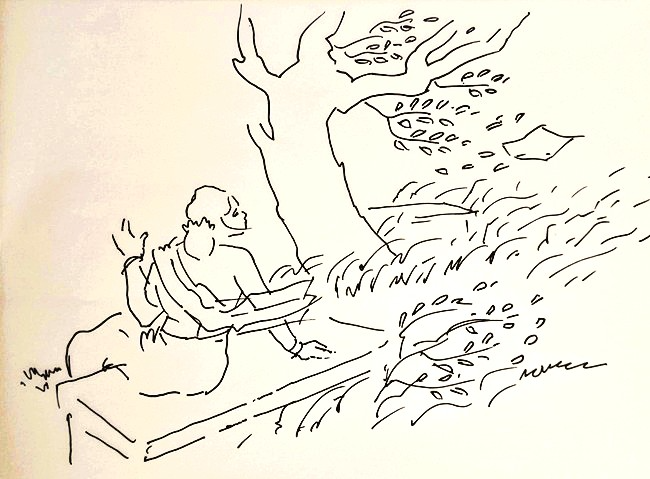
Stepping into a sprawling park nearby, Latha headed towards a lonely bench to sit on the horns of a dilemma. Soon, as if they got wind of her morose mood, the monsoon clouds began to engulf the setting sun to sync the environs with her gloomy demeanor. But yet, unmindful of her bereft state, the charm of her middle-aged form enlivened the surroundings, emanated by the eyes of the beholders. If anything, enhancing that sense of espial, the romantics among them envisioned her maiden frame entwining her man as an ever-eager creeper. All the same, lost in her thoughts, she was oblivious to the goings on around her enchanting presence.
However, as her mind began muddying her thoughts, she grasped the note she had tucked in her blouse, closer to her heart, and hardly had she pulled it out to review her plan of revenge, a gust of wind snatched it from her hands. Nonplussed though, she readily recovered her wits to pursue that ariel piece for its retrieval before it landed in alien hands. So, not losing sight of that self-incriminating thing, she ran with the wind till that dropped into a secluded portion of the park. Then, holding her breath for a while, she hurried her way into that nuke but upon seeing a semi-gray-haired man engrossed in going through her outpour, missing a heart a beat, she stopped in her tracks. However, gathering her wits in time and having weighed her options - reclamation or abandonment – she headed towards him.
“Excuse me, it’s mine,” she said embarrassedly pointing to her note that he began to pocket.
“How am I to know that it’s yours?” he said questioningly.
“You know that it’s not yours either,” she said argumentatively.
“True, but what if I were to put this damned idea into the wrong head,” he said without taking his eyes off her.
“I’m Latha,” she said lowering her face
“Have it,” he said handing it over to her.
“Thank you,” she said with a sigh of relief.
‘It’s Okay,’ he said thoughtfully.
‘Oh, what would he be thinking about me?’ she began to envision, leaving him hurriedly. ‘Whatever it is, what difference does that make for me? But isn’t something more in his stare than mere desire? Whatever it is, probably that could have held him back from befriending me. Could it be contempt for my character? So be it, but how do I care. Oh, no, he’s privy to my plan and could imperil me when the chips are down. What if I seduce him into becoming my accomplice? But looks like he’s too level-headed to get into a vulnerable position to compromise himself. So what, I’ve nothing more to lose by way of trying. Even otherwise, his semi-grey eminence is worth courting.’
Looking back over her shoulders and seeing his stare, she walked towards him.
“Sorry, I forgot to ask your name,” she said upon reaching him.
“Is it the cause of your comeback?” he said with a smirk on his face.
“What else do you think it could be?” she said making it evens stevens.
“So, you’re smart as well,” he said wearing his admiration for her on his sleeve.
“As well as what?” she said teasingly, pleased with herself.
“I’m Mohan,” he said invitingly.
“Thank you, Mr. Mohan, but that’s no reply for my query,” she said coyly.
“Well, but there’s no prelude for that?” he said expectantly.
“May I sit, as a prelude?” she said, slipping out of her slippers.
“Oh, I’m sorry for being unchivalrous,” he said, standing up.
“Maybe you’re overawed,” she said coquettishly as they sat together.
“Looks like you’re unnerved,” he said for a repartee.
“What rubbish?” she said mawkishly.
“Never mind, I’m no blackmailer,’ he said sincerely.
“Thank you for not making it worse for me,” she said suggestively.
“Now, you’re free to call it quits,” he said tentatively.
“But I’m not done yet,” she said seductively.
“With what?” he said anticipatively.
“I’ve another side of my ‘scandal sheet’ to show you,” she said enticingly.
“I suppose it’s a fair offer,” he said assuming an attentive posture.
She was barely thirty when her husband, a Major in the Indian Army, laid down his life in a counter-insurgency operation in Kashmir. So as to wholly devote herself to his ageing parents, to whom he was the only child, she gave up her schoolteacher job, and came to lead her life with them in the shadows of the martyr’s memories. However, after their death, in quick succession, to overcome her ennui, she took up teaching all again. That was five years back, when she turned forty. Soon, as it happened, she was drawn to a twenty something colleague that set up their passionate liaison in which she was on cloud nine all again. But ever since her lover, that was a week back, broke with her to get engaged with a young woman, she has been left gasping in the pit of despair.
“Why spare your boyfriend and spoil his betrothed?” he said in a manner of knowing the answer.
“I don’t want to lose him to her,” she said resolutely.
“Suppose you make it a perfect murder that’s rare any way, would it insulate him from another dame?” he said questioningly.
“I didn’t delve into all that,” she said confusedly.
“It’s the villainy vanity that failed you to figure it out,” he said thoughtfully.
“What do you mean by that?” she said in half-protest.
“If it were a case of love turned into hatred, you would’ve wanted to see his end but as he snubbed you for her sake, I suppose it’s your vanity that makes her the target of its hurt,” he said in a helpful tone.
“It’s possible,” she said after some contemplation.
“You’re sensible,” he said in a complimentary manner.
“But still your counselling helps,” she said invitingly.
“I’m not a psychologist,” he said evasively.
“But you seem so,” she said, and added, “if you care to tell me about yourself, I’m all eager to listen.”
“Evan as deeper thoughts tend to evade the radars of close relationships, how strange it is that our apprenticeship of acquaintance should begin with the exposure of our dark secrets,” he began stoically. “To begin with, though bright, being poor, I was down to earth but when a rich man’s attractive daughter married me for love, so to say, my ego got energized. But it’s her wifely devotion that gave birth to my manly vanity that is besides our smart son, who, in time, became a decorated cop. When we were in search of a suitable bride for him, the Naxals managed to get their nemesis to plunge us into gloom.”
“Oh, what a fateful coincidence!” she exclaimed, interrupting him.
“But as you would see, the effects of it varied widely,” he said as he resumed summarising his life. “Lo, living in my vanity world by then, in my son’s supreme sacrifice, I came to see my service to the nation as his father, furthering my illusion. Sadly, as my wife widowed me five years back, though I could overcome her loss in time, devoid of her adoration, I became a fish out of water. Not for long though as my hand of vanity led me to a poor lass of quality, whom, with my wealthy attentions, I enticed into marrying me. That was three years back, and ever since, people mistook her for my daughter, bolstering my vanity no end.”
At that, he paused even as she was listening wide-eyed.
“It’s thus, given my situation, I failed to fathom her feelings,” he began saying. “It’s only the other day that she made me privy to the villainy of my vanity that has been stymieing her, not so much in my bed but in her life, as she put it. Instead of wooing her with my wealth, had I won her with my affection, she might’ve fallen in love with me, never mind my grey hair. As the familiarity of the well-heeled living began waning the thrill of it, for long, she was yearning for a normal life with a man she loved. Asserting that she could bear it no more, she pleaded for separation from me without any encumbrance, and seeing her plight, as I had no heart to refuse, it didn’t take me long to accede to her request. Whatever, as a recompense, I even offered her enough money to last her life-time that she has flatly refused. So, after she moved out of my place this evening, as a prelude to divorce, I came here to take a serene look at the falsity of my vanity, and you know what followed.”
“Oh, how remarkable,” she said in awe and added, “you make me seem so small.”
“Why spoil me by stoking my vanity,” he said half in jest.
“Well, I will be failing myself if I don’t confess that I came back to you with the idea of seducing you into becoming my partner in crime,” she said shamefacedly.
“Blame it on the villainy of vanity,” he said patting her shoulder assuredly.
At that, pulling out the damning thing from her blouse and having shredded it into tiny pieces, she blew them away from her palm as if driving out vanity from her life itself.
“Will you let me be your life partner?” she said turning to him with an appealing look.
“See, it’s not wise to act on the rebound,” he said sounding caution.
“But isn’t it stupid to lose track of our providential encounter?” she said spiritedly.
“Do you think I’m a stupid?” he said suggestively.
“I would let the time decide,” she said mischievously.
“Who knows what life has in store for us,” he said philosophically.
“Isn’t it said that If hopes were dupes, fears may be liars,” she said in hope, extending her hand.
Then, as if not wanting to lose track of each other, hand in hand, they headed towards the exit.

How a Simple Image Becomes a Strong Book Cover
How a Simple Image Becomes a Strong Book Cover
Chuck Morgan, Crime Fiction Author
A good cover works because every part, composition, color, typography, and detail, pulls in the same direction. The goal is not to explain your plot but to suggest the experience the reader will have. A thriller should feel tense. A romance should feel warm. A fantasy should feel epic. Readers make these judgments in seconds, so clarity matters more than complexity.
Think of a cover as a billboard. It must be readable from afar, recognizable at thumbnail size, and emotionally accurate at full size. When you choose one powerful image, a simple color palette, and clear type, you give readers an immediate sense of what your book is about.
Telling a Story with One Picture
Before a reader opens your book, the cover is already shaping their expectations. You can guide that reaction with a few beginner-friendly principles:
• Choose one or two main things to look at. Too many objects create confusion.
• Use the rule of thirds. Place your primary object slightly off-center to create natural balance.
• Limit your colors. Two dominant colors and one accent color keep the mood focused.
These choices act like the first sentence of your story. A single rusty key on peeling wallpaper suggests secrets and inheritance. A lone figure on a rain-soaked street suggests danger, isolation, or movement. You don’t need to spell out the plot—just give readers the emotional doorway.
Choosing Your Focal Image: Symbol or Scene
Most covers rely on either a symbol or a scene, and each approach has strengths.
• Symbol covers use one object; a locket, a compass, a ring, a knife.
They’re bold, simple, and easy to recognize even at thumbnail size. Symbols work well when your story has a central object or theme.
• Scene covers show a place; a train platform, a kitchen, a forest, a street.
They give readers a sense of setting and atmosphere. Scenes work well when the world of your story is a major draw.
Whichever you choose, keep 20–30% of the cover empty so your title has room to breathe. And stick to one or two focal points so the design stays clear when reduced to a small image online.
Using Small Details to Suggest Plot and Character
Tiny, well-chosen details can hint at backstory, conflict, or stakes with no text. These “micro-clues” reward readers who look closer:
• A smudged passport suggests travel, identity, or escape.
• A burned sleeve hints at danger or violence.
• A wedding ring tucked in a pocket suggests betrayal or secrecy.
• A rotary phone signals a specific time period.
Use only three to five of these details. Too many will clutter the design. Arrange them so that the biggest shape still reads clearly at thumbnail size. Shrink your cover to 25–30% or view it on your phone to make sure the primary image still pops.
Guiding the Reader’s Eye with Composition
Readers scan covers in predictable patterns, usually a quick Z or F shape starting at the top. You can use this to your advantage:
• Place your title or primary image near a third-line intersection.
• Use one strong focal point to anchor the design.
• Keep a simple hierarchy: title first, image second, author name third.
This structure helps your cover stay readable at any size. Even at 60–120 pixels wide, the title should be clear and the primary image recognizable.
Color and Texture That Set the Mood
Color is emotional shorthand. You can signal genre and tone instantly with the right palette:
• Dark blues and teals feel serious, moody, or literary.
• Bright reds or neon greens feel urgent, dangerous, or futuristic.
• Soft pastels feel romantic, gentle, or youthful.
Limit yourself to three primary colors. Make sure the title contrasts strongly with the background so it’s readable in thumbnails.
Texture also plays a role:
• Soft-touch matte feels intimate and warm. Good for memoirs or emotional fiction.
• Gloss or spot UV adds shine and drama. Great for thrillers.
• Foil stamping adds a premium or historical feel.
You don’t need to memorize technical specs. Just match the finish to the emotional tone of your story.
Typography as the Book’s Voice
Fonts carry personality just like characters do. Choosing the right one helps readers understand your book’s tone:
• Serif fonts feel classic, literary, or historical.
• Slab serifs feel gritty and strong—great for crime or Westerns.
• Geometric sans-serifs feel modern and clean.
• Script fonts feel romantic or personal.
Pick one main font and one supporting font. Make sure the title is large enough to read at thumbnail size. Use spacing, scale, and color to make the typography feel like part of the image, not just a label stuck on top.
Placing the Title for Maximum Impact
Your title should feel integrated with the art. You can:
• Center it for bold, simple impact.
• Align it with a strong line in the image.
• Overlap it slightly with the primary object to create depth.
Aim for the title to take up 10–25% of the cover height. This keeps it readable without overwhelming the art. Remember that the spine also matters. Its width changes with page count, so your type must adapt.
Matching Your Cover to Your Genre and Market
Readers rely on visual cues to know what kind of book they’re looking at. Each genre has its own “language”:
• Romance uses soft colors, warm lighting, and faces.
• Thrillers use dark backgrounds, sharp type, and motion.
• Fantasy uses symbols, landscapes, and ornate type.
• Crime often uses bold type, gritty textures, and high contrast.
If you’re writing a series, keep your covers consistent:
• Use the same font family.
• Keep a similar color palette.
• Repeat a visual motif on each cover.
This helps readers recognize your books instantly on a shelf or online.
Making Sure Your Cover Works Everywhere
A cover must succeed in two places:
• On a physical shelf, where readers see it from several feet away.
• As a tiny thumbnail, where readers see it at 60–120 pixels wide.
To test your design:
• Shrink it to phone size.
• Make sure the title is still readable.
• Make sure the primary image is still recognizable.
• Remove unnecessary textures. They disappear at small sizes, anyway.
Simple designs almost always perform better.
Basic Print and Digital Requirements
You don’t need to be a production expert, but a few basics help:
• Paperbacks need extra space around the edges (bleed).
• Hardcovers need room for flaps.
• Digital covers look best at a 1.6:1 ratio (tall and narrow).
• Print uses CMYK, screens use RGB, so colors may shift slightly.
These are normal parts of the process, and most design tools handle them automatically once you know what to look for.
Bringing It All Together
A great book cover isn’t about fancy effects or complicated art. It’s about clarity, emotion, and storytelling. When you combine:
• One strong focal image
• A simple, balanced composition
• A limited color palette
• Clear, expressive typography
• A few meaningful details
• Genre-appropriate cues
…you create a cover that feels professional, communicates instantly, and invites readers into your story.
Covers are promises. When yours is clear and emotionally accurate, readers know exactly what kind of journey you’re offering, and they’re far more likely to pick up the book.
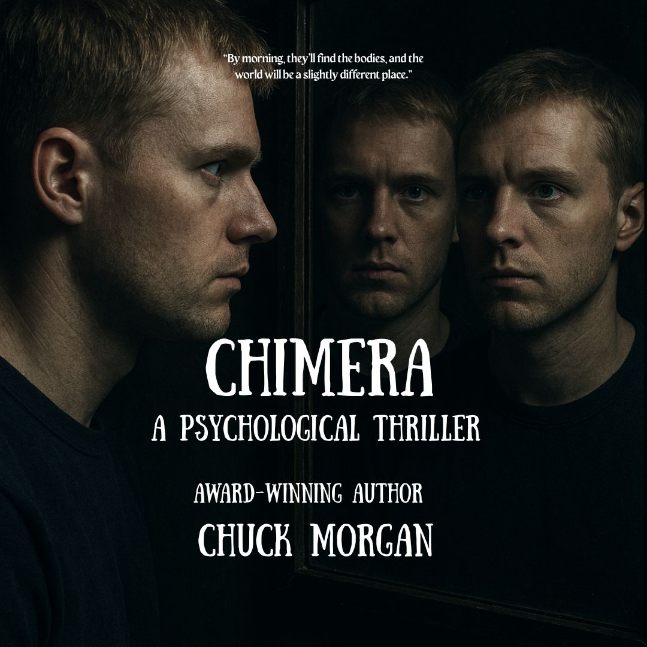
NEW PSYCHOLOGICAL THRILLER BY AWARD-WINNING AUTHOR CHUCK MORGAN
CHIMERA DELIVERS A CHILLING PSYCHOLOGICAL THRILLER WHERE IDENTITY
FORENSICS AND MURDER SPIRAL INTO ONE. NEW RELEASE EBOOK PRICE ONLY…$0.99 FOR A LIMITED TIME.
A tense and cerebral novel by award-winning Chuck Morgan blurs the line between hunter and hunted inside a meticulously staged nightmare.
New York, NY, February 26, 2026 — Author Chuck Morgan unleashes a gripping psychological thriller with Chimera, a Kindle edition that fuses forensic precision with unsettling suspense. The novel draws readers into a cold case resurgence where ritualistic murder scenes reveal chilling order rather than chaos and where the most dangerous question is not who the killer is but what the killer is becoming.
Chimera follows FBI Special Agent Dirk Trainor as a decades-old spiral of violence resurfaces with terrifying clarity. Each crime scene is staged with meticulous design, marked by a spiral cross signature that grows more refined with every kill.
As the investigation deepens, the evidence points inward. Adoption records surface. Fugue like
visions haunt Trainor. A DNA result fractures everything he believes about himself and his past. Alongside his partner Jill Quarters, Trainor races to stop the next murder while confronting the possibility that identity itself may be the missing link binding the crimes together.
Morgan crafts a narrative that balances procedural accuracy with psychological depth. The novel explores how self-control separates precision from chaos and how obsession can masquerade as order. Through layered revelations, Chimera examines the fragility of identity and the terrifying implications of inherited violence and hidden bloodlines.
What sets Chimera apart is its fusion of forensic detail and philosophical unease. The spiral is not merely a signature but a symbol of control ritual, and descent. Each chapter tightens the pattern, pulling readers deeper into a labyrinth where geometry becomes language and murder becomes message. Morgan’s prose is sharp, controlled, and relentless, mirroring the killer’s own meticulous discipline.
The inspiration behind Chimera stems from the idea that the most unsettling crimes are not driven by
impulse but by design. Morgan challenges readers to consider whether monsters are born, constructed, or uncovered through truth.
The book is now available. Secure your copy here: https://www.amazon.com/dp/B0GG5TXDSH
For interview requests, or additional information, please contact:
Chuck Morgan
Email: cmorganwriter@hotmail.com

THE PHILOSOPHY OF FYODOR DOSTOEVSKY - ALEXIS KARPOUZOS
Fyodor Dostoevsky’s literary corpus presents a fertile ground for interdisciplinary analysis, particularly at the intersection of existential philosophy and psychoanalysis. His novels grapple with profound questions of human nature, morality, freedom, guilt, and redemption, while simultaneously portraying intense psychological landscapes. This academic issue centers on examining the internal conflicts of Dostoevsky’s characters through the lenses of philosophical existentialism—particularly the thought of Søren Kierkegaard and Friedrich Nietzsche—and psychoanalytic theory, drawing from Sigmund Freud, Jacques Lacan, and Carl Jung. At the core of Dostoevsky’s narratives lies a tension between rationalism and irrationalism, faith and nihilism, individuality and collective identity. Characters such as Raskolnikov (Crime and Punishment), Ivan Karamazov (The Brothers Karamazov), and the Underground Man (Notes from Underground) serve as case studies for this examination. These figures embody psychological fragmentation and the struggle for meaning in a world perceived as morally ambiguous or even absurd.
The issue investigates how Dostoevsky anticipates psychoanalytic concepts such as the unconscious, repression, the death drive, and the divided self. It also explores how his theological and moral concerns engage with existential themes of despair, freedom, and authenticity. The analysis asks: How does Dostoevsky dramatize the philosophical problem of evil through psychological interiority? In what ways do his characters' inner conflicts reflect broader metaphysical anxieties about the human condition? By engaging with both philosophical discourse and psychoanalytic frameworks, this issue aims to contribute to a deeper understanding of Dostoevsky’s unique synthesis of narrative, psychology, and spiritual inquiry.
EXISTENTIAL DILEMMAS — FREEDOM, CHOICE, AND THE BURDEN OF SELFHOOD
Dostoevsky’s characters are essentially case studies in existential dilemmas, and he uses their inner turmoil to dramatize themes like freedom, moral responsibility, and the fragmented self. Here’s a breakdown of how these themes manifest in some of his key characters:
1. Freedom as Both Gift and Curse
Dostoevsky’s characters often confront absolute freedom—but rather than liberating them, it frequently becomes a source of anxiety, confusion, and moral crisis.
- The Underground Man (Notes from Underground) is perhaps the clearest example. He rebels against determinism and rational egoism, insisting that man will act irrationally just to prove he is free. He says, “What man wants is simply independent choice, whatever that independence may cost and wherever it may lead.” This paradox—freedom as self-sabotage—illustrates Dostoevsky’s challenge to Enlightenment rationalism and shows how unmoored freedom can become destructive.
- Raskolnikov (Crime and Punishment) uses freedom to test the Nietzschean idea of the “extraordinary man, ” believing he can transgress moral boundaries for a higher purpose. However, his intellectual freedom brings him unbearable psychological guilt. The burden of having to justify his freedom morally and spiritually becomes his torment.
2. The Anxiety of Choice and Moral Responsibility
Freedom, for Dostoevsky, is inseparable from choice, and every choice carries moral and existential weight. His characters are often paralyzed by the responsibility of choosing, especially in a world where moral foundations are unclear or contested.
- In The Brothers Karamazov, Ivan Karamazov intellectualizes the problem of evil and chooses to reject God’s world on moral grounds. But this “choice” becomes a torment, as his decision not to believe leaves him morally adrift. His nihilism is mirrored in the actions of Smerdyakov, showing that ideas and choices have real, often catastrophic consequences.
- Dmitri Karamazov also illustrates the anxiety of choice. His impulsive decisions reflect a man torn between sensual indulgence and spiritual longing. His choices are expressions of an uncentered self, deeply aware of his moral failures.
3. The Burden of Selfhood
Dostoevsky’s characters often struggle under the burden of self-consciousness, a theme he explores long before it became central to existentialist thought. His characters are not simply individuals—they are divided individuals, plagued by internal contradictions.
- The Underground Man again exemplifies this. He cannot act decisively because he is consumed by the need to understand and second-guess himself. His hyper-consciousness paralyzes him. “To be too aware is a sickness, ” he says—a core existential insight.
- In The Double, Golyadkin is literally confronted with another version of himself, dramatizing the inner fragmentation of identity. This prefigures what Sartre would later call “bad faith”—the inability to unify one’s self-concept under freedom.
- Stavrogin in Demons embodies the self completely detached from moral law. His philosophical detachment and emotional apathy turn freedom into a horrifying vacuum—a portrait of existential despair when freedom is stripped of all ethical or spiritual grounding.
QUILT, SUFFERING AND CONFESSION
Dostoevsky’s portrayal of guilt, suffering, and confession often prefigures psychoanalytic concepts, particularly those of Freud and Lacan, but he diverges in crucial ways—especially because he frames suffering not merely as a symptom of repression, but as a potential path to spiritual redemption. Let’s break this down by theme and theoretical lens.
1. Guilt: The Inner Tribunal
Freudian Alignment:
Freud viewed guilt as a product of the superego, the internalized authority figure that punishes the ego for transgressions—even imagined ones. In Crime and Punishment, Raskolnikov’s psychological breakdown exemplifies this idea. Even before he is caught, he experiences overwhelming guilt, hallucinations, and paranoia. His punishment begins long before the legal consequences, which mirrors Freud’s idea that guilt is internal, unconscious, and often irrational.
Freud also argued in Dostoevsky and Parricide that Dostoevsky’s obsession with father-figures and guilt reveals repressed Oedipal desires. For example, the parricide in The Brothers Karamazov becomes a literal enactment of Freud’s theory, with Ivan’s intellectual rebellion facilitating his father’s murder—a fantasy Freud believed Dostoevsky both indulged and punished himself for.
Lacanian Alignment:
Lacan would interpret guilt not merely as moral, but structural—arising from the subject’s alienation within language (the Symbolic order). Characters like Ivan Karamazov experience a guilt that isn’t just psychological but metaphysical: a guilt for existing in a broken moral universe, for being complicit in the world’s suffering. This aligns with Lacan’s idea that guilt can arise from being out of sync with the Name-of-the-Father (symbolic law).
2. Suffering: Neurosis or Redemption?
Freudian Divergence:
Freud saw suffering largely as a pathological symptom—something to be analyzed, explained, and ideally cured. In contrast, Dostoevsky treats suffering as a potentially redemptive force. For example:
- Raskolnikov’s path to moral and spiritual clarity is only possible through suffering.
- Sonya, his spiritual guide, accepts suffering not passively but with sacred dignity—transforming it into a moral act.
This Christian existential view diverges sharply from Freud’s secular, medicalized model of psychic suffering.
Lacanian Nuance:
Lacan’s notion of jouissance—the strange, self-destructive pleasure in pain or transgression—offers a closer match. Dostoevsky’s characters often cling to their suffering, even when it’s irrational or destructive (e.g., the Underground Man’s masochism). This aligns with Lacan’s idea that the subject is driven not by desire for happiness but by an enjoyment that exceeds the pleasure principle—something we see clearly in the perversity of Dostoevsky’s anti-heroes.
3. Confession: Talking Cure or Spiritual Catharsis?
Freudian Perspective:
Freud’s “talking cure” was based on the premise that bringing unconscious guilt into consciousness through verbal confession could alleviate neurotic symptoms. Dostoevsky uses confession—especially in Crime and Punishment—as a similar cathartic mechanism. Raskolnikov’s eventual confession is not only moral but deeply psychological, leading to the release of his internal torment.
Divergence:
However, Dostoevsky frames confession in spiritual terms. It is not just self-revelation but submission to divine grace. For Freud, confession clears repression; for Dostoevsky, it clears the soul. In The Brothers Karamazov, Alyosha’s idea of universal responsibility takes this even further—implying that confession is not just individual but communal and metaphysical.
Lacanian Take:
Lacan complicates confession by emphasizing that the subject is split and never fully knowable to itself. Confession, then, is not necessarily liberating—it may even reinforce alienation. Dostoevsky’s use of unreliable narrators (e.g., the Underground Man) and fractured interiority aligns with this. These characters confess compulsively, yet their speech often deepens their alienation, reflecting Lacan’s skepticism about the transparent subject.
CHRISTIAN EXISTENTIALISM AND THE NIHILISM OF NIETZSCHE
His Christian existentialism is in deep, often implicit, dialogue with the nihilism Nietzsche would later articulate. In fact, Nietzsche himself said, “Dostoevsky is the only psychologist from whom I have anything to learn.” Let’s break down the contrast through a few core themes that emerge in Dostoevsky’s philosophical dialogues:
1. Faith vs. Meaninglessness
Dostoevsky (Christian Existentialism):
Dostoevsky believes that in the absence of God, life loses all moral and metaphysical grounding. His characters often reach the brink of nihilistic despair, only to be offered (though not always accept) the possibility of salvation through faith, love, and humility. In The Brothers Karamazov, Alyosha represents this redemptive Christian existentialism—rooted in suffering, but ultimately affirming spiritual meaning.
Nietzsche (Nihilism):
Nietzsche, by contrast, sees the “death of God” not as a cause for despair, but as a challenge to create new values. He argues that traditional morality, rooted in Christian meekness and guilt, is a slave morality that denies life. Nietzsche embraces the abyss and urges us to become Übermenschen (overmen) who impose meaning on a godless universe.
Contrast: Where Dostoevsky sees the loss of God as a moral and existential catastrophe, Nietzsche sees it as an opportunity for liberation.
2. Freedom and Responsibility
Dostoevsky:
For Dostoevsky, freedom is unbearable without God. In The Grand Inquisitor, Ivan Karamazov’s parable criticizes Christ for giving humans the “burden of freedom.” He suggests that most people don’t want freedom; they want comfort, certainty, and authority. Dostoevsky’s Christian existentialism sees freedom as a gift only if it is grounded in love and spiritual truth.
Nietzsche:
Nietzsche’s freedom is radically autonomous. He calls for the revaluation of all values, even if it leads to existential vertigo. Freedom means taking full responsibility for the meaning you create—even if that leads to suffering or isolation.
Contrast: Dostoevsky sees freedom as dangerous without transcendence; Nietzsche sees transcendence as an illusion that limits freedom.
3. Suffering and Redemption
Dostoevsky:
Suffering is central to Dostoevsky’s theology. He believed that through suffering, one confronts the truth of the human condition—and potentially reaches redemption. Characters like Sonya, Prince Myshkin, and Alyosha demonstrate that compassion born from suffering can lead to grace and spiritual insight.
Nietzsche:
Nietzsche also values suffering—but as a test of strength. For him, suffering is not redemptive through divine grace, but transformative through personal will. He says, “What does not kill me makes me stronger.” His suffering is aesthetic, heroic, and life-affirming—not moral or redemptive.
Contrast: Dostoevsky’s suffering is redemptive in a Christ-like way; Nietzsche’s is existentially empowering, without moral judgment.
4. Dialogical Expression of These Ideas
Dostoevsky doesn’t write philosophy in treatises—he writes it through characters in dialogue and conflict.
- Ivan Karamazov is the closest Dostoevsky gets to a Nietzschean: an atheist, a rationalist, morally outraged at divine injustice. His “Rebellion” chapter could’ve come straight from Nietzsche—yet Ivan is tortured by his conclusions.
- The Grand Inquisitor, another of Ivan’s creations, argues that humanity cannot handle freedom and must be ruled by lies for their own good—a deeply Nietzschean, anti-Christian position.
- Alyosha, in contrast, lives out the possibility that faith, humility, and love are the only sustainable answers to the existential abyss.
Result: The tension in Dostoevsky’s work is not that Nietzschean nihilism is rejected outright—it is inhabited, explored, and found wanting.
DOSTOEVSKY’S TECHNIQUES OF DOUBLING AND NARRATIVE POLYPHONY
Dostoevsky’s techniques of doubling and narrative polyphony can be richly interpreted as a literary dramatization of the unconscious, long before Freud formally theorized it. These narrative strategies externalize the fragmented, conflicting aspects of the psyche, giving voice to the invisible tensions within a character’s inner world. Let’s unpack how this works:
1. Doubling: The Split Self and the Uncanny
Doubling in Dostoevsky often reveals a fractured self, dramatizing the division between conscious identity and repressed impulses—a literary equivalent of what Freud would later call the return of the repressed.
Key Example: The Double
- Golyadkin, the protagonist, is haunted by a doppelgänger who seems to embody all the social confidence and ambition he lacks. As the double grows stronger, Golyadkin unravels. This mirrors the Freudian concept of the ego’s confrontation with the id or shadow self—those parts of ourselves we disavow but which return in uncanny form.
- The double functions like a projection of Golyadkin’s unconscious—his fears, desires, and failures manifested externally.
This “uncanny” experience (Freud’s das Unheimliche) is both familiar and alien, much like the experience of repressed psychic material surfacing unbidden.
2. Polyphony: Voices of the Divided Psyche
Mikhail Bakhtin coined the term polyphony to describe how Dostoevsky’s novels allow multiple, conflicting voices to coexist without a final authorial judgment. This isn’t just a stylistic innovation—it mirrors the structure of the unconscious, where contradictory drives and voices clash without resolution.
Freudian Parallel:
In Freudian terms, a polyphonic narrative enacts the conflict between ego, id, and superego—each represented by different characters or internal dialogues.
- In Crime and Punishment, Raskolnikov argues with himself endlessly—his inner voice divided between cold rationalism (his “Napoleonic” theory) and a deeper, moral-spiritual guilt. These voices don’t neatly resolve; they churn, like competing forces in the unconscious.
Lacanian Reading:
Lacan would suggest that this multiplicity of voices reflects the subject’s incoherence within language. There is no stable, unified self—only a speaking subject caught between the Imaginary (fantasy), the Symbolic (law), and the Real (trauma).
In Dostoevsky:
- The narrative fragmentation and indirect discourse (like in Notes from Underground) reflect a speaking subject in crisis, where language fails to stabilize identity.
- Polyphony dramatizes this split subjectivity, with each voice acting as a symptom or fragment of a deeper psychic truth.
3. Confession and Self-Narration: Psychoanalytic Space
Dostoevsky often structures his narratives around confession, resembling a psychoanalytic session where the speaker:
- Staggers toward self-understanding
- Contradicts themselves
- Reveals more than they intend
The Underground Man’s monologue is a brilliant example of this. His writing is compulsive, defensive, circular—just like a neurotic patient’s free association. His discourse enacts resistance, projection, self-deception—all key mechanisms in psychoanalysis.
The monologue doesn’t unify the self—it discloses its fractures. This kind of narrative is itself a dramatization of unconscious process.
DIALOQUE WITH SARTRE, KIERKEGAARD, CAMUS
Bringing Dostoevsky into dialogue with Sartre, Kierkegaard, and Camus highlights just how foundational his work is to existential philosophy, even though he predates most of it. Each of these thinkers grapples with the self, freedom, despair, and meaning—core Dostoevskian themes—but they interpret them through different metaphysical and ethical lenses.
Below is a comparative analysis, structured by key existential concepts and how Dostoevsky engages them in relation to these major thinkers:
1. Freedom and the Burden of Choice
Dostoevsky:
Dostoevsky dramatizes freedom as both a gift and a burden. In Notes from Underground, the narrator asserts that humans will deliberately choose against their interests to preserve the dignity of their free will—even if it leads to destruction.
“Man needs only independent will, whatever that independence may cost and wherever it may lead.”
Kierkegaard:
Kierkegaard calls this the “dizziness of freedom”—the anxiety that comes with infinite possibility. Like Dostoevsky, he sees true selfhood as something we must consciously choose, often in the face of despair. The leap of faith becomes the means by which the self embraces meaning beyond rationality.
✦ Shared point: Both see freedom as existentially terrifying, and requiring a leap toward God or spiritual meaning.
Sartre:
Sartre pushes freedom even further: “Man is condemned to be free.” For him, there is no God, no essence—only radical responsibility. In contrast to Dostoevsky, Sartre believes that freedom is absolute, and meaning must be created, not discovered.
✦ Contrast: Dostoevsky sees freedom ungrounded in God as potentially destructive (leading to nihilism). Sartre sees it as the starting point for authentic existence.
2. The Self: Unity or Fragmentation?
Dostoevsky:
His characters are often deeply divided—not just psychologically, but morally and spiritually. Characters like Raskolnikov or the Underground Man wrestle with multiple selves, torn between pride, guilt, and transcendence. The self is fragmented and must struggle toward unity, often through suffering and repentance.
Kierkegaard:
He also describes the self as a synthesis of opposites: the finite and infinite, necessity and possibility. Despair arises when this synthesis is not achieved. Like Dostoevsky, he believes that the self can only be reconciled through a relationship with God.
✦ Shared theme: Despair as the sickness of the divided self, and faith as the cure.
Camus:
Camus denies this resolution. In The Myth of Sisyphus, he portrays the self as perpetually confronted by the absurd—the gap between the human need for meaning and the universe’s indifference. Camus refuses both nihilism and religious faith, instead promoting rebellion through lucidity.
✦ Contrast: Dostoevsky resolves inner conflict through redemptive suffering and God. Camus sees acceptance of absurdity—without appeal to God—as the path to dignity.
3. Guilt, Sin, and Responsibility
Dostoevsky:
Guilt is not just psychological—it is spiritual and universal. In The Brothers Karamazov, Zosima teaches that “each man is guilty for all.” Even characters who haven’t committed crimes (like Ivan) are tormented by a sense of moral complicity.
Kierkegaard:
Sin is existential estrangement from God. Like Dostoevsky, Kierkegaard sees guilt as a spiritual reality, not merely social or psychological. It can only be overcome by faith—not by ethics or reason.
Sartre:
For Sartre, guilt is the result of bad faith—fleeing from the responsibility of freedom. He rejects metaphysical sin and insists on authenticity as the moral criterion.
Camus:
Camus avoids guilt altogether—his ethics are post-moral. He offers solidarity, not salvation. In The Plague, characters like Dr. Rieux fight human suffering without religious hope, driven instead by compassion and rebellion.
✦ Summary: Dostoevsky’s characters suffer from existential guilt rooted in divine law. Sartre and Camus see guilt as either self-deception or unnecessary baggage. Kierkegaard aligns more closely with Dostoevsky in treating guilt as a call to spiritual responsibility.
4. Suffering: Curse, Test, or Resistance?
Dostoevsky:
Suffering is redemptive. In Crime and Punishment, Raskolnikov must suffer to be reborn. In The Idiot, Myshkin’s Christ-like compassion emerges through his capacity to empathize with human suffering.
Kierkegaard:
Suffering is a test of faith—a necessary stage in the journey to becoming a true self. Abraham’s trial in Fear and Trembling reflects this deeply.
Sartre:
Suffering has no inherent meaning—it’s something to confront and move through. What matters is how one chooses to respond.
Camus:
Suffering is absurd, but noble resistance is still possible. The myth of Sisyphus captures this: we must imagine him happy, not because he conquers suffering, but because he defies it without illusion.
✦ Summary: Dostoevsky and Kierkegaard: suffering as a path to transcendence. Sartre and Camus: suffering as a test of authenticity or revolt, without metaphysical consolation.
Can Working with Polymaths Turn a Simple Draft into a Masterpiece?
Can Working with Polymaths Turn a Simple Draft into a Masterpiece?
Chuck Morgan, Crime Fiction Author
Most aspiring writers underestimate the value of collaborating with professional polymaths who can elevate their work from a simple manuscript to a masterpiece. By leveraging the diverse skills and insights of these multifaceted individuals, you can enrich your narrative, enhance its depth, and elevate its originality. This post will explore how integrating their unique perspectives can open new avenues for creativity and bring your literary vision to life.
The Role of a Polymath in Manuscript Transformation
Transforming a modest manuscript into a masterpiece often requires diverse perspectives and expertise. An expert plays a pivotal role in this process, as their broad knowledge helps refine storytelling, enhance themes, and improve narrative structure. By integrating knowledge from various fields, they can offer insights that elevate your work, ensuring it resonates with a wider audience and stands out in a crowded literary landscape.
Defining the Modern Polymath
The modern polymath embodies a unique blend of skills across various disciplines, transcending traditional academic boundaries. You might find a polymath excelling in fields like science, art, technology, and the humanities. Their ability to adapt knowledge and creativity from one area to another not only sparks innovation but also enriches your manuscript with multi-dimensional depth and relevance that appeals to diverse readers.
The Unique Skill Set of a Polymath
A polymath's unique skill set includes critical thinking, creativity, adaptability, and a deep understanding of interdisciplinary connections. This combination allows you to equip your manuscript with diverse themes and perspectives, making it relatable and impactful. Instead of being boxed into a singular narrative, your writing becomes a fusion of ideas, drawing from economics, philosophy, or psychology, giving it the richness that leaves a lasting impression.
This breadth of knowledge equips the polymath to identify and bridge gaps in your manuscript. For instance, integrating psychological principles can deepen character development, while insights from history may lend authenticity to your plot. Their proficiency in multiple domains means they are not just editors or proofreaders; they are visionaries capable of providing strategic guidance and innovative concepts. This dynamic partnership can completely transform your writing, providing layers of meaning and enhancing your manuscript's overall appeal.
Crossing Disciplines: How Diverse Knowledge Enhances Creativity
Integrating diverse knowledge into your creative process boosts innovation significantly. Exposure to various fields enables you to draw unique connections that spark originality. Consider artists who fuse science with design, producing work that transcends conventional boundaries. By engaging with professionals from different disciplines, you cultivate a fertile ground for fresh ideas, enriching your manuscript and elevating its potential to be a magnum opus.
The Interdisciplinary Approach
Embracing an interdisciplinary approach allows you to leverage insights from different domains, transforming your writing into something truly remarkable. By collaborating with experts in fields such as psychology, technology, or art, you infuse your work with a variety of perspectives that can enhance storytelling and emotional resonance. This method allows for a richer exploration of themes and concepts that deepens your manuscript's impact.
Stimulating Innovation Through Diverse Perspectives
Diverse perspectives act as a catalyst for innovation, often leading to revolutionary ideas. By engaging with individuals from various backgrounds, you challenge conventional thinking and inspire fresh concepts. This cross-pollination of ideas can cause breakthroughs, such as integrating storytelling techniques from gaming into literature that engages readers in novel ways.
For example, the collaboration between artists and scientists has led to groundbreaking projects like immersive installations that merge narrative with technology. By examining how different fields approach creativity, you uncover methods and strategies that can reshape your writing process. Exploring varied viewpoints not only enriches your understanding but also allows you to experiment with multiple storytelling techniques, resulting in a manuscript that is both innovative and captivating to your audience.
Practical Strategies for Collaborating with Polymaths
Working with polymaths can elevate your manuscript to new heights. By leveraging their diverse expertise, they can enhance creativity, deepen insights, and refine the narrative. Establish structured collaboration processes, define clear roles, and set mutual goals to maximize the benefits of their multifaceted skills. Balance your creative vision with their input, ensuring that each partner's strengths are effectively used.
Identifying the Right Polymath for Your Manuscript
Seek polymaths whose knowledge aligns with your manuscript's themes and subject. Look for individuals with interdisciplinary backgrounds that intersect with your goals—be it science, art, or technology. Engaging with communities, attending workshops, or leveraging platforms like LinkedIn can help you find potential collaborators who possess the unique blend of skills necessary for your project’s success.
Effective Communication: Bridging Different Expertise
Fostering effective communication with polymaths hinges on clarity and openness. Establish a common language that resonates across disciplines, avoiding jargon that may alienate team members. Regular check-ins and collaborative brainstorming sessions can help ensure everyone is on the same page. By actively listening and encouraging feedback, you create an environment where ideas can flow freely, resulting in innovative solutions and a cohesive manuscript.
To truly bridge different expertise, you might use collaborative tools, such as shared documents or project management software. These platforms allow for transparent exchange of ideas and resources, making it easier to accommodate various viewpoints. Encouraging each polymath to share their perspectives and expertise can lead to breakthroughs in your manuscript. If someone excels in visual storytelling, for instance, invite them to illustrate key concepts, while another with a background in data analysis can contribute relevant statistics, creating a richer narrative tapestry.
Case Examples: Manuscripts Enhanced by Polymath Collaboration
Many manuscripts have undergone remarkable transformations through collaborations with polymaths, showcasing the power of multidisciplinary input. One notable instance involves a historical novel co-written by an author and a historian, leading to enhanced accuracy and depth in character development. Another example features a science fiction manuscript refined by input from both a physicist and a psychologist, resulting in a richer exploration of the human condition amidst advanced technology. These cases illustrate that blending diverse expertise can significantly elevate a written work.
Success Stories in Various Genres
Across genres, polymath collaboration has yielded impressive success stories. A fantasy author partnered with botanists to create a flora-rich world, while a memoirist sought the insights of a neuroscientist to explore memory. In each scenario, the manuscript not only gained authenticity but also appealed widely to readers, illustrating how specialized knowledge can enrich storytelling.
Lessons Learned from Professional Experiences
Throughout various collaborative projects, key lessons emerge about the dynamics of polymath partnerships. The necessity of clear communication stands out, ensuring all contributors share a cohesive vision. Another vital insight is the value of flexibility; being open to changing your original ideas enhances the overall quality of the manuscript. Lastly, respecting each contributor's expertise fosters a sense of collective investment, which can significantly affect the creative process.
Emphasizing clear communication allows all voices to align with the project's vision, facilitating a smoother integration of diverse ideas. Flexibility in your contributions can lead to surprising improvements that elevate the manuscript. Mutual respect among collaborators nurtures a collaborative environment, ultimately resulting in a product that embodies the strengths of each participant. Through these shared professional experiences, you'll gain valuable insights that not only enhance your manuscript but also deepen your appreciation for the art of collaborative writing.
Evaluating the Impact: From Modest to Masterpiece
Analyzing the transformation from a modest manuscript to a magnum opus involves examining not only the quality of content but also the influence it has on readers and the broader literary community. This can be assessed through metrics such as reader engagement, critical reception, and the manuscript’s lasting relevance in discussions. Feedback from beta readers and editorial reviews will offer insight into how well the work resonates and whether it prompts deeper conversations or inspires further exploration within its field.
Measuring the Transformation
Transformation can be quantified using both qualitative insights and quantitative metrics. Reader surveys can provide data on engagement levels, while sales figures and social media interaction reflect popularity. A comparative analysis of the manuscript pre- and post-collaboration with polymaths can highlight shifts in narrative complexity, thematic depth, or stylistic advancement, carefully showing the evolution sparked by diverse expertise.
Future Opportunities in Manuscript Development
The landscape of manuscript development holds exciting prospects as interdisciplinary collaborations become increasingly common. Engaging with experts from varied fields not only enhances the richness of your writing but also opens avenues for innovative storytelling techniques, cross-genre explorations, and niche market targeting, ultimately expanding your readership and impact.
As manuscripts develop, integrating technology also plays a significant role in manuscript development. Tools such as AI-assisted writing software can provide personalized feedback based on trends within your genre. Workshops and online platforms for collective writing can connect you with other writers and professionals, fostering an environment of continuous improvement. Networking at literary events or virtual forums can further lead to unconventional partnerships that challenge your ideas and creativity, ensuring your work stands as a significant contribution to literature.
To wrap up
From above, you can see how harnessing the skills of professional polymaths can elevate your modest manuscript into a masterpiece. By integrating diverse perspectives, expertise, and creativity, these multifaceted professionals can enrich your work, enhance its depth, and broaden its appeal. Collaborating with them allows you to tap into a wealth of knowledge across various disciplines, transforming your ideas and strengthening your narrative. Embrace this opportunity to leverage their insight and watch your manuscript flourish into the magnum opus you envision.
https://chuckmorganbooks.com

Which Arcane Formats Reveal Hidden Routes for Indie Authors?
Which Arcane Formats Reveal Hidden Routes for Indie Authors?
Chuck Morgan, Crime Fiction Author
Arcane knowledge often holds the key to your success as an indie author. By exploring lesser-known formats and avenues, you can unlock unique opportunities to connect with readers and amplify your voice. This post researches various unconventional publishing methods and marketing strategies that could help to establish your presence in the literary world. Discover how these hidden routes can enhance your visibility and foster a loyal readership, ultimately elevating your writing career.
The Unconventional Pathways: Genres That Flourish
Exploring unconventional genres can unveil unique opportunities for indie authors. Because mainstream markets often saturate popular genres, venturing into lesser-known areas like magical realism, steampunk, or queer speculative fiction allows you to capture an audience eager for fresh narratives. These niches not only encourage creativity but also often come with less competition, enabling you to carve out a dedicated readership that returns for more of your distinctive storytelling.
Identifying Niche Markets: Where Indie Authors Can Thrive
Niche markets are where you can truly shine as an indie author. Focus on specific interests or experiences that resonate deeply with targeted audiences, such as historical fiction set in lesser-known periods or romance featuring unconventional protagonists. By pinpointing these unique niches, you cater to passionate readers who are actively searching for content that speaks to their specific tastes, increasing your chances of success in a crowded literary market.
The Rising Tide of Genre Blending: Opportunities for Innovation
Genre blending presents exciting opportunities for you to innovate and capture a diverse audience. Combining elements from different genres—like romance intertwined with science fiction—creates unique narratives that defy traditional categorization. Readers today often seek fresh experiences, appreciating the fusion of familiar tropes with unexpected twists. This approach not only enhances creativity but also broadens your potential readership, as it attracts fans from multiple genres who crave new and dynamic stories.
The rise of genre blending reshapes reader expectations, leading to a demand for hybrid stories that combine adventure with magical realism or mystery with fantasy elements. Consider titles like the "Mercy Thompson" series by Patricia Briggs, which deftly mixes urban fantasy with elements of mystery, attracting diverse readerships who appreciate nuanced storytelling. By weaving genres together, you can craft a narrative that resonates on multiple levels, allowing your work to break free from conventional labels and draw in a wider audience eager for inventive tales.
Using Alternative Publishing Platforms: Beyond Traditional Routes
Alternative publishing platforms present a wealth of opportunities for indie authors looking to break free from traditional routes. Explore these options to find unique avenues for distributing your work and connecting with readers who value diverse content. By leveraging these platforms, you can reach niche audiences and experiment with formats that resonate beyond conventional publishing norms.
The Power of E-Book Exclusivity: Examining Kindle Direct Publishing
Kindle Direct Publishing (KDP) offers authors the chance to maintain control over their work while enjoying significant royalties. With the potential for exclusivity through KDP Select, you gain access to promotional tools and a wider audience via Kindle Unlimited, which can elevate your visibility in a crowded market.
Exploring Subscription Services: How Platforms Like Patreon Can Boost Visibility
Platforms like Patreon allow you to cultivate a dedicated readership that supports your creative endeavors through subscriptions. Engaging directly with your audience fosters a sense of community, while exclusive content can entice followers to pledge. This unique model not only enhances your income but also amplifies your brand's reach.
Expanding your presence on subscription services like Patreon can significantly impact your visibility as an indie author. By offering exclusive content such as early access to chapters, behind-the-scenes insights, or personalized interactions, you draw in a loyal audience. Successful authors on the platform often report enhanced engagement and increased sales, effectively transforming followers into devoted readers. Fostering this community enhances your marketability and allows you to experiment with new ideas, ultimately leading to a sustainable writing career.
The Art of Strategic Networking: Building Connections in Unexpected Spaces
Strategic networking transcends traditional book fairs and writing workshops. Look for opportunities in unconventional settings, such as local art galleries or community events. Engaging with different creative communities not only enriches your perspective but also exposes you to diverse audiences. Seek meet-ups or forums where indie authors gather, offering you a chance to forge genuine connections that can lead to collaborative opportunities and support systems.
Leveraging Social Media: Tactics for Indie Authors to Engage and Grow
Social media platforms serve as potent tools for indie authors seeking to connect with readers and fellow writers. Use targeted hashtags to expand your reach, take part in relevant conversations, and share your writing journey authentically. By engaging consistently with your audience through Q&A sessions, polls, and live readings, you can foster a loyal community that supports your work and amplifies your visibility in the crowded literary market.
Collaborations and Cross-Promotions: Creating Synergy with Fellow Creators
Collaborations can magnify your reach and introduce your work to new audiences. Teaming up with fellow indie authors or creators allows you to pool resources for marketing efforts, share expertise, and host joint events. Strategies like co-authoring a short story collection, bundling your books for promotions, or creating a podcast featuring discussions about your genres can lead to increased engagement and sales for both parties.
Creating synergy through collaboration can significantly elevate your visibility and expand your audience. For instance, if you partner with a fellow author who writes in a complementary genre, you can co-host virtual book signings, share newsletters, or run joint social media campaigns. Engagement metrics from similar projects show that authors experienced up to a 50% increase in follower growth and sales income after implementing cross-promotional strategies. These collaborative efforts not only enhance your promotional tactics but also build a supportive, creative community that uplifts all involved.
Pricing Strategies and Promotion Techniques: Unlocking Market Potential
Effective pricing and targeted promotions can significantly enhance your book's visibility and sales. Understanding market demand and reader psychology allows you to set interesting price points that attract potential readers. Incorporate promotional techniques that create buzz and engagement, drawing attention to your work in niche communities. By mastering pricing strategies and dynamic promotions, you unlock hidden routes to reach your audience.
The Psychological Impact of Pricing: How to Set the Right Price Point
The price of your book can influence a reader's perception and decision to purchase. Pricing your book at $2.99 rather than $3.99 often leads to higher sales because of the psychological threshold associated with the $3 mark. Consider your target audience and competitive landscape; a lower introductory price can stimulate interest, leading to increased reviews and visibility on platforms like Amazon.
Promotional Events and Contests: Using Incentives to Engage Readers
Hosting promotional events and contests creates excitement around your work while encouraging reader engagement. Offering signed copies or exclusive content as prizes can attract attention and reward your audience, fostering loyalty and creating a buzz around your book.
Use social media platforms and author websites to run contests that invite readers to share your work, review it, or create fan art. For instance, you could offer a prize for the best fan translation of a scene from your book or a giveaway for the first ten readers to tweet about your launch. This not only motivates participation but also builds a community around your writing, amplifying your reach and creating a sense of shared investment in your success.
Navigating the Indie Author Ecosystem: Resources and Communities
Connecting with the right resources and communities can elevate your indie author journey. You need to immerse yourself in platforms that foster collaboration and learning. This ecosystem not only provides tools to enhance your craft but also connects you with fellow authors who share insights and experiences. By actively taking part, you can discover valuable support networks, industry news, and potential partnerships that can transform your writing career.
Key Online Communities: Finding Support and Knowledge Sharing
Online communities are invaluable for indie authors seeking guidance and camaraderie. Platforms like Goodreads groups, Reddit forums, and Facebook author groups offer spaces to share your work, ask questions, and receive constructive feedback. Engaging with these communities allows you to learn from both the successes and challenges faced by your peers. Regular participation will enhance your visibility and help build a supportive network crucial for personal growth and marketing.
Essential Tools and Services: Enhancing Author Efficiency and Reach
Integrating the right tools into your writing process can streamline tasks and expand your audience. Software like Scrivener or Reedsy facilitates organization and drafting, while Canva can help in designing eye-catching book covers. Platforms such as Mailchimp for newsletters and KDP for self-publishing provide vital services that enhance your reach. Using these resources not only boosts your productivity but also allows you to focus on your writing.
Tools and services tailored for indie authors can significantly change your workflow. For instance, Scrivener’s powerful organizational features let you manage complex projects with ease, while platforms like Draft2Digital allow seamless distribution of your work across multiple retailers. Social media schedulers, such as Buffer or Hootsuite, help you maintain an active online presence without overwhelming your schedule. Altogether, these resources equip you with the means to market effectively and connect with readers, maximizing your engagement and sales potential.
Conclusion
Taking this into account, exploring various arcane formats can significantly enhance your visibility as an indie author. Using niche genres, experimental storytelling techniques, and embracing multimedia elements can unlock hidden routes to connect with diverse audiences. By strategically leveraging these unique formats, you can differentiate yourself in the crowded literary landscape, expand your readership, and establish a stronger presence in the market. Your adaptability and willingness to experiment will pave the way for innovative opportunities in your writing journey.
What Unorthodox Self-Publishing Channels Remain Under-explored?
What Unorthodox Self-Publishing Channels Remain Under-explored?
Chuck Morgan, Crime Fiction Author
With the rise of digital publishing, you may know traditional platforms like Amazon and Smashwords, but many other self-publishing channels remain underexplored. These alternative avenues can offer unique opportunities for reaching niche audiences and enhancing your visibility as an author. In this post, you'll discover lesser-known platforms that can help you diversify your publishing strategy and engage with readers in innovative ways.
Crowdsourced Publishing Platforms: Tapping into Collective Wisdom
Crowdsourced publishing platforms allow you to harness the collective insights of a community, transforming the writing process into a collaborative endeavor. Through these platforms, you can receive real-time feedback, explore diverse viewpoints, and even solicit contributions from fellow writers and readers. This engagement not only enriches your content but can also spark creativity and innovation that may have otherwise eluded you in traditional solitary writing processes.
The Mechanisms Behind Crowdsourced Funding
Crowdsourced funding operates on the premise of collective financial backing, allowing you to present your project to a wide audience. Platforms like Kickstarter or Indiegogo enable you to set a funding goal, showcasing your manuscript or idea to potential supporters. You can offer incentives like early access, exclusive content, or even limited-edition prints, appealing to your audience's desire for connection and investment in your success.
How Community Engagement Shapes Content Creation
Community engagement directly influences your content's direction, ensuring it resonates with your audience. By sharing drafts and soliciting input, you refine your work based on collective feedback. This iterative process can lead to unexpected directions and themes, aligning your project more closely with the reader's interests and preferences. Engaged communities often foster ownership and loyalty, turning casual readers into dedicated advocates.
Interactivity on crowdsourced platforms transforms mere spectators into active participants in your creative process. When you invite feedback on plot points or character development, for instance, readers feel a stake in the outcome. Platforms like Inkshares facilitate this dynamic, where publishing occurs only if a certain threshold of pre-orders is reached, motivating your audience to advocate for your project. This collective engagement doesn’t just enhance your content; it can also create a passionate community that amplifies your work through word-of-mouth and social sharing, providing valuable marketing and visibility. The voice of your community becomes an integral part of your narrative journey, shaping each iteration toward a more polished final product.
Niche Marketplaces: Beyond Amazon’s Shadow
Exploring niche marketplaces offers authors the chance to connect with specific audiences that remain untapped by mainstream platforms like Amazon. Websites such as Etsy, Gumroad, or niche-specific bookstores cater to dedicated communities, allowing your work to be showcased directly to interested readers. Leveraging these platforms not only diversifies your income streams but also enhances your visibility among targeted demographics that are passionate about specialized content.
Identifying Untapped Niches for Genre-Specific Visibility
To enhance visibility, focus on discovering sub-genres or themes within your writing that attract dedicated follower bases. Platforms like Wattpad and Bookstagram already host audiences that crave niche content, which can help you pinpoint these areas. Mining forums and social media groups related to specific genres can reveal underserved topics ripe for exploration.
Strategies for Optimizing Engagement in Alternative Marketplaces
Engaging effectively in alternative marketplaces requires a tailored approach. Use the unique features of each platform—like Etsy's custom options or Gumroad's direct sales—to create exclusive content that resonates with your target audience. Encourage reader interaction through Q&A sessions on social media or collaborations with influencers within your niche, positioning your work front and center for engaged communities.
Interactive content plays a vital role in boosting engagement. Creating limited edition prints or personalized author messages can drive commitment on platforms like Etsy. Running promotional campaigns or contests on social media will enhance your presence and foster community interactions. Targeted ads within niche marketplaces can also lead to increased visibility. Use analytics tools to track which strategies yield the best reader engagement and adapt your approach accordingly to refine your marketing efforts.
Social Media as a Publishing Tool: More Than Just Advertising
Using social media extends beyond promotional tactics; it creates a dynamic platform for storytelling and audience engagement. By sharing excerpts, insights, and behind-the-scenes glimpses of your writing process, social media can cultivate a loyal following and draw readers into your narrative world. This level of interaction turns passive followers into active participants in your publishing journey.
Building an Author Brand Through Authentic Engagement
Establishing an author brand requires genuine interaction with your audience. By responding to comments, asking questions, and sharing your personal writing experiences, you forge deeper connections with readers. This authenticity resonates, encouraging them to invest in your work and promoting word-of-mouth marketing.
Exploring Long-Form Content Creation on Platforms Like Instagram and LinkedIn
Long-form content on platforms like Instagram and LinkedIn offers a unique opportunity to explore topics related to your writing. By crafting detailed posts or articles that showcase your expertise, you not only engage your audience but also position yourself as a leader in your genre. This approach fosters a richer connection and encourages discussions about your themes and ideas.
Instagram’s carousel feature allows for multi-part narratives, while LinkedIn's article publishing can attract professional connections interested in your insights. Authors like Matthew Dicks have successfully used Instagram for storytelling in long-form posts, drawing followers into ongoing narratives. Similarly, LinkedIn has seen writers share industry-related articles, blending personal anecdotes with expertise. This duality transforms social media into a rich venue for thoughtful exploration, attracting readers and enhancing your author brand.
The Rise of Audio Stories: An Untapped Medium
The surge in audio storytelling presents a fresh avenue for self-publishers, allowing them to leverage this burgeoning medium. With platforms like Audible and Spotify expanding their catalog of audio stories, listeners are eagerly consuming content that fits their on-the-go lifestyles. As traditional reading habits shift, your opportunity to create an interesting auditory experience is ripe for exploration.
The Growing Demand for Serialized Audio Content
Serialized audio content is experiencing increased popularity, particularly among younger audiences who crave bite-sized entertainment. You can engage listeners by crafting stories that develop over several installments, mirroring the success of serialized television shows. This format not only builds anticipation but also fosters a loyal listener base eager for each new release.
Exploring Distribution Channels for Audiobook and Podcast Integration
Many distribution channels, from dedicated audiobook platforms to mainstream podcast networks, are available for your audio stories. You might integrate your content across platforms, increasing visibility and accessibility. For example, leveraging audiobook platforms like Chirp and Podchaser can target listeners in distinct niches, while also using cross-promotional opportunities within podcast advertising to engage new audiences.
To navigate these distribution channels effectively, focus on strategic partnerships. Collaborating with popular podcasters for guest appearances can introduce your audio stories to their established listener bases. Ad campaigns on social media platforms like Facebook and Instagram can also promote your serialized content, driving traffic to both your audiobook and podcast versions. By utilizing analytics tools, you can track listener engagement and refine your strategy for maximum impact, ensuring your audio stories reach the audience they deserve.
International Self-Publishing Outposts: Global Readers Await
Venture beyond local borders to tap into thriving international markets for self-publishing. Countries like India and Nigeria present vast opportunities, with English-speaking populations eager for diverse narratives. Your stories can resonate on a global scale, allowing you to connect with readers who are hungry for new voices and perspectives. Expanding your reach not only broadens your reader base but also enriches the literary landscape with multicultural insights.
Exploring Emerging Markets for English Language Self-Publishing
Emerging markets such as Southeast Asia and parts of Africa are becoming fertile grounds for English language self-publishing. Increasing internet penetration and mobile accessibility have made it easier for readers in these regions to access your work. Platforms like Wattpad and Webnovel are gaining popularity, allowing you to share your stories with a new generation of avid readers looking for unique content.
Navigating Cultural Sensitivity in Global Publishing
Understanding cultural nuances is crucial when targeting global audiences. Different regions have varying customs, traditions, and taboos that can significantly influence how your work is received. Researching these cultural elements not only prevents unintentional offense but also enhances connection with your readers. By weaving contextually relevant themes into your narratives, you can foster deeper engagement and appreciation for your work.
For instance, exploring the rich tapestry of traditions in a specific culture can provide an interesting backdrop for your characters while respecting their heritage. Avoiding clichés and harmful stereotypes can empower you to create multifaceted characters that resonate authentically. Engaging with local beta readers or sensitivity readers can offer invaluable feedback, ensuring your portrayal is respectful and relatable. Taking these steps exemplifies a genuine effort to connect with your audience, ultimately enriching their reading experience and bolstering your credibility as a global author.
Summing up
You can see that unorthodox self-publishing channels, such as niche online communities, social media platforms, and collaborative publishing projects, remain underexplored. These unconventional routes can offer you unique opportunities to reach targeted audiences and leverage peer-to-peer engagement. By tapping into these channels, you can diversify your publishing strategy and connect with readers who are passionate about your content. Embracing these innovative approaches can significantly enhance your visibility and impact in the crowded self-publishing landscape.