

#CreativeWriting

Standby Travel: Reflecting on days of future past (First in a new series - published on Amazon)
REFLECTING ON DAYS OF FUTURE PAST
Is a collection of biographical memories of the past. The following personal words are inspired by a poem titled REFLECTION.
“I should have known!” He thought, reflecting on the future past.
A future now determined by past deeds and decisions, a future no longer a targeted destiny. Not worrying about the future, and staying in the current can be healthy, but it is like running a race wearing blinkers. Only focused on the destiny, inflexible, blinded from the surrounding journey, or the fading memories quickly moving into a forgotten past. With the future coming increasingly faster, reflecting on the future past, is it worth remembering?
The current doesn’t consider versions of oneself, a version influenced in childhood by important people, spirits that nurtured and cared for his early years, by events that carved and caused early impressions, from phobias to dreams, holding onto unrealistic ambitions.
Staying current, staying healthy, they say.
Was it the soup of his DNA, his natural characteristics combined with infantile influences that chartered the course, the journey, his destiny, his fate, his choices. How much choice and individuality did he bring to his life? He reflected on his future past.
The older version of himself looking back through upgrades and downgrades of his younger versions, his journey was never straightforward, but what does it teach us, he thought – reflecting on the future past.
Staying current is only healthy when you decide to block out the reflections of future past, the older wise version critiquing, creaking with old age, with a biased view of the future past.
“I should have known!” needs to be rewritten. “I did, I do, and don’t regret.”
The older current version of self, having the last words in reflecting on the future past.
Standby Travel - is a story about a novice traveler, taking his first steps into another world. The world of air travel in the far away days on the early 1970's. A world 50 years ago, when intercontinental air transportation was just beginning to shape itself for the famous slogan to come "Everyone can travel"
It is a personal account, a personal prospective, a personal experience, of a novice traveler entering another world. The bigger world, the world of travel, the doors opening on new culture, and all the new sensory experiences that are the mystery and adventure of the world of travel.
First in the series of Reflecting on days of future past.
Amazon.com: Standby Travel: Reflecting on days of future past eBook : Rutherford, John: Kindle Store

God's Atheist
Preface
I am God’s atheist, a skeptic who finds the Bible’s narratives implausible and absurd. The notion that Jesus died for my sins and the concept of Hell seem utterly preposterous. Twenty-one years ago, my wife Mary Jo and I were on our first cruise, celebrating our second honeymoon after twenty years of marriage. Mary Jo was the light of my life, a woman whose laughter could brighten the darkest days and whose kindness touched everyone she met. As we danced, she suddenly collapsed and died at the age of 43. The pressure changes from our flight had dislodged a blood clot, which struck her heart. I watched in utter disbelief as her midsection grotesquely swelled, and a torrent of fluid erupted from her mouth, spraying over ten feet. It was as if a dam had burst within her, unleashing a flood of sorrow and shock that still reverberates through my soul.
The absolute insanity of the nightmare I witnessed is still painful to remember. The word surreal somewhat explains the devastation of my world but not adequately enough.
With that being said, I’ve acquired the knowledgeable wisdom that we are entering into an era of magnificent beauty, perfect harmony, perpetual joy, growing wisdom, pure truth, unending peace and unconditional love. Bob
Chapter 1: Logic

I’m 71, when I was very young my mother taught me a little prayer, “Now I lay me down to sleep I pray to the Lord my soul to keep, if I should die before I awake I pray to the Lord my soul to take.” So as a toddler the belief in a higher power was instilled. Upon reaching puberty, the discussion of God would come up and several of my friends commented, “Yeah, well where did God come from? I don’t believe any of it.” I certainly couldn’t answer that question but silently retained my belief in a higher power. My junior and senior year in college I developed an interest in higher end mathematics, calculus, geometry, advanced algebra and quantitative methods. I aced these classes because I enjoyed the logic of math. One plus one always equals two and there were no gray areas. Enjoying the reasoning of how one could determine the volume metrics of how much air was in a room was fascinating to understand. I graduated with a degree in finance and should have gone into engineering. But, I was somewhat lacking in common sense. Logic is the truth.
Chapter 2: God: The Most Discussed Subject Of All

Today, let's reason together and use logic concerning the subject of God. We must agree that the whole issue of God is the most discussed by all of humanity. I am intellectually in total agreement with an atheist's thought process. I was very fortunate to have been raised in a small Ohio town by a mother and father who were old enough to be my grandparents. Mom was in her late forties and thought she had cancer. She always referred to me as her little tumor. Dad was born in 1897, mom in 1904. Growing up, we seldom locked our doors as there was no need and virtually zero crime. Today I look around and what do I see? Major cities with vast homeless populations living in tents. When I was a teenager marijuana was the drug of choice, today it's fentanyl. In my 71 years I’ve witnessed numerous wars, the oceans being dumped with plastics that will never dissolve, vast corruption within the leaders of our nation and the world in general, an unending barrage of advertisements in all media to buy this and must have that. A prison population that is the largest in the world because prisons are for profit. A health care industry that is also centered around the almighty dollar. I saw a poster of a future doctor reading on his first day in medical school, “A patient cured is a customer lost.” Cancer patients being pumped full of drugs that simply do not work, chemotherapy destroys the immune system and is over 90% ineffective. Why is it administered? Money. I’ve watched mega church ministers preaching about Jesus. One needed a new swimming pool for his $750,000 estate so he could baptize the new converts, the congregation happily gave. One of the wealthiest organizations on the face of the earth is the Catholic Church. Why? They’ve indoctrinated entire populations to tithe so they won’t go to Hell. I’ve seen Christians going to church every Wednesday and Sunday pointing their fingers constantly all through the week at the sinners. That prostitute is going to Hell, she better get right with Jesus. God help that drug user's soul. These people will certainly wish they had listened to the good news of the gospel now that they’re burning in Hell forever. I’ve read that Hell is a place of demons, darkness, fire, pain, torture and unending increasing agony. Forever. I’ve known numerous people full of anger, rage, jealousy, hate, fear, anxiety, hopelessness, and deep depressions. I’ve had several close friends commit suicide and I’ve also endured the dark night of the soul where nothing means anything, all hope is gone, unrelenting loneliness and extremely deep re-occurring depressions. I came very, very close.
Chapter 3: Hell Is A Lie

Any rational thinking individual looking at all this must reasonably say, “If God made all this, I want nothing to do with it because it’s insane.” I’m logically in total agreement with the atheists viewpoint. I believe George Carlin is the greatest comedian who has ever lived. He always explained the truth but in a hilarious fashion, he’s an atheist. An Invisible Man In The Sky .Years ago I taught an adult Sunday school for over a decade, I am extremely familiar with Biblical doctrine. I never mentioned Hell because I didn’t believe in it. My ingrained higher power belief simply became, God Is. How could the eternal Source of Love make a place of unending torment? He didn’t, Hell is a lie. The concept of Hell and Satan was simply made up. Centuries ago a council of scholars, on the advice of the Romans, agreed on the idea after Christianity had been declared the empire's religion. This would help keep the ignorant masses in line and be a good reason for them to give money. As I mentioned earlier, that worked well, considering the massive wealth of the Catholic Church. I’ll inform you of another little truth that is no longer a secret. God did not make this universe and isn’t even aware of its existence, the pure logic of this statement will be explained later.
For the atheists' consideration, have you any idea how extremely powerful your mind is? Everything we’ve seen, heard, tasted, smelled and touched from the moment of birth is stored within our subconscious. We’ve all had the experience of trying to remember a name and couldn’t. Several days later the name pops into the forefront of thought. The reason this occurs is we’ve placed into our database the question, when the answer is found we’re consciously aware. If you’d like a more peaceful life, put positive into your mind instead of negative. This is the reason I haven't watched network news for over 20 years, all they talk about is the negative because the public is comforted by seeing others worse off than themselves. Great for ratings.
Chapter 4: We Are All Bipolar

The truth is we are all bipolar. Our right mind, spirit, is based on love, and our wrong mind, ego, is based on fear. Fear of what? In the deepest part of our subconscious, God. Once we have consciously accepted the truth that God Is. Now what? We start school. In this school, we’ll learn through experience the fruits of our ego: fear, resentment, anger, laziness, and hatred. Our school also teaches the fruits of our spirit: love, acceptance, peace, energy, and empathy. A peaceful mind is our natural state. If we’re growing more peaceful, it’s proof we’re on our correct path. The economy, world affairs, crime and drug issues, will become just mild interests. This is the truth because I’m experiencing it. So where did our ego come from? Hold onto your tickets, before explaining I’ll share my source of information.
There are many manuscripts of the Bible. For the New Testament alone, there are about 5,500. If we include lectionaries, which are Bibles arranged in the order they were read in the ancient church rather than in canonical order, then the number grows dramatically. Additionally, there are over 24,000 manuscript copies or portions of the New Testament in various languages including Greek, Latin, and others. The Bible is a collection of 66 books written by about 40 different authors over approximately 1,500 years. These authors came from diverse backgrounds and wrote in different languages on three different continents. Many of the writings are simply not true. For example, Romans 9:21 says, “Does not the potter have the right to make from the same lump of clay one vessel for special occasions and another for common use?” The potter is a reference to God, the vessel is us. “One vessel for special occasions” means Heaven. “Another for common use” means Hell. In other words, if one lives a loving, caring, giving life but was made for common use; that person is going to experience agony in an eternal Hell and there is nothing he/she can do about it. This is utter and complete nonsense. The Old Testament is constantly talking about a jealous and vengeful God full of wrath. The terms omnipotent and omnipresent are used to describe two of the divine attributes of God. Omnipotent means all-powerful and refers to the belief that God has supreme power and is not subject to physical limitations like man. Being omnipotent, God has complete authority over wind, water, gravity, and physics. His power is limitless. Omnipresent means present everywhere and refers to the belief that God is capable of being everywhere at once. Once again logic must ask, Who would God be jealous of ? Me? You? The Beatles? So the Bible was written by forty different people over a thousand years and re-interpreted to many times to list.
Years ago, the lady I was living with came home from the library with a book simply because she liked the title. Beth was working on her master’s degree and is highly intelligent. The manuscript has 413 pages, and she read it in two days. I also found it a fascinating study but took much longer to read. The Disappearance Of The Universe was written by Gary R. Renard. It’s a record of 17 mind-bending conversations that took place over nearly a decade between Gary and two Ascended Masters who materialized before him in 1992. They revealed some shocking secrets of existence that taught the miraculous powers of advanced forgiveness. He’s learning the stock trade and a professional guitar musician. He was in his Maine home during Christmas week and his wife Karen was at work. They have no children. Sitting in his living room, looking out the picture window, two people suddenly appeared and were sitting on the couch. Male and female, Arten and Pursah. This is how the book starts. When I first read this, I thought, “Yeah right, this has to be fiction.” It's non-fiction. When I started reading Disappearance, a huge red flag occurred. The basis of Christianity for over 2000 years is that Jesus died for our sin. Gary stated that this is not true. All those years ago, I had to come to a conclusion about this critical issue before reading any further. I stopped reading and started meditating. After several weeks, the answer came to me immediately after waking from a restful sleep and a dream I couldn’t remember. I knew the dream had been about my wife Mary Jo but couldn’t remember any specifics. At that time she had been dead for seven years. You may not believe this, but I know she answered my question. I somehow heard her say to me, “Bob, let's say you had been watching me horribly moan for 10 minutes while I was experiencing a nightmare. You didn’t want to suddenly wake me because you know how startled I startle. When I finally came out of it, you asked what the dream had been about. I explained I had been a horrible serial killer who received immense pleasure from skillfully torturing victims for many long hours before granting the release of death. Honey, did I sin against God?” “Of course not, you were dreaming.”” There’s your answer.” I proceeded to resume studying Gary’s manuscript and will explain the logic of all this. He mentioned ACIM numerous times, if interested I highly recommend reading Disappearance first.
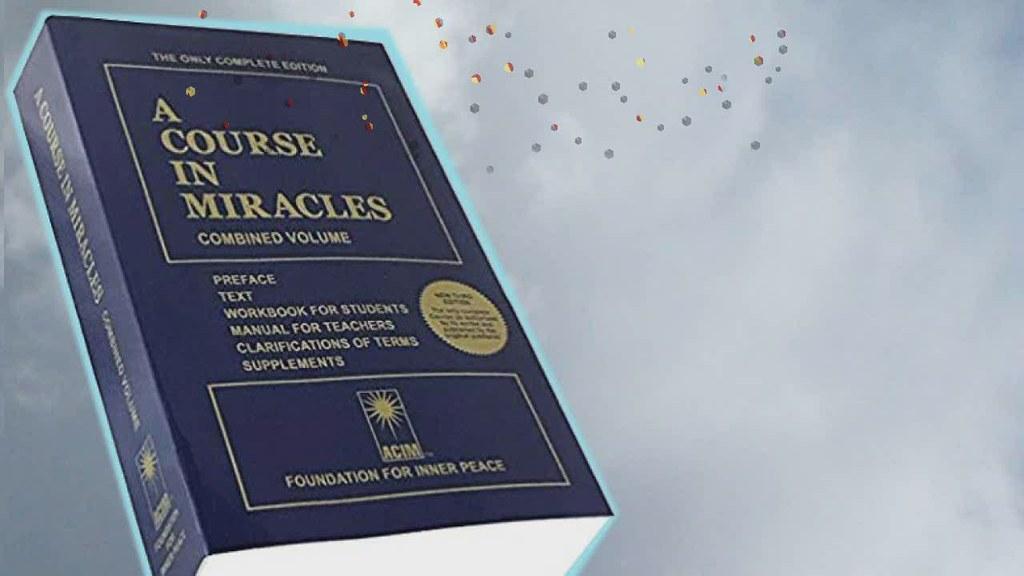
A Course In Miracles (ACIM-1333 pages) by Helen Schucman is in my opinion the most profound and truthful spiritual manuscript ever written. Christians are looking for the return of Jesus, he has returned via these magnificent writings. Dr. Helen Schucman began receiving the material for The Course quietly over eight years, from 1965 to 1973 at the age of 43. During this time, she was an associate professor of psychology at Columbia University’s College of Physicians and Surgeons. Schucman said that the book had been dictated to her, word for word, via a process of inner dictation from Jesus. At first, insanity crossed her mind so she asked this voice extremely difficult questions. To her amazement all were answered correctly. This is a self-study spiritual curriculum that presents a way of life based on contact with the Holy Spirit. ACIM teaches what the Bible truly means. I have studied and written about The Course for over fifteen years and have found nothing that is not logically true, I cannot say that about the Bible. ACIM explains how our ego came to be. The Course was written by one woman over eight years and never re-interpreted. Foremost, we do not need saving from a non-existent eternal torment. We require saving from our ego. So God Is, now what?
Chapter 5: The Big Bang
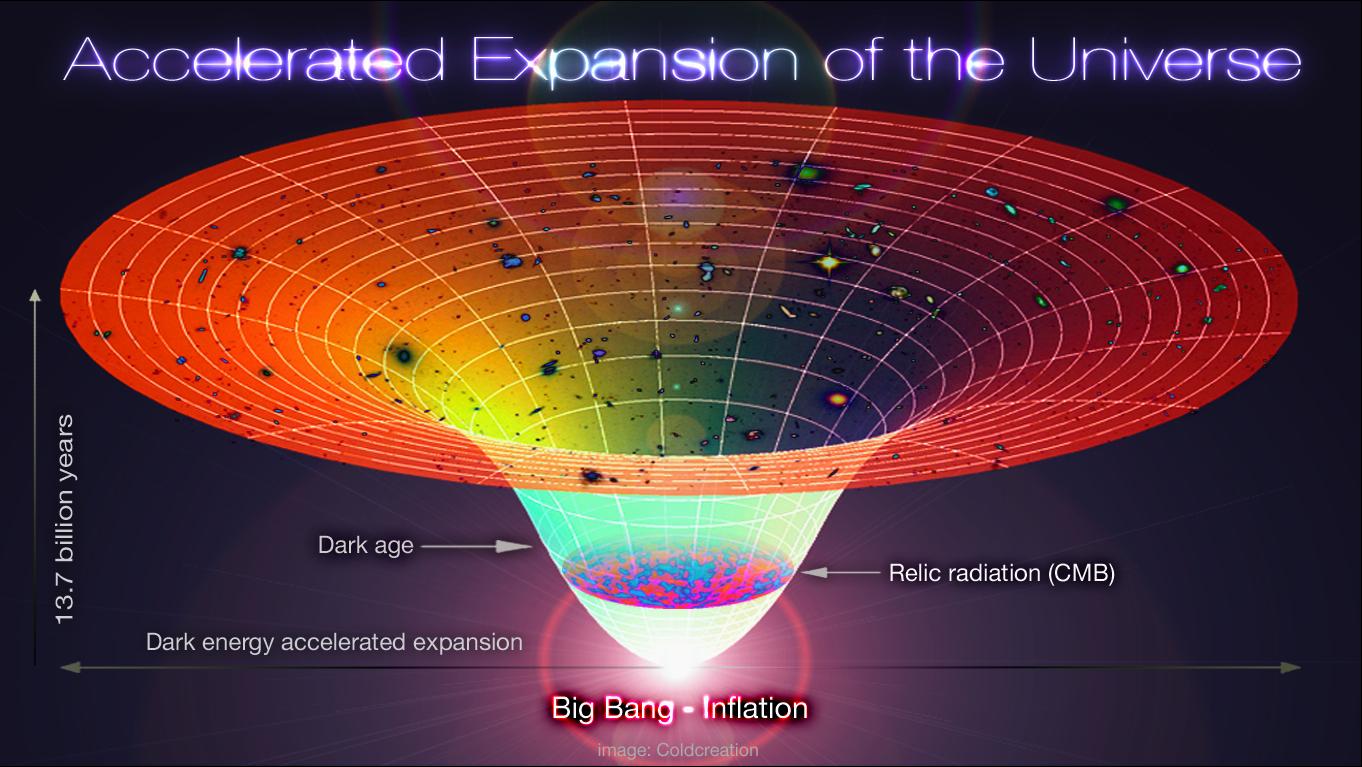
The Big Bang. We’re taught that astronomers believe the universe began as a singular point and expanded to the size it is today and still growing. So everything came from virtually nothing? We’re also taught the concept that most scientists believe that RNA, or something similar to RNA, was the first molecule to self-replicate and begin the process of evolution that led to more advanced forms of life, including human beings. What? So this is the answer to millions and millions of aquatic creatures, birds, animals, and humans? Scientists believe the earliest life forms we know of were microscopic organisms, microbes, that left signals of their presence in rocks about 3.7 billion years old. These scientific theories only strengthened my belief in a higher power. If you think about and study these two believed explanations of all life everywhere, they make no sense until you come to the amazing understanding there was a powerful intelligence behind the Big Bang. Christ. If this statement has spiked your curiosity please read on for the reason Christ made the first ego. Jesus’s last name is not Christ, his name is Jesus of Nazareth. He understood perfectly that he was one with Christ, so are you, so am I and so is everyone who has ever lived. Christ is much more than just a name, it's a state of being. In other words we are not frail and limited human beings, we are incredibly strong and unlimited Christ Beings. Forever. I once read the time it would take a hummingbird to fly around the world and from the friction of its wings to wear the world into dust, eternity is just beginning. My friend, that is a long time.
ACIM states that it is even beyond its teachings to fully explain what Love actually is. However, with logic and reasoning we are given glimpses. Let’s discuss a Love that Is absolutely perfect. A Love that Is beyond purity, immeasurably magnificent and beautiful, immense total power, all knowing, all seeing, everywhere, outside of time, forever unchanging, cannot conceive of any loss, eternal, and always giving an unlimited joy and contentment and happiness. Totally complete in and of Itself, with a perfect light that extends to all existence. We are a part of this forever. Every time we hold open a door, offer our place in line, give to the beggar on the highway, turn the other cheek we love. When you’re smacked in the face either physically or verbally and don’t strike back you’re doing the exact opposite of what’s expected. Perhaps, down the road, when they’re on the receiving end they’ll act differently because of remembering your response. Ever non-partially listen to two people arguing? Neither is listening to what the other is saying because they’re thinking of a response. When you come out of an argument, do you feel good? I never argue because it's pointless. I’ve been banned from Christian groups on Facebook for the heresy of not believing in hell and atheists have called me insanely stupid for believing in God. To me, it's all good, I know what I know. To explain the logic of all this I wrote the following fictional story utilizing the teachings of ACIM. The statements about the black hole and what Christ thought about Jesus are of course my imagination.
Chapter 6: My True Fictional Creation Story

“Whoa, why is this? Who am I? Another answered, not by voice, but somehow He heard. You’re My Son. What’s a Son? You’re my very first creation. What does creation mean? I’ll show You around after a little more creating. You’re also My only joy. Astonishingly, He knew what joy was and felt absolutely wonderful. This Being started to share the very essence of Who He Is, and suddenly, He started to learn and comprehend very, truly, extremely fast. He mysteriously understood atomic forces, protons, electrons, neutrons, neutrinos, recurring and changing inorganic and organic molecules. He comprehended amino acids and the forces that regulate all. Vistas of astonishing beauty opened up for Him. He became ecstatic while gazing at forests, oceans, rivers, lakes, mountains, skies, worlds, suns, stars, galaxies, and universes. He was everywhere with this magnificent One. He asked, Who are You? I Am was the reply. He instantly comprehended His own name is Christ.
He became aware this is His Father, Whose very nature is to give and teach all He knows, and He knows everything. Christ knew He was not in any way separate or different from God and understands He is not a part of God but an extension of the whole. He knew love must be shared, and the love that is shared in His Father’s universe is exquisite and beautiful. Oh, the joy and laughter as They completed One Another. Christ supremely became as powerful, compassionate, wise, knowing, limitless, and most importantly as loving as His Creator. They are inseparable and continue to co-create vast galaxies and universes. However, due to the infinite wisdom of I Am, they stopped short of creating life to populate all that is. In Their beautiful Minds, They knew exactly what to do when God would say the moment was perfect. They envisioned all aquatic life, myriads of different flying species, all animal life, and the harmony of the varying interconnected environments all would live in. Their creations were also to be gifted with the ability to co-create. Each after their own kind. All of this would happen in a nanosecond, just as Christ had been created. There was no concept of time or space for They were everywhere, and They were One. God has created Christ to be exactly like Himself and to share His eternal love and joy in a state of unencumbered, boundless, and unimaginable ecstasy. Any question the Son asked was instantly answered as Their communication was perfect.
Then somewhere, somewhen Christ asked a question that was not answered. What? Why? The question was like,” What else is there?” or “What would it be like to go out and play by Myself?” I Am did not answer because there is nothing else, but God’s perfect creation. The Divine Son became horrified, certainly an awful new feeling previously unknown. He mistakenly thought His perfect communication was completely gone. Then He experienced a vastly more terrible knowing. Fear. Christ instantly created a universe of His own where He could hide. The Big Bang occurred, composed of billions of fragments. He needed somewhere deeper to escape, so He made the first human bodies after His Own Image and placed His magnificent Mind into all of them. The first ego was spawned. This Mind believes that it is completely on its own. Christ also actualized all the animal life, countless aquatic creatures, the avian companions, and the harmonious environments they would all co-create in. The idea of duality could not be carried out in God’s Reality, so Christ created a universe of illusion and entered it as if falling asleep and dreaming.
Because They were no longer perfectly communicating God thought, “My Child is asleep and must be awakened.” But there was a major problem. Whatever God places His attention on becomes as if it is real. If God entered the dream to redeem His Son, then the dream would become real to Him as well, and He would also be trapped. There would be the risk of both the Father and the Son becoming eternally separated from their true Home and losing Their Identity. In other words, if God Himself were to acknowledge anything except the idea of perfect oneness, then there would no longer be perfect oneness. To solve the problem and allow God to keep His attention focused on Reality, He created a special agent, the Holy Spirit, Who would be a bridge between the two states of existence and the answer to the perceived separation. The Spirit was created with the miraculous ability to view God’s perfect Heaven while also viewing the Son’s imperfect dream. The Holy Spirit knew the original Christ Mind had created a black hole and was attempting to achieve nothingness, His fear was that immense. The brilliant light of God completely shattered the darkness and Christ began to love Himself again and woke up in the Heaven He never left.
So now Christ who is once again learning from the Father is thinking, “I’ve learned much from my first question of “Whoa, why is this?” I must help the children I have made who are sleeping.” Thus enters Jesus into our dream illusion. The Son thought, “I’ll have Jesus be born of a virgin, and he’ll be able to perform what my children will call miracles.” Christ knew He had been healed by the Holy Spirit, so the same Spirit conceived Jesus in Mary’s womb. Furthermore, Christ reasoned, “I’ll ask the Holy Spirit to descend on Jesus in the form of a dove after he’s baptized by John. I’ll have him led into the desert immediately after his baptism and live for 40 days and nights without food or water.” He knew His children would mistakenly think the reason was to be tempted by a Satan which doesn’t exist. Christ also thought, “I’ll have Jesus trained in the wilderness to only listen to the Holy Spirit; thus his ego will be totally eliminated. Jesus will be the only one in time who will completely manipulate his dreaming. He’ll walk on water, calm the seas, feed the multitudes, explain magnificent spiritual truths, heal the paralyzed, the blind will see, the deaf will hear and best of all, he’ll raise the dead. This will prove to my children that death is an illusion, especially after he will live again after his crucifixion.” He knew unfortunately His children would think he died for their sins. My Father knows nothing about my false universe and doesn’t even know what sin is. He understands, “I’ll have the same Holy Spirit Who healed Me, have Jesus thoroughly understand he is One with Me as I am One with Our Father. My creations will eventually understand the same Truth. When the last mind is healed and the false universe vanishes, My Father and I will receive great pleasure and joy in teaching our beautiful Children the perfection of Their being. Forever. They’ll understand Love is not an emotion but the most powerful force in all creation.” Jesus said while dying, “Father forgive them for they know not what they do.” He knew God doesn’t forgive because He sees nothing to forgive. This was said to put into the collective human consciousness the beauty and importance of forgiving.
Here’s another fictional story I wrote.
Chapter 7: An African Mother
Let’s say you’re an African mother living in the jungle in the year 1694. You’ve been with your man 17 years and have 4 children. You work hard and are 48 years old. Not easy raising 4 children and a sometimes childish husband in this sweltering hot environment. All in all, life is good for you, and you laugh much more than you cry. One day, some white folks come into your village who are missionaries. They seem like nice people who have great food and smile a lot. They begin explaining about some man named Jesus who lived thousands of years ago. They tell you he walked on water, the blind could see, the deaf could hear, the paralyzed could walk, he raised the dead, and after he was hung on a cross to die, he raised himself 3 days later. Now these well-meaning people tell you he died for your sins, and you must believe this, or you’re going to eternal Hell. You ask, “What is sin?” They tell you. “What is Hell?” They tell you. You go to bed that night thinking this newfound information is a little absurd. This whole stuff sounds pretty out there to you. Who on earth came up with all this? You’ve lived a hard life but a good one. You have no enemies, many friends, loving children and a good hardworking and caring husband. Why on earth did these people tell you about this Jesus person? You’ve made some mistakes but now you’ve been informed these are sins. When you had asked what this sin stuff is about, they informed you that you’ve sinned against God. You asked, “What’s God?” They explain God had made you. You had thought all this time that your parents had made you. Also, this God who you have never seen is furious with you and is going to send you to a place of unending pain and misery. Forever. However, you’ve been told some good news. All you have to do is believe in Jesus, who died for the sin you didn’t know you had done. So, now you’re thinking, this God sent His only son to earth and commanded him to endure torture, suffering, and death? You don’t want anything to do with any of this nonsense. You had even begun to feel guilty about mistakes you were informed were sins. You had never felt guilty before and certainly do not appreciate the feeling. You truly like these kind-hearted missionaries and are a good judge of character. You never lie and always tell the truth. The minister asks you if you believe in Jesus. You tell him you’d rather not, as you were doing better before thinking about their so-called truths. They left. For several years you had been somewhat angry with the missionaries because they had disrupted your peaceful mind. You had started discussing this issue with their God after they had taught you how to pray. You understood the concept of forgiveness because you’d certainly forgiven your husband and children countless times over the years. To your astonishment when you told God you’d forgiven these folks, a feeling of amazing joy and peace briefly enveloped you and vanished. Over the next decade you and God became quite close, and you considered Him your best friend. You knew God understands your unchanged feelings about the sin issue and the death of Jesus. Years later, you reach the nice old age of 94 and die in your sleep. Where are you now? Atheists will say “in the dirt”. Born again Christians, “Eternal Hell.” I feel the atheists have a much better response. A third glorious answer, “Enjoying the magnificent perfection and love of Heaven, forever.”
Chapter 8: My First Writing Came From A Dream

Fifteen years ago, I had a dream about Mary Jo and immediately wrote it down. All I could remember was, What if I told you? and wrote this in 25 minutes on my phone’s memo pad. The words just flowed without thinking. I know they came from Mary Jo because I wasn’t yet familiar with A Course In Miracles, but this writing coincides exactly with ACIM doctrine.
“What if I told you? What if I told you love is not an emotion but a force? What if I told you, God Is? What if I told you nothing can affect Reality and nothing unreal exists, therein lies the peace of God? What if I told you there is no hell, only Heaven? What if I told you, you make your own hell? What if I told you all you see is an illusion, compared to the reality of Heaven? What if I told you death is an illusion, you live forever? What if I told you God does not forgive because Source sees nothing to forgive? What If I told you if God made anything imperfect, He/She would no longer be perfect, therefore you are perfect, you have simply forgotten? What if I told you, you are dreaming in Heaven and are about to wake up? What if I told you as you help you are helped, as you give you are given too, as you love you are loved? What if I told you, you go through pain to teach you what you do not want? What if I told you, as you forgive others, you are forgiving yourself? What if I told you forgiveness is the final lesson you need to learn? What if I told you nothing you can do offends God because you are merely dreaming? What if I told you there is no such thing as sin? What if I told you Spirit heals your mind and mind heals your body? What if I told you, you need no one to make you whole, you are whole? What if I told you, you have a twin flame, you may not have met yet? What if I told you we are all brothers and sisters, we are one? What if I told you, you are love, because you were made by love? What if I told you, you are forever the Divine Effect from Divine Source? What if I told you, you are Infinitely powerful, you have simply forgotten? What if I told you, you are part of the Mind of God, Source has not forgotten you? What if I told you, Heaven would not be complete without You? Would you forgive and believe? Read that again.”
Chapter 9: The Meaning

Let’s reason together to understand what this all means to humanity in 2024. There is a vast difference between being spiritual and religious. Spirituality is for those who have experienced hell, the religious are those afraid of going there. I’m the former. As I reflected on my thoughts, it became clear to me that we are destined to become Co-Creators with God. This insight came despite my ego’s persistent claims that such a belief is perfectly insane. We’ll awaken from our dream in the Heaven we’ve never left after we have achieved perfection in forgiveness. Jesus explained to Helen in ACIM that he is not to be worshiped, just highly respected. The only difference between him and us is what is potential for us is his Reality. He has God and nothing else. Jesus explained in the Course that he set in motion over 2000 years ago the principle of the Atonement. This is the knowing that the one problem that ever existed was perfectly solved. We are not separate from God in any way, never have been and never will be. This is impossible for we are One with Source and have simply forgotten.
Let's say you and I are strangers and enjoying a cold beer on a hot summer afternoon in a quiet little bar. We strike up a conversation and after an hour the alcohol is mildly kicking in. I say, “Our discussions are quite enjoyable, I’d like you to know something about me.””What’s that?” “I’m perfect.” Suddenly you remember you have an errand to run for your wife and can’t miss dinner. While driving home your thinking, “Wow does that guy have issues, he needs professional therapy.” However, perhaps you happen to be God. The response would be, “Thank you my Son, I know, because this is how I created you.” If God made anything imperfect He/She would no longer be perfect, therefore we are perfect. Yes we make mistakes in our dreams, but this doesn’t negate our perfection in Heaven.
A bit of trivia, Jesus had been married to Mary. Under Jewish law, only the wife could anoint the body. As I mentioned earlier, eventually we will evolve into a Co-Creator God Consciousness Being. It is a natural process to unfold into this state. There is so much we can learn by observing nature and all her teaching lessons. In all of nature, there is never a hurry to quicken a process as everything is always perfect in every moment and when the time is right, the rose will bloom. The Universal Christ Mind is constantly communicating with all creation in every moment. For the kingdoms without free will, this connection is called innate intelligence when the guidance comes directly from the Universal Mind. The guidance for a beaver to build a dam, a bird to build a nest, a flock of birds to fly in a V Formation, the spider to spin her web, or the hibernation of animals in the winter. The timing always comes perfectly. All these life forms are always in Christ's presence in every moment. This guidance is perfect, and it represents harmony, balance, order, and unity for the good of all. Nature comes together to represent the synchronicity of the Oneness as life unfolds. These kingdoms, mineral, plant, insect, animal, and angelic, do not have free will and are directly connected to the Christ Mind and stay consciously aware at every moment. Everyone on Earth is also directly connected to this Mind but have not yet learned to stay consciously aware. Before coming to Earth we were also connected to the Son's Mind through Innate Intelligence, but when we came to Earth we were gifted with free will, the ability to manifest using a conscious mind and learning to discern using the five senses and reasoning. Once understanding we are always connected to the Universal Mind and never separated from the Oneness of life, we’ll learn to trust our feelings and reconnect to understand our perfection.
Gary Renard is also the author of Your Immortal Reality. In his writing, Gary explains, “Imagine you’re watching TV and you forgive a news story you see. The Holy Spirit then spreads your forgiveness throughout the mind that projects the universe, and through the projection itself. This act cuts through unconscious guilt and its karmic projections like a laser beam, affecting all your past and future lives, every dimension of time, and every parallel universe that seems to exist. As you practice forgiveness, the Holy Spirit collapses time, erasing the lessons you would have needed to learn. Although you might think, “This is boring, nothing’s happening,” something extraordinary is happening. Our ego is like an onion, peel away a layer, and it still looks and smells like an onion. The more you forgive vast layers of the ego are being peeled away, and your ego is disappearing. If you persist in practicing forgiveness, you’ll eventually reach the final layer of the onion. Once that layer is gone, the onion and the ego vanishes completely. After your final forgiveness lesson, the ego is gone; it's been undone, and there's nothing left to interfere with your experience of Who You Are. There's no reason for you to reincarnate in your dream. Practicing forgiveness the way I’ll continue to instruct you is how to break the cycle of birth and death. Perhaps a close friend was planning on stealing from you tomorrow, but this does not happen. The reason being you had already forgiven a closer friend who had stolen in the past. A lesson learned does not need repeating.” Your Immortal Reality.
Each time a baby appears to be born into this world, it is merely reliving the time when it seemed to leave its perfect environment in God, where all was Nirvana, and it was completely taken care of and provided for, and then suddenly found itself slapped in the face by a seeming reality that was a living hell by comparison. We may consider birth to be a miracle, but babies don’t come into this world smiling, do they? They come in crying and screaming. The mind that is reliving the seeming separation has actually fallen asleep and is dreaming an idle, insignificant dream, or nightmare because anything that seemed to be apart from Heaven would have to be symbolic of an opposite to Heaven. It would thus seem to include opposite characteristics. There’s no doubt we believe we’re experiencing reality here. We must be shown the way out of this experience. Our “asleep at the wheel mind” doesn’t know it, but it’s going to wake up in the equivalent of a cosmic instant. That is because the Voice for God and Heaven, which we now understand is the Holy Spirit, is always with us to remind us of the truth and call us to return. This fail-safe memory of who we really are can never be lost, making an awakening to the Reality of Heaven completely inevitable. We have the power to choose the memory and strength of God or something else instead. That is what the part of our mind that decides did immediately after the seeming separation. Out of shock, fear, and confusion, it made a series of unwise choices that resulted in us appearing to be here. We still don’t realize that, given the remarkable power of the mind, certain choices made by us could end the seeming separation, and could have at any time. This means that we are capable of accomplishing it, with beautiful help from The Holy Spirit. God could not have created this world. It would not be in His nature for He is not cruel. If this were the real world, God would be cruel, for no Father could subject His children to this as the price of salvation and be loving.
Chapter 10: ACIM Fourteen Core Beliefs
1. This world is not real. God did not create this world nor even know of its entire universe is an illusion dreamt by the Son of God.
2. Pure non-duality: Anything that comes from God must be exactly like Him. God could not create anything that is not perfect, or else He wouldn’t be perfect.
3. Consciousness is the domain of the ego and was conceived after we dreamt of separation.
4. Spirit is unchanging, perfect, and eternal. This is the state of Heaven.
5. Truth is not different for everyone. Truth is truth.
6. There are no levels in Heaven. All conflict arises from the concept of levels. We are either enlightened and back in reality with God, or still dreaming of separation. Only life in Heaven is real.
7. Life in all its myriad forms or possibilities is already scripted at the instant of separation. The only choice is in our mind, where we decide to identify with the Holy Spirit or with the ego, when interpreting each moment.
8. Life in this world is insane. Nothing makes sense in this world. The world was made as an attack on God.
9. There is only one higher self, the Holy Spirit. Also known as the voice for God, our memory of God, or the reflection of God’s love in our dream.
10. Collectively, we are the Son of God. God created only One Son of God.
11. There is no evil or devil, only illusory madness projected by our ego mind and thankfully, they are not real.
12. Every attack is an attack upon ourselves. We project our unconscious guilt onto (dream) figures or situations that seemingly attack us. So now they are guilty, not us.The cause of our guilt arises from our imagined separation from God.
13. Life is a lesson. Every opportunity is used by the Holy Spirit to teach forgiveness to undo the ego mind.
14. Time and space are illusions, and Spirit has nothing to do with them.
Chapter 11: How Do I Know?

I’ve read that it doesn’t matter one iota to God if we believe in Him or not. The only thing He asks of us is to forgive. How do I know all of these teachings are Divine Truth? Because I have applied them to my daily life, and am experiencing a deeply real and continually growing peace. I have discovered the beauty of living in the now. My ego wants me to be living in the past and concerned over the countless mistakes I made, and more importantly desires me to be very worried about the future. If I’m living in the past or worried about the future, I’m not talking to the Holy Spirit now. When we live in the moment, absolutely nothing can harm us. Put this into practice and you will understand by personal experience. ACIM calls this the Holy Instant. So how do we eliminate our ego? The beauty of God’s grace informs us we eliminate our ego by the simplicity of forgiveness. This certainly didn’t happen overnight, but I started forgiving the guy blaring on his car horn, the cashier talking on the phone, different friends who stole from me, the two ladies who broke off our separate marriage agreements, the manager who fired me because I intimidated him for knowing more about his job than he did. The heroin addicts I lived with for over a decade that cost me everything I owned because I was an enabler. By constantly forgiving, I was systematically and permanently eliminating another of my ego’s layers. Another very important tactic to guarantee its elimination is never talk or listen to it because this makes it real to you and it’s not. Whenever you’re sorrowful, depressed, indulging in self-pity, angry, worried, anxious, hating, jealous or fearful; you’re listening to your screaming and lying ego that wants you absolutely miserable. Forgive all and pay it no mind, always.
Epilogue

I don’t know when it became unimportant to me if it’s raining or sunny or what time it is. The day of the week means nothing, and I couldn't care less what month it is. Politics, inflation, the state of the economy, relations between countries, the drug explosion, the healthcare system is simply of no consequence to me anymore. It no longer matters if I sleep a lot or very little. I do not worry about money, as it’s always there when I need it. I haven't owned a car in years. I rent and all I own is a T.V., cell-phone and clothes. I’ve lost over a half million dollars in real estate, and wasn’t upset at all. I find I have a grateful attitude for good health and my cup is half-full. I no longer worry about anything and fear nothing. I have no guilt. I never argue. I have no enemies and many friends. I’m perfectly fine being totally alone and am never lonely. I love that one. It doesn’t matter if folks read my writings or not. I still write. If friends call, great. If they don’t, great also. I smile a lot. These writings are what I dwell on and if you read with an open attitude the growing positive attributes I’m experiencing will happen to you as well. By living and applying these words to your life, you become awake in your dream. When you finally achieve perfection in forgiveness, God will awaken you from your dream. This is a guaranteed fact.
I pray we begin to see the attributes of Christ in everyone we meet.
“Gandhi said, “Be the peace you want to see in the world.” We decide it and bring it to our experience. It just “seems” to be the other way around. When I integrate the goal of peace into my everyday life, it soon becomes a beacon of light making the way clear. For me, this journey is a cleansing of the window to the Soul. We are the Infinite Peace of God. The Truth of us is like a pure and beautiful screen of Love. It is always innocent and peaceful and shines out from the mind embracing everything it sees. It brings me back to the Home I've never really left. When I think of the many attractions of the world and all of its temptations. Peace is now the only one that draws me in. Nothing else makes any sense to me anymore. Peace brings with it the awareness of the Love of God. I am the perfect, loving, and unlimited extension of God. Only my thoughts and beliefs would convince me otherwise. I need only to stay in the peace and silence of this present moment. Everything else disappears from my awareness, and only the Peace and Love of God remain. They were always there shining brightly in the background of my mind and are no longer hidden by the meaningless thoughts and beliefs of a delusional egoistic mind. Don't let the clouds of delusion mask the Light of your Being. Just be the Light, for you are the Light that you seek. The journey to God is merely the reawakening of the knowledge of where you are always, and what you are forever. It is a journey without distance to a goal that has never changed. Truth can only be experienced. It cannot be described and cannot be explained. I can make you aware of the conditions of truth, but the experience is of God. Truth will dawn upon you of itself, for God Is. Pray, Holy Spirit for my highest good and the highest of all grant perfection in listening to the sacred silence between my thoughts. I pray this everyday and find I’m answering questions I didn’t know I had. Your experience may not be the same as mine, but you will have a growing peace when you pray in faith from your heart. Guaranteed. God Bless, Bob
Copyright
Pen Name-Robert Hall
Edition-First Edition
Year Of Publication-2024
ISBN’s
EPUB 9798227557780
DOCX 9798227557780
MOBI 9798227557780
PDF 9798227557780
Kindle N/A
Print N/A
All rights reserved
All rights reserved. No part of this publication may be reproduced, stored or transmitted in any form or by any means, electronic, mechanical, photocopying, recording, scanning, or otherwise without written permission from the publisher. It is illegal to copy this book, post it to a website, or distribute it by any other means without permission.
Moral rights
Robert Hall asserts the moral right to be identified as the author of this work.
External content
Robert Hall has no responsibility for the persistence or accuracy of URLs for external or third-party Internet Websites referred to in this publication and does not guarantee that any content on such Websites is, or will remain, accurate or appropriate.
Designations
Designations used by companies to distinguish their products are often claimed as trademarks. All brand names and product names used in this book and on its cover are trade names, service marks, trademarks and registered trademarks of their respective owners. The publishers and the book are not associated with any product or vendor mentioned in this book. None of the companies referenced within the book have endorsed the book.
God’s Atheist
First edition. 10/02/2024
Copyright © 2024 Robert Hall.
Publisher Logo

The "What If We Were" Series by Renowned Children's Author C.M. Harris: Teaching Acceptance, Kindness, and Empathy to Children
The What If We Were series, written by the acclaimed children's author C.M. Harris, has become a beloved collection of children's picture books that focus on fostering empathy, kindness, and acceptance. This series, which includes "What If We Were All The Same!", "What If We Were All Friends!", "What If We Were All Kind!" and the forthcoming "What If We Were All Honest!" provide a powerful platform to teach children the values of understanding and respect for one another, regardless of differences.
The Importance of the "What If We Were" Series
At the heart of the What If We Were series is a simple but profound message: our differences make us unique, and those differences should be celebrated. The first book in the series, "What If We Were All The Same!" teaches children the beauty of diversity and the importance of accepting others as they are. The book's rhythmic storytelling and vibrant illustrations have captured the hearts of children and educators, providing a perfect tool for lessons on inclusivity and understanding.
Subsequent books in the series—"What If We Were All Friends!" and "What If We Were All Kind!"—build upon this foundation by exploring themes of friendship, kindness, and the impact of our actions on others. Whether learning to be a good friend or recognizing the power of kindness, these books guide young readers in their social-emotional development, helping them grow into empathetic, caring individuals.
The upcoming book What If We Were All Honest! will complete this inspiring series. It will focus on integrity and the value of telling the truth, showing that honesty is one of the most important values we can cultivate. You can find the series on Amazon.

Classroom Posters to Inspire Learning
To extend the messages of these books beyond storytime, C.M. Harris has developed a line of inspired classroom posters perfect for decorating learning spaces and keeping the books' lessons alive. These 11x17 posters, featuring vibrant designs and uplifting quotes, remind students daily to practice kindness, empathy, and inclusivity. The posters highlight key messages such as “What If We Were All Kind!” and “Friendship Is Magic,” reinforcing the series’ themes and encouraging children to embody these principles in their interactions with peers.
These visually engaging posters serve as tools for teachers to start discussions, create activities, and help children build a more inclusive classroom environment. The vibrant and inclusive posters are available in a set of 5 on Amazon
Teacher and Student Activities for What If We Were All The Same!
To further engage with the themes of the first book in the series, What If We Were All The Same!, Harris has created a set of activities for teachers and students. These resources include printable handouts and an interactive digital PDF that teachers can use in the classroom. The activities focus on topics like diversity, self-acceptance, and kindness, providing thoughtful ways for students to reflect on what makes them unique and how they can appreciate the uniqueness of others.

One activity that stands out is the “Celebrate Our Differences” worksheet, which encourages students to write or draw about what makes them special, fostering a sense of pride in who they are. Another interactive lesson allows children to partner with a classmate and interview each other about their favorite hobbies, foods, and family traditions, creating connections and building friendships through shared experiences.
These activities align perfectly with social-emotional learning (SEL) standards and are an excellent tool for teachers who want to incorporate empathy and acceptance into their curriculum. More information can be found on the author's website.
Author School Visits: Bringing the Books to Life
C.M. Harris has always been passionate about sharing the power of literature with young minds, and one of the most fulfilling aspects of their work is participating in school author visits. During these visits, Harris reads their What If We Were books aloud, captivating students with engaging storytelling and opening the floor for discussions on diversity, kindness, and what it means to be a good friend.
Harris's school visits are interactive and immersive, allowing students to ask questions, share their thoughts, and reflect on how they can practice the lessons from the books in their daily lives. The visits often conclude with a fun and creative activity where students can write or draw their own “What If We Were” story, sparking their imaginations and reinforcing the book's message in a personalized way.
These visits have had a profound impact, with teachers praising how Harris connects with children and makes the stories' themes tangible. It's not just about reading the book—it's about igniting a passion for kindness, acceptance, and making a difference in the world.
Final Thoughts
The What If We Were series is much more than just a collection of children's books. It’s a movement that encourages children to embrace diversity, practice kindness, and build lasting friendships. With inspiring classroom posters, thoughtful teacher-student activities, and impactful school visits, C.M. Harris ensures that the books' messages resonate deeply with students long after the stories are read.
In a world where inclusivity and empathy are more important than ever, the What If We Were series stands as a beacon of hope, helping to shape a generation of children who will understand the importance of acceptance and live it in their everyday lives.
For more information about author school visits, posters, and teacher resources, visit [C.M. Harris's website](https://cmharrisbooks.com).

AMPUTATED MINDS by Gautam K Mirchandani

AMPUTATED MINDS - A Story To Tell: A collection of 9 short stories about 9 human minds captive by their uncontrolled mind.
1. One Step Forward: A Terrible Step To Take.
2. The Letter: Dip In Blood.
3. Do On To Others: A Wishful Thought.
4. 24 Hours: Life Changed.
5. Seasons Greetings: Dreamy Nightmare.
6. The Milkman: Last Delivery.
7: The Insane Mind: Turning Tables.
8: Traveling Broad Gauche: Journey Ends
Available On: notionpress.com, Flipkart.com and Amazon. in

YELLAMMA by Gautam K Mirchandani

Yellamma was a barren woman, her husband had died five years ago, leaving a piece of land near the sea for her where she lived all alone, grew her crops and did her breeding. never interfering with the village or with the villagers.
What did Yellamma do while living on her land alone? How did her husband die? It's speculated he was lost in the vast sea or was it the poison that killed him? It was rumour that he planned to remarry for a child but Yellamma opposed it. Was she a barren woman? or didn't like children? Could it be that she was the one??? The Witch!
The book is available at notionpress.com, and Amazon. in Filpkart.com

Bizarre Tales by Gautam K Mirchandani

Bizarre Tales is a collection of twelve short stories that delve into the complexities of human nature and the world we inhabit. Available at notionpress.com and Amazon. in and Flipkart.com

THE DESOLATE STRETCHES OF THE MIND by Gautam K Mirchandani
A collection of poetry and songs exploring life, beauty, joy, sorrow, heartbreak, pain, grief, war, pop, rock, and thoughts transformed into words. THE DESOLATE STRETCHES OF THE MIND. The book is available on these sites: notionpress.com, and Amazon. in, Amazon.com, Amazon.co.uk, and Flipkart.com
20TH CENTURY
Two murmurs and a point
Makes a pretty good riot
Girls over here, girls over there
It's girls, girls, everywhere
The world of TV the world of Videos
Who wants the damn old Radio?
Boys shout here, boys wink there
It’s just a boy, boys, whistling everywhere
Where is old Santa Merry?
In 20th Century
In its fight, in its loot
In its’ love, in its shoot
Days and hash rules
Presidents are just fools
Kissing is common
From Commies to the Romans
Just take your pick
Knives, guns, and bricks
Throw the hell around
From heaven to the ground
Where is old Santa Merry?
In the 20th century
In its’ dance, in its’ chance
In its play, in its’ lay
Wars and Revolution
Are today’s solution
The sun gets hotter
Blood is cheaper than water
Liquor is for fun and gay
Let it be night or day
I say you, you say me
We just tell lies as we feel
We vote nuts to power
We stand in queues for hours
Do one thing for heaven's sake
Trust no one these days
₲

THE DANCE OF THE WHITE SHADOWS by Gautam K Mirchandani
Hey there!
I'm excited to tell you about my latest project "The Dance of the White Shadows". It's a collection of 110 poems that express different emotions through words and it's all about music.
I know you're passionate about music, just like me, so I thought you might enjoy checking out my songbook. I'd be thrilled to hear your thoughts on it!
Thanks so much for taking the time to read this, and I hope to hear from you soon! Available at notionpress.com
A SUMMER NIGHT NIGHTMARE
Lying awake in a warm bed
Blinking eyes in the dark
Trees whispering against the pane
Something is about to start
Terror clutches your heart
You feel the cold sweat run
Praying feverishly
Waiting for the rising sun
It is a summer night nightmare
There will be no tomorrow
The beginning of another horror
Shadows moving in your room
You feel faint about to swoon
You open your mouth to scream
This is for real no dream!
It is a summer night nightmare
The beginning of another horror
₲

Astounding (songs and photos) by Sony KT Mirchandani and Siddharth K Mirchandani.

Anguish is like a poison arrow that can destroy your dreams, hopes, body and soul.
Love is a four-letter word that sounds lovely and is wonderful to say. But don't take it as a weak word, for it has conquered the hearts of kings and even God.
Warfare is a private game by the human race to boost their hate and greed.
Distress is like a broken heartbeat in silence.
Available In: Print Edition, ebook, @amazon.com @Flipkart
AND YOU
You make me feel so good
I never felt like this before
My mind goes numb
When you are around
You take me higher
I can never feel down
And you… ohm you
You move into my heart
Filling it with your love
And you… ohm, yes you
Made me feel so good
Now the dullest days of mine
Look so joyful bright
I feel like a King
Wearing a love Crown
Everything looks like Heaven
When you’re around
Baby, oh baby
Stay with me forever
Never leave me, ever
You know it’s you...
Made me feel so good
I can’t leave a moment without you
I want to be in your heart forever
You bring so much good in me
You turn the girl inside of me
Into a beautiful woman
With your tender touches
And you… ohm you
You move into my heart
Filling it with love
And you… ohm, yes you
Made me feel so good.
$

MIKE TYSON PUNCH by Sony KT Mirchandani

MIKE TYSON PUNCH Is a songbook of 30 songs that speak about freedom in love, freedom from selfish love, freedom from a cheated heart and freedom from being a puppet in love and living one’s own life as a Master and not as a Slave because the heart is not a roulette wheel to play. The book is available on notionpress.com
CHAINS OF EGOS
Unbound me from these chains
These chains of your egos
I'm not your slave
I'm your lover
You can't force me
To do things your way
You have the full right
To hate me
And I have the full right
To fall out of love
So, why does your ego hurt
If, I say,
I don't want to stay with you
Why can't I lead my life?
Just as you are leading yours
You can't buy my love
But don't be foolish to force me
To love you
Unbound me from these chains
Chains of egos
$