

Fiction Writing
Self‑Publishing vs. Traditional Publishing: How a New Author Can Choose the Right Path
Self‑Publishing vs. Traditional Publishing: How a New Author Can Choose the Right Path
Chuck Morgan, Crime Fiction Author
For a brand‑new author, few decisions feel as overwhelming, or as defining, as choosing between self‑publishing and traditional publishing. Both paths can lead to a successful writing career, but they work differently, and each comes with its own set of expectations, responsibilities, and rewards. The good news is that there’s no “wrong” choice. The better news is that once you understand how each option works, the right path for you usually becomes clear.
This article breaks down the differences in plain English, focusing on what new authors actually need to know—not the myths, not the hype, and not the outdated advice that still floats around writing groups. Think of this as a practical guide to help you make a confident, informed decision about your publishing future.
What Traditional Publishing Really Means
Traditional publishing is the long‑established route: you write a manuscript, find a literary agent, and that agent submits your book to publishers. If a publisher buys your book, they pay you an advance, handle production, and distribute your book to bookstores.
What You Get With Traditional Publishing
Here’s what most new authors care about:
• No upfront costs. You don’t pay for editing, cover design, printing, or distribution.
• Professional team support. Editors, designers, marketers, and sales reps work on your book.
• Bookstore access. Traditional publishers have relationships with retailers, which increases your chances of seeing your book on shelves.
• Industry credibility. Some readers, reviewers, and media outlets still view traditionally published books as more “legitimate.”
What Traditional Publishing Requires
This is the part many new authors don’t realize:
• You need a literary agent. Most major publishers won’t look at unagented submissions.
• It can take years. Finding an agent can take months or longer. Selling the book can take months. Publishing the book can take one to two years after that.
• You give up creative control. The publisher decides on the cover, price, release date, and sometimes even the title.
• You earn smaller royalties. Traditional authors typically earn 8–15% on print books and around 25% on ebooks.
Who Traditional Publishing Works Best For
Traditional publishing is a strong fit if:
• You want the prestige and validation of a major publisher.
• You prefer to focus on writing while others handle production.
• You’re patient and willing to wait for the right opportunity.
• You write genres that publishers actively seek (thrillers, romance, book‑club fiction, memoir, etc.).
• You want your book in physical bookstores nationwide.
If these points resonate with you, traditional publishing may be worth pursuing.
What Self‑Publishing Really Means
Self‑publishing puts you in the driver’s seat. You write the book, hire your own editors and designers, upload your files to platforms like Amazon KDP or IngramSpark, and manage your own marketing.
It’s not the “vanity publishing” of decades past. Today, self‑publishing is a thriving, respected, and highly profitable path for many authors.
What You Get With Self‑Publishing
Here’s what draws many new authors to this route:
• Full creative control. You choose the cover, title, price, release date, and everything else.
• Speed. You can publish in weeks instead of years.
• Higher royalties. Amazon KDP pays up to 70% on ebooks and around 60% minus print costs on paperbacks.
• Ownership. You keep your rights, your files, and your future options.
• Flexibility. You can update your book anytime—fix typos, change the cover, add a new edition.
What Self‑Publishing Requires
But self‑publishing also comes with responsibilities:
• You pay for production. Editing, cover design, formatting, and marketing are your expenses.
• You run the business. You’re the publisher, which means you make the decisions and manage the process.
• You must learn the basics of marketing. Even a great book needs visibility.
• You need to be comfortable with trial and error. Success often comes from experimenting with covers, blurbs, ads, and pricing.
Who Self‑Publishing Works Best For
Self‑publishing is a strong fit if:
• You want control over your creative and business decisions.
• You’re willing to learn the publishing process.
• You want to publish quickly and build momentum.
• You write in genres that thrive in self‑publishing (romance, thrillers, fantasy, sci‑fi, mystery).
• You’re entrepreneurial or at least open to becoming more business‑minded.
If this sounds like you, self‑publishing may be the better path.
The Money Question: Which Path Pays Better?
New authors often assume traditional publishing pays more because it’s the “professional” route. In reality, the opposite is often true.
Traditional Publishing Earnings
• Advances for debut authors vary widely, but many fall between $5,000 and $20,000.
• You don’t earn royalties until your advance “earns out.”
• Royalties are smaller because the publisher takes most of the revenue.
Self‑Publishing Earnings
• You keep a much larger share of each sale.
• You can publish multiple books per year, increasing your income potential.
• Many self‑published authors earn more than traditionally published authors, especially in genre fiction.
But here’s the key: self‑publishing income depends on your willingness to treat your writing like a business. If you’re willing to learn marketing, build a readership, and publish consistently, the financial upside can be significant.
Creative Control: How Much Say Do You Want?
This is one of the biggest differences between the two paths.
Traditional Publishing
• You may not get the cover you want.
• You may not get the title you want.
• You may not get the release date you want.
• You may not get the final say on edits.
Some authors love having a team make these decisions. Others find it frustrating.
Self‑Publishing
• You control every detail.
• You can hire the professionals you want.
• You can change anything at any time.
If creative freedom matters to you, self‑publishing is the clear winner.
Marketing: The Truth No One Tells New Authors
Here’s the reality that surprises many first‑time writers:
Both paths require you to market your own book.
Traditional publishers do some marketing, but most of their budget goes to their biggest authors. Debut authors often receive minimal support.
Self‑published authors handle their own marketing, but they also keep more of the profits.
If you’re willing to learn basic marketing skills—email lists, social media, newsletters, ads, or reader engagement—self‑publishing gives you more control and more reward.
If you prefer someone else to handle marketing, traditional publishing might help, but it’s not guaranteed.
Speed to Market: How Fast Do You Want Your Book Out?
This is one of the clearest differences.
Traditional Publishing Timeline
• Querying agents: months to years
• Submission to publishers: months
• Production: 12–24 months
Total: 2–4 years from finished manuscript to bookstore shelf.
Self‑Publishing Timeline
• Editing and design: 1–3 months
• Uploading and publishing: days
Total: as fast as you want.
If you want to build a career quickly, self‑publishing gives you momentum. If you’re patient and want the traditional experience, the longer timeline may not bother you.
Distribution: Where Will Your Book Be Sold?
Traditional Publishing
• Bookstores (big and small)
• Libraries
• Online retailers
• International markets
Self‑Publishing
• Amazon (the biggest market)
• Kobo, Apple Books, Barnes & Noble Press
• Print distribution through IngramSpark
• Libraries (if you choose the right distributors)
Self‑published authors can reach almost everywhere traditional authors can—except widespread physical bookstore placement, which remains a traditional advantage.
The Hybrid Option: You Don’t Have to Choose Just One
Many successful authors today are hybrid authors, meaning they publish some books traditionally and others independently.
This approach gives you:
• The credibility of traditional publishing
• The income and control of self‑publishing
• The flexibility to choose the best path for each project
For example, you might traditionally publish a memoir but self‑publish your thriller series. Or you might self‑publish early in your career, build an audience, and later attract a traditional deal.
Hybrid publishing is becoming more common every year.
How to Decide: A Simple Framework for New Authors
If you’re still unsure, here’s a quick way to clarify your direction.
Choose Traditional Publishing If You Want:
• Prestige and industry recognition
• A professional team handling production
• A chance at bookstore placement
• A slower, curated publishing experience
Choose Self‑Publishing If You Want:
• Creative control
• Faster publication
• Higher royalties
• Ownership of your rights
• The ability to build a long‑term career on your own terms
Choose Hybrid Publishing If You Want:
• The best of both worlds
• Flexibility
• Multiple income streams
• A career that adapts to your goals
Final Thoughts: Your Path Should Match Your Personality and Goals
There’s no single “best” publishing path. There’s only the path that aligns with your goals, your temperament, and the writing life you want to build.
If you’re entrepreneurial, curious, and eager to learn, self‑publishing can be empowering and financially rewarding. If you value tradition, collaboration, and the prestige of a major publisher, traditional publishing may feel more fulfilling. And if you want flexibility, hybrid publishing gives you room to grow.
What matters most is that you choose the path that supports your long‑term vision—not the path someone else says is “better.”
Can a minimalist book cover still convey lyrical narratives and Emotion?
Can a minimalist book cover still convey lyrical narratives and Emotion?
Chuck Morgan, Crime Fiction Author
Minimalist book covers often look deceptively simple—one object, one color field, a quiet title. But simplicity isn’t the same as emptiness. When done well, minimalism can feel poetic, atmospheric, and emotionally charged. It can hint at a novel’s inner music without spelling out every detail. For new authors, this approach can be a powerful way to communicate tone, theme, and narrative promise with clarity and confidence.
This guide breaks down how minimalist covers work, why they resonate with readers, and how you can use them to express the emotional qualities of your story even when you’re working with very few visual elements.
What Minimalism Really Means in Book Cover Design
Minimalism isn’t about making a cover “plain.” It’s about intentional reduction—stripping away everything that doesn’t serve the emotional or narrative core of your book.
A minimalist cover typically uses:
• 1–3 visual elements (a single object, a silhouette, a shape)
• 1–3 colors (often a dominant color, a neutral, and a small accent)
• Large areas of negative space
• Clean, restrained typography
This economy of elements forces clarity. When you remove clutter, busy scenes, multiple characters, and decorative flourishes, you create space for one strong idea to shine. That idea becomes the emotional anchor of the cover.
Minimalism helps readers:
• Understand the mood instantly
• Recognize the cover at thumbnail size
• Feel the emotional “temperature” of the story
• Sense the tone without being overwhelmed by detail
In other words, minimalism doesn’t reduce meaning. It concentrates it.
What Minimalist Covers Strip Away—and Why That Matters
Most beginning authors try to show too much: the protagonist, the villain, the setting, the key object, the dramatic moment, the tagline, the subplots. The result is often visual noise.
Minimalism removes:
• Literal scenes
• Multiple characters
• Overly descriptive imagery
• Decorative borders or flourishes
• Dense or competing typography
• Background clutter
What remains is one motif—a single object, symbol, or gesture that carries the emotional weight of the story.
Examples might include:
• A lone chair in an empty room
• A single red thread across a pale background
• A silhouette of a house with one lit window
• A pair of glasses lying on cracked pavement
These aren’t illustrations of the plot. They’re emotional signposts. They hint at tension, loss, intimacy, danger, nostalgia—whatever your story leans toward.
By reducing the visual field, you create hierarchy. The viewer’s eye goes exactly where you want it to go. That clarity makes minimalism feel confident and lyrical.
How Restraint Invites Interpretation and Emotional Projection
One of the secret strengths of minimalism is the semantic gap, the space between what you show and what you imply. When you withhold specifics, readers fill in the blanks with their own imagination, memories, and emotional associations.
This is why a minimalist cover can feel strangely personal. It becomes a mirror.
You can guide that emotional projection through:
Scale
• A tiny object in a vast field of color suggests isolation or insignificance.
• A large, cropped shape feels immediate and intimate.
Texture
• Grainy textures feel nostalgic or weathered.
• Smooth, flat surfaces feel modern or cold.
Color Temperature
• Cool grays and blues evoke distance, melancholy, or suspense.
• Warm beiges and ochres suggest memory, comfort, or longing.
Minimalism doesn’t tell readers what to feel. It nudges them toward a mood and lets them complete the emotional arc themselves.
Translating a Novel’s Lyrical Arc into Minimal Visual Language
Even if your book is rich, layered, and emotionally complex, you can still express its “lyrical” qualities through minimal design. Think of your story’s emotional arc as a melody. Your cover becomes the opening note.
To do this, choose:
• One or two motifs that symbolize the story
• A controlled palette that sets tone
• Deliberate scale and placement to suggest rhythm
• 50–80% negative space to create breathing room
For example:
• A crime novel about buried secrets might use a single shovel blade emerging from darkness.
• A literary novel about grief might use a wilted flower against a pale, quiet background.
• A thriller about surveillance might use a lone camera lens or a single eye.
These aren’t literal scenes—they’re lyrical distillations of the story’s emotional core.
Symbolism, Gesture, and Negative Space
Minimalist covers rely heavily on symbolism and gesture. A small shift in angle, scale, or placement can change the entire emotional reading.
Symbolic shorthand
• A clenched hand = tension
• A tilted horizon = unease
• A single bloom = fragility
• A broken object = loss or rupture
Color as emotional anchor
• Deep navy = introspection
• Vermilion = urgency
• Soft cream = nostalgia
• Stark black-and-white = confession or moral clarity
Negative space as silence
Negative space functions like a rest in music. It gives the focal element weight and resonance. It also slows the viewer’s reading of the image, creating a more contemplative, lyrical experience.
Typography as Voice: Rhythm, Tone, and Hierarchy
In minimalism, type isn’t decoration, it’s part of the emotional storytelling.
Tone
• Serif fonts feel literary, classic, or introspective.
• Sans-serif fonts feel modern, cold, or clinical.
• Condensed fonts feel tense or urgent.
• Light, airy fonts feel intimate or fragile.
Rhythm
Spacing and line breaks create a visual tempo:
• Tight tracking = tension
• Wide tracking = breath or distance
• Large title + small author name = bold, declarative tone
• Small title + large author name = quiet, confident restraint
Practical guidelines
• Use no more than 2–3 typographic levels
• Maintain clear scale ratios (1.2–3× difference)
• Test readability at 60px, 18px, and 12px
Typography becomes the “voice” of the cover—calm, sharp, whispering, or commanding depending on your choices.
Color, Texture, and Materiality as Emotional Signals
Minimalist covers rely heavily on the emotional power of color and texture.
Palette
A simple 2–3 color system works best:
• Dominant color (70%) sets the emotional base
• Secondary color (20%) supports tone
• Accent color (10%) adds narrative emphasis
Texture
• Uncoated paper feels soft, intimate, or handmade
• Matte lamination feels modern and quiet
• Glossy finishes feel bold or dramatic
• Linen textures feel nostalgic or tactile
Tactile cues
Even in digital thumbnails, texture influences perception. A soft-touch matte cover suggests a different emotional register than a high-gloss thriller finish.
Designing for Story: Strategies That Suggest Narrative Without Showing It
Minimalism thrives when you choose one narrative premise and build the cover around it.
Use contrast and scale
A single oversized object can imply stakes.
A tiny object in a vast field can imply vulnerability.
Use directional cues
A shadow pointing off-frame suggests pursuit.
A diagonal line suggests disruption or imbalance.
Use one prop to imply character
A broken watch, a child’s toy, a bloodied glove—these hint at backstory without showing a scene.
Visual “Beats” in a Single Image
Even a minimalist cover can contain a subtle three-beat sequence:
1. Anchor – the main object or symbol
2. Interruption – a shadow, tilt, or secondary detail
3. Resolution – a small clue that reframes the meaning
This creates a tiny narrative moment—a visual micro‑story that feels lyrical and emotionally alive.
Balancing Ambiguity and Specificity
Minimalism works best when you combine:
• One specific detail (a scuffed shoe, a torn letter)
• Two or three ambiguous cues (a shadow, a doorway, a horizon)
Specificity grounds the viewer.
Ambiguity invites interpretation.
This balance is what makes minimalist covers feel poetic rather than empty.
Common Missteps That Flatten Emotion
Minimalism fails when:
• There’s no emotional anchor
• The symbol is too abstract
• The palette doesn’t match the genre
• The typography is too small or too weak
• The cover is so empty it feels unfinished
Minimalism isn’t about removing meaning. It’s about refining it.
Practical Guidelines for Authors and Designers
• Limit yourself to three elements
• Choose one dominant color
• Use one typographic voice
• Ensure the cover reads clearly at thumbnail size
• Write a one-sentence narrative that the cover must express
• Test with 10–15 readers and note common emotional responses
• Iterate by removing or swapping one element at a time
Minimalism is a discipline. The fewer elements you use, the more intentional each one must be.
Conclusion: Minimalism as Lyrical Storytelling
A minimalist book cover can absolutely convey lyrical narratives and deep emotion. In fact, minimalism often heightens emotional resonance because it removes distractions and focuses the reader’s attention on one powerful idea.
By choosing suggestion over detail, you invite readers to participate in the story before they even open the book. You give them space to imagine, interpret, and feel. And that’s the essence of lyrical storytelling—evoking emotion through restraint, rhythm, and carefully chosen moments.
Minimalism doesn’t silence your story.
It lets it breathe.

How the Lettering on a Book Cover Shows the Story’s Mood and Pace
How the Lettering on a Book Cover Shows the Story’s Mood and Pace
Chuck Morgan, Crime Fiction Author
When new authors think about book covers, they usually picture the artwork first, the image, the colors, and the overall vibe. But the lettering on your cover does just as much work as the picture behind it. In fact, the typography often communicates the story’s mood and pace before a reader even notices the art. The font, size, spacing, and style of your title and author name all send signals about what kind of experience your book delivers.
Typography isn’t decoration. It’s storytelling.
This article breaks down how lettering shapes mood and tempo in a way that’s easy to understand, even if you’ve never thought about design before. By the end, you’ll know how to choose the type that matches your story’s emotional tone and narrative speed — and you’ll feel confident making decisions that help your book stand out.
Why Typography Matters More Than You Think
Readers decide fast. In a bookstore or online, they glance at a cover for maybe two seconds before deciding whether to look closer. In those two seconds, the lettering does a huge amount of heavy lifting.
Typography can:
• Signal genre
• Suggest the emotional tone
• Hint at pacing
• Create expectations
• Attract the right readers
• Repel the wrong ones
Think of it this way: if your story is a movie, the typography is the soundtrack. It sets the mood before the first scene even begins.
A thriller with soft, curly script sends the wrong message.
A cozy romance with sharp, blocky lettering feels off.
A literary novel with loud, neon fonts confuses readers.
Typography is a promise. Your job is to make sure the promise matches the book.
Mood: How Lettering Shows Emotion
Mood is the emotional atmosphere of your story — dark, hopeful, tense, romantic, playful, eerie, gritty, warm, or anything in between. Typography expresses mood through shape, weight, and style.
Here’s how different choices communicate different feelings.
1. Sharp, angular fonts → Tension, danger, conflict
These fonts have edges, corners, and a sense of precision. They work well for:
• Thrillers
• Crime fiction
• Horror
• High‑stakes drama
They tell the reader: This story cuts. Pay attention.
2. Soft, rounded fonts → Comfort, warmth, gentleness
Rounded letters feel friendly and safe. They’re perfect for:
• Romance
• Cozy mysteries
• Heartwarming fiction
• Children’s books
They say: You’re safe here. Settle in.
3. Elegant serif fonts → Tradition, seriousness, depth
Serif fonts have little “feet” at the ends of the letters. They feel classic and grounded. They fit:
• Historical fiction
• Literary fiction
• Memoir
• Epic fantasy
They whisper: This story has weight.
4. Minimalist sans‑serif fonts → Modern, clean, cool
Sans‑serif fonts skip the decorative touches. They feel sleek and contemporary. They work for:
• Sci‑fi
• Tech thrillers
• Modern drama
• Nonfiction
They signal: This story moves with the present.
5. Handwritten or script fonts → Intimacy, emotion, personality
These fonts feel personal and expressive. They’re great for:
• Romance
• YA
• Journals or memoirs
• Character‑driven stories
They say: This story comes from the heart.
Tempo: How Lettering Shows the Speed of the Story
Tempo is the rhythm of your book — fast, slow, steady, chaotic, or unpredictable. Typography can hint at pacing long before a reader opens the first page.
1. Fast‑paced stories → Bold, tight, high‑contrast lettering
Fast stories need fonts that feel urgent. You’ll often see:
• Thick, heavy letters
• Tight spacing
• High contrast
• Strong vertical lines
These choices create a sense of pressure and momentum. They tell the reader: This book moves.
2. Slow‑burn stories → Spacious, elegant, calm lettering
Slow‑burn narratives benefit from:
• Thin or medium‑weight fonts
• Wide spacing
• Soft curves
• Gentle contrast
This creates breathing room. It signals: This story unfolds gradually.
3. Chaotic or unpredictable stories → Distressed or irregular fonts
These fonts might look:
• Weathered
• Scratched
• Uneven
• Fragmented
They hint at instability or danger. They tell the reader: Expect the unexpected.
4. Steady, balanced stories → Clean, even, well‑spaced fonts
These fonts feel controlled and consistent. They’re ideal for:
• Family sagas
• Character‑driven fiction
• Contemporary drama
They say: This story has a measured rhythm.
How to Match Typography to Your Story
You don’t need design training to make smart choices. You just need to think about what your story feels like.
Here’s a simple process any new author can follow.
Step 1: Identify your story’s emotional core
Ask yourself:
• Is the story dark or light?
• Is it tense or gentle?
• Is it gritty or polished?
• Is it intimate or distant?
Write three words that describe the emotional tone.
These words will guide your typography choices.
Step 2: Identify your story’s pacing
Is your book:
• Fast and breathless?
• Slow and atmospheric?
• A mix of both?
• Chaotic and unpredictable?
Your pacing should influence the weight and spacing of your lettering.
Step 3: Look at other books in your genre
This isn’t copying — it’s research.
Pay attention to:
• Font style
• Font size
• Placement
• Color
• Spacing
Patterns will appear quickly. Genres follow visual rules because readers rely on those cues.
Step 4: Choose fonts that match both mood and tempo
Here are a few examples:
A dark, fast thriller
→ Sharp, bold, tightly spaced sans‑serif font
A gentle, slow romance
→ Soft, rounded script with generous spacing
A gritty crime novel
→ Distressed serif font with strong contrast
A modern sci‑fi adventure
→ Clean, geometric sans‑serif with tight spacing
A literary family saga
→ Elegant serif with moderate spacing
Typography is a tool. Use it to reinforce the story you’ve written.
Color, Size, and Placement Also Affect Mood and Tempo
Typography isn’t just the font. It’s the entire presentation.
Color
• Red feels urgent
• Black feels serious
• White feels clean
• Gold feels elegant
• Pastels feel gentle
Size
• Large titles feel bold and fast
• Smaller titles feel quiet and thoughtful
Placement
• Centered titles feel stable
• Off‑center titles feel modern or edgy
• Vertical titles feel experimental
Every choice adds another layer of meaning.
Common Mistakes New Authors Make
Here are the pitfalls to avoid:
1. Choosing a font because it “looks cool”
Cool doesn’t matter. Fit matters.
2. Using too many fonts
Two fonts maximum — one for the title, one for your name.
3. Picking fonts that don’t match the genre
A horror novel with bubbly lettering confuses readers.
4. Using hard‑to‑read script
If a reader can’t read your title instantly, they move on.
5. Ignoring spacing
Crowded letters feel frantic.
Wide letters feel calm.
Spacing is pacing.
A Simple Formula for New Authors
If you want a quick rule of thumb, here it is:
Mood = Font Style
Tempo = Font Weight + Spacing
Match both to your story, and your cover will feel right.
Typography Is Storytelling
When a reader looks at your cover, they’re not just seeing words — they’re feeling something. Typography sets the emotional temperature and the narrative rhythm before the first sentence ever appears.
You don’t need to be a designer to make smart choices. You just need to understand what your story feels like and choose lettering that reflects that feeling.
Typography is your first impression.
Typography is your handshake.
Typography is your promise.
Make sure it’s the right one.

How a Simple Image Becomes a Strong Book Cover
How a Simple Image Becomes a Strong Book Cover
Chuck Morgan, Crime Fiction Author
A good cover works because every part, composition, color, typography, and detail, pulls in the same direction. The goal is not to explain your plot but to suggest the experience the reader will have. A thriller should feel tense. A romance should feel warm. A fantasy should feel epic. Readers make these judgments in seconds, so clarity matters more than complexity.
Think of a cover as a billboard. It must be readable from afar, recognizable at thumbnail size, and emotionally accurate at full size. When you choose one powerful image, a simple color palette, and clear type, you give readers an immediate sense of what your book is about.
Telling a Story with One Picture
Before a reader opens your book, the cover is already shaping their expectations. You can guide that reaction with a few beginner-friendly principles:
• Choose one or two main things to look at. Too many objects create confusion.
• Use the rule of thirds. Place your primary object slightly off-center to create natural balance.
• Limit your colors. Two dominant colors and one accent color keep the mood focused.
These choices act like the first sentence of your story. A single rusty key on peeling wallpaper suggests secrets and inheritance. A lone figure on a rain-soaked street suggests danger, isolation, or movement. You don’t need to spell out the plot—just give readers the emotional doorway.
Choosing Your Focal Image: Symbol or Scene
Most covers rely on either a symbol or a scene, and each approach has strengths.
• Symbol covers use one object; a locket, a compass, a ring, a knife.
They’re bold, simple, and easy to recognize even at thumbnail size. Symbols work well when your story has a central object or theme.
• Scene covers show a place; a train platform, a kitchen, a forest, a street.
They give readers a sense of setting and atmosphere. Scenes work well when the world of your story is a major draw.
Whichever you choose, keep 20–30% of the cover empty so your title has room to breathe. And stick to one or two focal points so the design stays clear when reduced to a small image online.
Using Small Details to Suggest Plot and Character
Tiny, well-chosen details can hint at backstory, conflict, or stakes with no text. These “micro-clues” reward readers who look closer:
• A smudged passport suggests travel, identity, or escape.
• A burned sleeve hints at danger or violence.
• A wedding ring tucked in a pocket suggests betrayal or secrecy.
• A rotary phone signals a specific time period.
Use only three to five of these details. Too many will clutter the design. Arrange them so that the biggest shape still reads clearly at thumbnail size. Shrink your cover to 25–30% or view it on your phone to make sure the primary image still pops.
Guiding the Reader’s Eye with Composition
Readers scan covers in predictable patterns, usually a quick Z or F shape starting at the top. You can use this to your advantage:
• Place your title or primary image near a third-line intersection.
• Use one strong focal point to anchor the design.
• Keep a simple hierarchy: title first, image second, author name third.
This structure helps your cover stay readable at any size. Even at 60–120 pixels wide, the title should be clear and the primary image recognizable.
Color and Texture That Set the Mood
Color is emotional shorthand. You can signal genre and tone instantly with the right palette:
• Dark blues and teals feel serious, moody, or literary.
• Bright reds or neon greens feel urgent, dangerous, or futuristic.
• Soft pastels feel romantic, gentle, or youthful.
Limit yourself to three primary colors. Make sure the title contrasts strongly with the background so it’s readable in thumbnails.
Texture also plays a role:
• Soft-touch matte feels intimate and warm. Good for memoirs or emotional fiction.
• Gloss or spot UV adds shine and drama. Great for thrillers.
• Foil stamping adds a premium or historical feel.
You don’t need to memorize technical specs. Just match the finish to the emotional tone of your story.
Typography as the Book’s Voice
Fonts carry personality just like characters do. Choosing the right one helps readers understand your book’s tone:
• Serif fonts feel classic, literary, or historical.
• Slab serifs feel gritty and strong—great for crime or Westerns.
• Geometric sans-serifs feel modern and clean.
• Script fonts feel romantic or personal.
Pick one main font and one supporting font. Make sure the title is large enough to read at thumbnail size. Use spacing, scale, and color to make the typography feel like part of the image, not just a label stuck on top.
Placing the Title for Maximum Impact
Your title should feel integrated with the art. You can:
• Center it for bold, simple impact.
• Align it with a strong line in the image.
• Overlap it slightly with the primary object to create depth.
Aim for the title to take up 10–25% of the cover height. This keeps it readable without overwhelming the art. Remember that the spine also matters. Its width changes with page count, so your type must adapt.
Matching Your Cover to Your Genre and Market
Readers rely on visual cues to know what kind of book they’re looking at. Each genre has its own “language”:
• Romance uses soft colors, warm lighting, and faces.
• Thrillers use dark backgrounds, sharp type, and motion.
• Fantasy uses symbols, landscapes, and ornate type.
• Crime often uses bold type, gritty textures, and high contrast.
If you’re writing a series, keep your covers consistent:
• Use the same font family.
• Keep a similar color palette.
• Repeat a visual motif on each cover.
This helps readers recognize your books instantly on a shelf or online.
Making Sure Your Cover Works Everywhere
A cover must succeed in two places:
• On a physical shelf, where readers see it from several feet away.
• As a tiny thumbnail, where readers see it at 60–120 pixels wide.
To test your design:
• Shrink it to phone size.
• Make sure the title is still readable.
• Make sure the primary image is still recognizable.
• Remove unnecessary textures. They disappear at small sizes, anyway.
Simple designs almost always perform better.
Basic Print and Digital Requirements
You don’t need to be a production expert, but a few basics help:
• Paperbacks need extra space around the edges (bleed).
• Hardcovers need room for flaps.
• Digital covers look best at a 1.6:1 ratio (tall and narrow).
• Print uses CMYK, screens use RGB, so colors may shift slightly.
These are normal parts of the process, and most design tools handle them automatically once you know what to look for.
Bringing It All Together
A great book cover isn’t about fancy effects or complicated art. It’s about clarity, emotion, and storytelling. When you combine:
• One strong focal image
• A simple, balanced composition
• A limited color palette
• Clear, expressive typography
• A few meaningful details
• Genre-appropriate cues
…you create a cover that feels professional, communicates instantly, and invites readers into your story.
Covers are promises. When yours is clear and emotionally accurate, readers know exactly what kind of journey you’re offering, and they’re far more likely to pick up the book.
How can synesthetic design improve your fiction book cover?
How can synesthetic design improve your fiction book cover?
Chuck Morgan, Crime Fiction Author
Most readers react quickly to hints that remind them of different senses. By mixing color, texture, type, and imagery in smart ways, you can make a cover feel like it has a sound, a smell, or a touch. This creates a stronger emotional reaction, sets clear genre expectations, and helps your book stand out in a crowded market.
What synesthetic design means for book covers
Synesthetic design is when you purposely combine visual elements, color, type, texture, and implied movement to make readers sense something beyond sight. Only a small percentage of people have true synesthesia, but everyone understands learned associations.
Examples:
• Deep indigo can feel quiet
• Bright red can feel intense
• Embossing can feel heavy or historical
Synesthesia in design terms
In design, synesthesia is simply translating story elements into sensory signals.
• Color choices can echo sound
• Type color can mimic tone
• Texture and movement can act like musical rhythm
These choices shape how readers feel about your book before they even read the first page.
Common cross‑sensory cues
Designers often rely on predictable pairings:
• Color ↔ Sound: Dark blues feel like low bass; bright yellows feel like high treble
• Texture ↔ Emotion: Soft paper feels intimate; rough linen feels gritty
• Motion ↔ Mood: Upward lines feel hopeful; blurred motion feels tense
These help your cover match your genre and tone.
You can test 3–5 cover versions with a small reader group to see which mood they pick up. For example:
• Indigo + soft textures = “mysterious”
• Bright red + tight type = “urgent”
Why synesthetic design matters?
Readers decide fast, often in 2–5 seconds. When your cover hints at sound, touch, or temperature, they understand the genre and mood instantly. Minor changes can shift click‑through rates by 20–40%, so sensory cues can directly improve sales.
Clarifying story and emotion
You can express your book’s tone through sensory shorthand:
• Lyrical stories work well with soft colors and flowing type
• Suspense benefits from sharp angles and high contrast
Matching a character's voice to texture and rhythm helps readers feel the pacing before they open the book.
Standing out in a crowded market
With so many new books released each year, a strong sensory “signature” helps readers remember yours. A consistent color, texture, or pattern can act like a logo for a series. Testing thumbnails and tracking engagement helps you choose the most memorable cue.
Core design principles
To make synesthetic cues work, stick to solid basics:
• Keep your palette to 3–5 colors
• Use only two type families
• Create a clear focal point
• Make sure the design still works at thumbnail size
Readers form opinions in as little as 50 milliseconds, so clarity is everything.
Consistent sensory language
Match sensory words to visual choices:
• “Warm” = soft gradients and warm colors
• “Cold” = desaturated blues and sharp edges
Use one texture style across the whole cover so the mood stays consistent.
Typography as voice and rhythm
Type can feel like sound or touch:
• Serifs feel classic or intimate
• Sans‑serifs feel modern
• Condensed fonts feel urgent
Limit yourself to two font families, use clear size hierarchy, and adjust spacing so the text “flows” like the story’s voice.
Imagery and negative space
You can suggest senses without showing them literally:
• Rust close‑ups can imply a metallic smell
• Circular spacing can suggest echo
• Blurred areas can imply movement or sound
Leave 30–50% negative space so the sensory message doesn’t get crowded.
Practical tools and techniques
Use design software to layer textures, test motion, and prepare print effects like embossing or spot UV. Create several digital and physical proofs, track engagement, and keep a list of sensory terms that match your story’s themes.
Creating a sensory brief
Start by choosing 6–10 sensory goals (e.g., “gritty,” “warm,” “sharp”). Map each one to color, contrast, texture, and type. Build a one‑page brief and a small mood board so designers and printers know exactly what you mean.
Visualizing sound and touch
You can layer textures, use blend modes, or even turn audio waveforms into design elements. Dark, matte areas can represent low sounds; bright highlights can represent high ones. Height maps and embossing can create a sense of physical weight or warmth.
Rapid prototyping
Export print‑ready files, digital covers, and mockups quickly. Order a few physical proofs to check texture and color accuracy. Use consistent color profiles so your sensory cues look the same across print and digital formats.
To wrap up
Now you can harness synesthetic design to make your fiction cover communicate mood, evoke tactile and sonic associations, and guide readers' expectations through deliberate color, texture, and typographic choices; by aligning sensory metaphors with your story's themes, you amplify emotional resonance, increase shelf impact, and create a memorable visual language that draws readers to your book.
Can Outsourcing the Tough Stuff Elevate an Author’s Craft?
Can Outsourcing the Tough Stuff Elevate an Author’s Craft?
Chuck Morgan, Crime Fiction Author
With the ever-growing landscape of publishing, exploring how outsourcing specialty tasks can bolster your literary works is vital. By delegating aspects like editing, formatting, and marketing, you can dedicate more time to your creative process, enhancing the quality of your writing. This post examines the potential benefits and considerations of outsourcing, helping you determine if it's the right strategy for elevating your literary oeuvre.
The Role of Specialized Tasks in Literary Creation
Defining Specialized Tasks in Writing
Specialized tasks in writing encompass the intricate layers of storytelling, character development, and thematic exploration that elevate a piece from mere narrative to an art form. You engage with elements such as tone, subtext, and pacing, which require a careful understanding of your audience and intent. These tasks often demand a level of detail that transforms simplistic prose into rich, immersive experiences, inviting readers to explore deeper into the text.
The Impact of Detail on Literary Quality
Detail significantly influences literary quality, as it weaves a more intricate tapestry of meaning and emotion. Engaging with sensory descriptions and emotional subtleties enriches your narrative, allowing readers to connect more profoundly with characters and settings. This level of detail not only enhances reader immersion but also propels themes and motifs, resulting in a more resonant and memorable experience.
Consider how meticulous attention to detail can shift a story's effectiveness. Classic works, like those of Gabriel García Márquez, thrive on layered descriptions that evoke strong emotions and vivid imagery. By intensifying the reader's sensory experience, whether through the smell of incense in a pivotal scene or the nuanced reaction of a character in a crisis, you create moments that linger well beyond the page. This depth does not merely embellish writing; it transforms it, granting readers insight into experiences that mirror real life, making your narrative not only a story but a journey of connection and reflection.
The Outsourcing Landscape: Who and What to Consider
Understanding the outsourcing landscape involves not just identifying tasks but also finding the right partners who can bring your vision to life. You should consider industry experience, client reviews, and expertise in the specific tasks you want to outsource. This ensures that the professionals you choose can both match your style and elevate your literary work.
Identifying Qualified Outsourcing Partners
Choosing qualified outsourcing partners requires thorough research and careful vetting. Look for individuals or agencies that specialize in literary tasks, from editing to cover design. Review their portfolios, assess their communication skills, and check for testimonials from other authors. Partnerships built on trust and professional competence will enhance the quality of your projects.
Evaluating the Tasks Suitable for Outsourcing
Identifying which tasks to outsource hinges on discerning which elements can enhance your productivity and creativity. Consider areas that consume a lot of time but do not directly involve the core of your storytelling, such as proofreading, research, or social media management. By outsourcing these functions, you can focus on writing and refining your craft, thus enhancing your literary oeuvre.
| Task Type | Reason for Outsourcing |
| Proofreading | Ensures grammatical accuracy |
| Research | Frees up time for writing |
| Marketing | Professional promotion skills |
| Cover Design | Visual appeal to attract readers |
| Transcription | Efficiency in turning drafts to text |
When evaluating tasks suitable for outsourcing, focus on those that challenge your productivity or detract from your storytelling. An example might be hiring a virtual assistant for administrative tasks, allowing you to dedicate more time to your writing craft. You can also consider editorial services for nuanced revisions or specialized beta readers for targeted feedback on specific themes or characters. Prioritization should align with your creative and logistical needs.
- Knowing what tasks you excel in helps define what to outsource.
| Consideration | Example |
| Time Consumption | Researching historical facts |
| Skill Specialization | Graphic design for cover art |
| Creative Liberty | Collaborating with a co-writer |
| Market Reach | Leveraging social media expertise |
| Element of Surprise | Feedback from unfamiliar audiences |
Evaluating the tasks suitable for outsourcing can significantly impact your writing process. Focusing on aspects that do not require your specific touch allows you to allocate energy towards creating interesting narratives. Engaging with professionals to handle your social media presence or manage your schedule can provide you with more room to innovate and expand your storytelling capabilities, ultimately enhancing your literary production.
- Knowing the balance between your strengths and what to delegate leads to effective outsourcing.
Balancing Authenticity and Efficiency
Balancing authenticity and efficiency requires a clear strategy. You must ensure that the outsourced tasks resonate with the core of your writing while allowing you to focus on higher-level creativity. This dual focus not only preserves your unique voice but also enhances productivity, enabling you to engage more deeply with your audience.
Preserving Authorial Voice in Collaborative Settings
Maintaining their authorial voice amid collaboration involves establishing clear guidelines and expectations for everyone involved in the writing process. By providing reference materials and tone descriptors, you help ensure that the essence of your work remains intact while benefiting from external perspectives. This approach fosters a cohesive narrative that feels true to your style.
Strategies for Seamless Integration of Outsourced Work
Effective integration of outsourced work starts with meticulous communication. Clearly outline the specifics of your voice and style, using examples from your existing writings. Employ collaborative tools that allow for real-time feedback and revisions, ensuring the final product aligns with your vision. Regularly review and refine the outsourced content to maintain the desired authenticity.
Using project management tools and clear workflow processes can significantly enhance the effectiveness of outsourced work. Implementing shared documents and maintaining open lines of communication throughout the writing process fosters collaboration. Consider setting up milestones for drafts to encourage feedback loops and adjustments. For instance, using platforms like Trello or Asana allows you to track progress and align efforts with your creative goals. Engaging regularly with your collaborators ensures adjustments can be made promptly, maintaining the continuity of your voice and intent. Ultimately, fostering a collaborative environment enriches the outcome while keeping your authentic voice at the forefront.
Success Stories: Authors Who Transformed Their Work
Many authors have embraced outsourcing to elevate their literary creations, enhancing both quality and productivity. By collaborating with experts, they have reshaped their narratives, maintained authenticity, and reached a wider audience. These success stories illustrate how strategic partnerships can redefine your writing journey while maintaining your unique voice.
Notable Examples of Outsourcing in Modern Literature
Several well-known authors have successfully outsourced aspects of their writing. For instance, Neil Gaiman used a collaborative approach with illustrators and editors to enrich his storytelling. Similarly, James Patterson employs co-authors to produce numerous bestsellers, allowing him to maintain creative output across multiple projects while ensuring quality through expert collaboration.
Important Points from Successful Authors' Experiences
Successful authors reveal that outsourcing can enhance creativity and efficiency in the writing process. Engaging specialists in editing, research, or even content creation allows you to focus on your strengths. These authors highlight the importance of selecting the right collaborators and maintaining open communication to ensure alignment with their vision.
Insights from these successful authors show that establishing clear objectives and expectations is vital when outsourcing tasks. Leveraging the expertise of editors or research assistants not only streamlines your workflow but also provides fresh perspectives that can inject new life into your narratives. Balancing your creative vision with the talents of others can lead to enhanced literary depth and broader appeal, as demonstrated by the impressive outcomes of those who have effectively integrated outsourcing into their writing processes.
Potential Pitfalls: When Outsourcing Goes Wrong
Outsourcing can lead to several pitfalls that may derail your creative process. Poor communication with freelance writers or editors can cause misunderstandings, resulting in outputs that don't align with your vision. Relying heavily on others for your unique voice and style can dilute the essence of your work, leading to an inauthentic final product. Deadlines may also become an issue, as external contributors might miss timelines, disrupting your publishing plans.
Common Missteps and Their Consequences
Failing to vet the skills and experience of the individuals you outsource can lead to subpar work that ultimately reflects poorly on you. For instance, choosing a freelancer without a background in literary writing may yield content lacking depth and sophistication. Neglecting to establish clear guidelines and expectations often results in a mismatch between your vision and the final deliverable, risking your reputation and reader satisfaction.
Mitigating Risks Through Strategic Planning
Employing a strategic planning approach can significantly reduce the risks associated with outsourcing. Establish clear objectives, timelines, and specific guidelines for the nuances you want preserved in your work. Regular check-ins and feedback loops can ensure that the outsourced tasks align closely with your creative vision. By choosing the right partners based on their expertise and past performances, you create a supportive framework that enhances rather than detracts from your literary oeuvre.
This entails developing a comprehensive brief outlining your expectations and desired outcomes. Engaging in trial projects with potential collaborators can help gauge their ability to meet your standards. You could consider implementing periodic reviews to assess progress and facilitate adjustments as needed. This method not only sharpens focus but also reinforces your narrative's integrity while maintaining creative control throughout the outsourcing process.
Summing up
Conclusively, outsourcing nuanced tasks can significantly enhance your literary oeuvre by allowing you to focus on your core strengths—storytelling and creativity. By delegating time-consuming or specialized tasks to skilled professionals, you can enhance the quality of your work and expand your creative horizons. This strategy not only optimizes your productivity but also enriches your writing with diverse perspectives and expertise, ultimately leading to a more polished and interesting body of work.
Is collaboration worthwhile for indie storytellers?
Is collaboration worthwhile for indie storytellers?
You may find that collaboration can transform your storytelling process in unexpected ways. As an indie storyteller, working with others can enhance creativity, expand your audience, and refine your craft. Exploring various perspectives and skills fosters a dynamic environment that encourages innovation. This post looks into the benefits and challenges of collaborative projects, helping you decide if this alchemical process is right for your narrative journey.
The Unique Currency of Collaboration
Collaboration transforms storytelling by leveraging diverse strengths and perspectives, creating a richer narrative experience. Indie storytellers benefit immensely from collective creativity, where unique voices meld into a cohesive dialogue that attracts broader audiences. Each collaborator brings their unique currency—expertise, insights, and fresh ideas—that enhances the overall project and elevates the final product. This fusion not only enriches the storytelling but also fosters a sense of community among creators.
Creative Synergy: Fueling Innovative Ideas
In collaborative environments, creative synergy emerges as individuals bounce ideas off one another, leading to innovative breakthroughs. Your project can grow as collaborators challenge convention and spark imaginative solutions. This collective brainstorming fosters an atmosphere where risks are embraced, and experimental narratives unfold, ultimately broadening the scope of your storytelling capabilities.
Resource Pooling: Maximizing Limited Budgets
Pooling resources enables indie storytellers to stretch limited budgets while enhancing production quality. By sharing talents, equipment, and contacts, you can access a broader range of skills and tools, making the project more viable. This collaborative approach transforms financial constraints into opportunities, as each member contributes their strengths and assets toward a common goal.
Using collaboration, you can access various tools and skills that might otherwise be out of reach. For instance, if you have a writer, a filmmaker, and a musician pooling their resources, the film could leverage high-quality audio and visuals without straining the budget. In a successful collaboration, these contributions can seamlessly blend, providing a more polished and professional outcome at a fraction of traditional costs. This approach also fosters a collaborative spirit, encouraging all participants to invest more personally in the project, ultimately leading to higher-quality results.
The Emotional Landscape: Navigating Relationships in Indie Storytelling
Emotional intelligence plays a pivotal role in indie storytelling, as navigating relationships with collaborators significantly influences both the creative process and the final product. A deeper understanding of emotions can enhance communication, foster a sense of community, and enable you to harness the full potential of your collaborators' input. Recognizing the emotional landscape not only enriches your stories but also creates an environment ripe for innovation and genuine connection.
Building Trust: The Foundation of Collaborative Success
Establishing trust is vital for collaborative success in storytelling. Being transparent, consistent, and respectful in your interactions lays the groundwork for open dialogue and shared ownership of the creative process. When everyone feels valued and heard, it cultivates a safer space for sharing ideas and taking risks, ultimately leading to more profound creative breakthroughs.
Conflict Resolution: Converting Tensions into Growth
Conflict is an inevitable aspect of collaboration, but instead of viewing it as a setback, consider it an opportunity for growth. Engaging with different perspectives allows for richer discussions and can clarify team objectives. A structured approach to conflict resolution fosters understanding, encourages alternative viewpoints, and can lead to transformative solutions that strengthen your collaborative work.
Managing conflict effectively requires a few key strategies. Actively listen to your collaborators to ensure everyone feels their voice is acknowledged. Encourage constructive feedback rather than personal attacks and focus discussions on solutions rather than problems. Highlighting common goals can realign everyone toward a shared vision. For example, indie filmmakers like the Duplass Brothers exemplify this approach, often resolving differences by prioritizing their narrative goals above personal disagreements, fostering a creative environment that propels their projects forward. By embracing conflict as a productive force, you cultivate a resilient storytelling team prepared to face challenges head-on.
Turning Ideas into Impactful Narratives
Transforming ideas into interesting narratives involves blending various elements—theme, structure, and character development—into a cohesive whole. This alchemical process requires not only creativity but also a keen awareness of how different voices and perspectives can enhance the story. By experimenting with new formats and collaborative dynamics, you elevate your narrative, creating a richer experience for your audience.
Diverse Perspectives: Enhancing Narrative Depth
Involving individuals from varied backgrounds brings fresh insights and angles to your storytelling. Each collaborator adds unique experiences and viewpoints, enabling you to explore complex themes and characters more authentically. Engaging in discussions that draw from multiple cultural, social, or professional experiences can lead to more relatable and impactful narratives, as you offer your audience a broader spectrum of human experience.
Collaborative Writing Techniques: Exploring New Dimensions
Adopting collaborative writing techniques can open new avenues for creativity and innovation in your storytelling. Techniques such as pairing writers for dialogue creation or using round-robin storytelling can generate unexpected twists and dynamic character interactions. Embracing tools like online brainstorming sessions or shared digital platforms encourages real-time feedback, allowing you to refine your ideas and enhance narrative flow collectively.
Using platforms like Google Docs enables multiple authors to contribute simultaneously, facilitating organic growth of the story. Incorporating methods like 'storyboarding' or 'character interviews' can further deepen character development and plot nuances. You might find that specifying roles, such as 'idea generator' or 'critical analyzer' during sessions helps structure collaboration, leveraging the strengths of each participant. This structured approach often results in narratives that are not only innovative but resonate more profoundly with their audience.
Measurable Outcomes: Assessing the Value of Collaborative Projects
Evaluating the success of collaborative projects extends beyond traditional metrics. You should consider various measurable outcomes such as audience engagement, social media impact, and the long-term value of partnerships formed during production. These factors can provide a clearer picture of the overall effectiveness and reach of your storytelling efforts, illustrating how collaboration can amplify your voice in an increasingly competitive landscape.
Audience Engagement: Metrics Beyond Box Office Sales
Your audience engagement can be gauged through multiple channels, including social media interactions, website traffic, and community feedback. While box office sales provide one measure of success, analyzing comments, shares, and likes on social platforms reveals deeper connections with viewers. Tracking these metrics over time helps you understand genuine interest in your work and refine future collaborative efforts.
Festival Circuit Success: How Partnerships Increase Visibility
Collaborative efforts can significantly elevate your project’s presence on the festival circuit. By joining forces with established filmmakers, you enhance your credibility, which can lead to more screening opportunities and networking advantages. Festivals often favor curated stories from teams with an interesting backstory, making collaboration a strategic move to enhance your visibility and increase your chances of recognition.
Networking at festivals opens doors to collaborations that can propel your career forward. When two or more storytellers tag-team for a project, their combined strengths attract attention from industry insiders and audiences alike. Consider the success of films that emerged from partnerships at Sundance or Cannes; these collaborations often lead to multiple awards, distribution deals, and increased marketing budgets. By pooling resources, you also gain access to a wider audience through shared promotional activities, further amplifying your visibility within the industry.
The Future of Indie Storytelling: Embracing Collaborative Models
As indie storytellers navigate an ever-evolving landscape, embracing collaboration enables them to blend diverse perspectives and skill sets. This shift not only enhances the depth of your narratives but also fosters a supportive community. By pooling resources, connecting with fellow creatives, and using innovative tools, you can explore new avenues for storytelling that resonate with wider audiences.
Emerging Platforms: New Frontiers for Cooperative Creation
New platforms like Wattpad and Discord offer indie storytellers innovative spaces for collaboration, allowing them to co-create in real-time and share feedback instantly. These platforms cultivate a sense of community, enabling you to engage directly with readers and fellow creators, which can lead to unexpected partnerships and collaborative projects.
Learning from Other Industries: Cross-Pollination Opportunities
Your storytelling can benefit significantly from examining how other industries collaborate creatively, adopting techniques from fields such as gaming and film production. Observing how these sectors integrate technology and audience engagement strategies can inspire your own methods of collaboration and story development.
The video game industry often collaborates across disciplines—designers work closely with writers and marketers to create immersive experiences. Understanding this model allows you to implement similar practices in storytelling, integrating various skill sets to enhance project quality. Building partnerships with professionals from diverse sectors can lead to innovative storytelling techniques and fresh ideas, creating a rich tapestry that elevates your creative work beyond traditional methods. Recognizing these cross-pollination opportunities will not only broaden your narrative scope but also open pathways for audience engagement you may not have previously considered.
Conclusion
With these considerations, you can assess whether the alchemy of collaboration is worthwhile for your journey as an indie storyteller. By engaging with diverse creators, you open doors to unique perspectives and shared resources that can elevate your work. While collaboration may require compromise and communication, the potential to enhance your storytelling and reach wider audiences makes it an interesting path. Embrace the opportunities that collaborative efforts provide, as they can significantly enrich your creative process and outcomes.
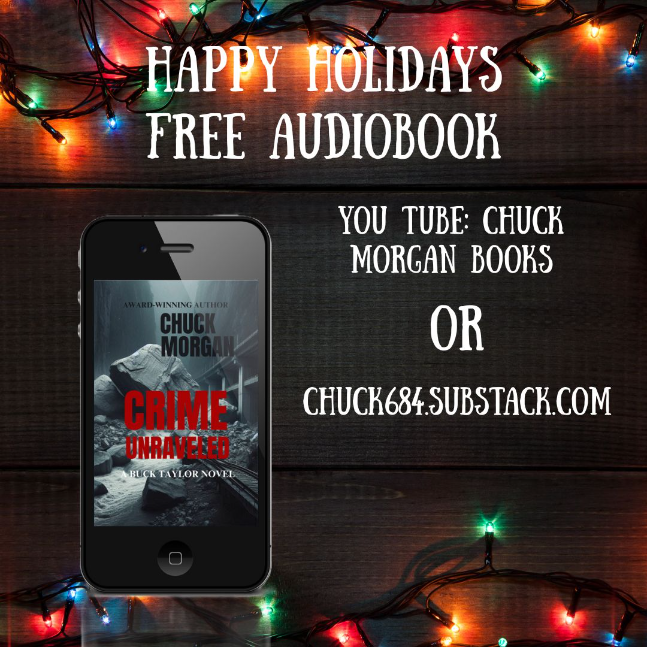
MERRY CHRISTMAS AND HAPPY HOLIDAYS
This week I wanted to do just a quick blog to wish everyone a Merry Christmas or Happy Holidays. As a way of thanking my loyal readers and those looking for a new crime fiction series to read I am offering one of my full length novels as a free audiobook on my You Tube page...Chuck Morgan Books or on my Substack pod cast at chuck684.substack.com. I hope you enjoy it. You can find the entire Crime Series as well as my other novels on Amazon or at chuckmorganbooks.com. Enjoy.
CRIME UNRAVELED — A Buck Taylor Novel (Book 13)
2025 Reader’s Favorite Book Awards — Crime Fiction Silver Medalist
A landslide buries a canyon—and uncovers a conspiracy.
A catastrophic landslide tears through Colorado’s iconic Glenwood Canyon, obliterating the highway and damming the Colorado River. As chaos spreads across the state, one chilling question arises from the rubble: Was this a freak act of nature or a meticulously engineered attack?
Colorado Bureau of Investigation Agent Buck Taylor steps into the devastation expecting answers. Instead, he finds murder. A geologist is executed. Another’s wife is brutally killed. And a powerful local family, steeped in wealth, influence, and buried secrets, stands at the center of a tightening web of lies.
When an ecoterrorist group suddenly claims responsibility, the investigation veers into dangerous new territory. With winter closing in and the body count rising, Buck and his team must race the clock to uncover the truth before the next disaster strikes. One that may hit far closer to home than anyone realizes.
Perfect for Fans of C.J. Box, Craig Johnson, Michael Connelly, and Nevada Barr
A gripping blend of crime, conspiracy, and Colorado wilderness suspense
Why Readers Can’t Put Down Crime Unraveled
• High-Stakes Natural Disaster Thriller: A massive landslide destroys Glenwood Canyon, setting off a chain reaction of danger, mystery, and political intrigue.
• A Murder Case with Teeth: What begins as a geological catastrophe spirals into homicide, revenge, and a deadly cover‑up.
• Buck Taylor at His Best: The award-winning CBI agent faces one of his most complex and personal investigations yet.
• Twists You Won’t See Coming: Ecoterrorists, family secrets, and shifting motives collide in a relentless, page‑turning pursuit of the truth.
• Authentic Colorado Atmosphere: Rugged landscapes, harsh winter conditions, and real-world investigative detail bring every scene to life.
• A Series That Keeps Delivering: Book 13 continues the acclaimed tradition of character depth, procedural accuracy, and emotional punch that fans love.
If you crave crime fiction packed with tension, heart, and explosive revelations… this is your next must‑read.
Add Crime Unraveled to your cart now and dive into Buck Taylor’s most dangerous case yet.
Do obscure niches open more ways to self‑publish?
Do obscure niches open more ways to self‑publish?
Chuck Morgan, Crime Fiction Author
Many self-publishers overlook the potential of obscure niches, missing out on unique opportunities to connect with specific audiences. By exploring these unconventional topics, you can carve out a distinct space in the market that not only attracts dedicated readers but also opens doors to diverse revenue streams. This post will guide you through the benefits of focusing on niche subjects and provide insights to help you leverage your passion into successful self-publishing ventures.
The obscure Niche Advantage
Delving into obscure niches allows you to cater to specific audiences, enhancing your market reach. These specialized areas often have dedicated followers who are passionate about the subject, connecting with readers more profound. By focusing on unique themes and topics, you create an opportunity to establish a loyal customer base that eagerly awaits your work, distinguishing your writing from broader, more general offerings.
The Allure of Specialized Markets
Specialized markets draw attention because of their distinctiveness and relatability. When you write for these audiences, you address their unique interests and challenges, making your content more engaging. This connection fosters community and loyalty, as readers often feel a personal affinity for authors who understand their niche. It’s a way to create a small but committed readership that values your expertise and perspectives.
Profitability in Fewer Competitors
Navigating an obscure niche typically results in fewer competitors, allowing your work to stand out more prominently. In markets where mainstream topics dominate, it’s easy to get lost in the crowd. Niche writing, however, facilitates increased visibility and can lead to higher sales, making your efforts more financially rewarding. Authors focused on specialized content can often demand higher prices, capitalizing on their unique insights and limited competition.
The reduced competition in obscure markets contributes to greater profitability in several ways. First, specializing means you can target your marketing more effectively, reaching eager readers rather than a broad audience with diluted interests. Niche topics often have higher perceived value, allowing you to set premium pricing for your books or products. For example, a writer focused on herbal medicine may find their niche audience willing to spend more for expertise and detailed guidance than they would on a general health book. As a result, creating content for a specific niche doesn't just build community; it also opens avenues for sustainable income and growth.
Tapping into Unique Audiences
Exploring obscure niches not only provides a unique voice but also opens avenues to engage distinct audiences that mainstream publishers often overlook. By tailoring your content for these specific groups, you create a loyal readership that feels understood and valued. This specialized focus can lead to higher engagement rates, repeat readers, and targeted marketing opportunities.
Finding Your Tribe: Identifying Target Demographics
Understanding your audience involves researching demographics such as age, interests, and online behavior. Use tools like social media analytics or Google Trends to identify who is engaging with similar content. Block out time for surveys or direct outreach to clarify what resonates with your targeted niche, helping you to refine your message and maintain relevance.
Building Community Support Around Niche Topics
Community support is vital in nurturing your niche audience. Engage with your readers through online forums, social media groups, and niche platforms, creating spaces for discussions that center on shared interests. Regularly take part in these communities by offering insights, responding to comments, or organizing events, which strengthens your connection and fosters loyalty.
Creating community support involves more than just direct interaction; it requires building a safe space for sharing ideas and experiences. Hosting online events, such as webinars or Q&A sessions on platforms like Discord or Facebook Groups, can draw in users eager to connect. Collaborating with influencers within these niches might also enhance your visibility, as their endorsement can attract their audience into your community. Ultimately, a tight-knit community can transform casual readers into passionate advocates for your work, enhancing both your reach and the content’s impact.
Innovative Strategies for Niche Self-Publishing
Applying innovative strategies can elevate your niche self-publishing efforts. Focusing on tailored content and using emerging digital platforms can significantly enhance your visibility and connection with targeted readers. By tapping into the nuances of your niche, you can foster a loyal following and explore additional revenue streams.
Crafting Tailored Content that Resonates
Your content must align with the interests and needs of your specific audience. By conducting thorough research on your niche, you can create engaging materials that not only inform but also inspire. Incorporating unique perspectives and specialized knowledge allows for stronger connections, ensuring your readers feel understood and valued.
Leveraging Emerging Digital Platforms
Using new digital platforms expands your reach beyond traditional publishing avenues. Social media channels, microblogging sites, and niche-focused forums provide venues for targeted engagement. Platforms like TikTok or Instagram can amplify your content through creative visuals, while Substack allows for focused newsletters tailored to passionate interests. Engaging with these platforms increases your chances of reaching untapped audiences and drives sales.
Emerging platforms often have lower competition, making it easier for you to establish authority in your niche. For instance, the rise of audiobooks and podcasts creates opportunities for serialized storytelling or expert interviews that cater to your audience's preferences. Exploring crowdfunding platforms can offer funding while also building a community around your work. Adapting to these trends makes your self-publishing strategy more dynamic and responsive to reader needs.
Expanding Opportunities Beyond Traditional Publishing
Leveraging obscure niches can guide you to unexplored publishing opportunities. By identifying specific interests that resonate with targeted audiences, you can tap into markets often overlooked by traditional publishers. Think about creating supplemental materials, like workbooks, guides, or merchandise that align with your niche content. This approach not only diversifies your income streams but also deepens engagement with your readers, establishing you as an authority in your chosen field.
Monetization Avenues: Beyond the Book
Exploring monetization options beyond conventional book sales can amplify your earnings significantly. Consider offering online courses, webinars, or exclusive memberships related to your niche. Affiliate marketing can supplement your income, along with options for merchandise such as themed apparel or branded products. By diversifying, you create multiple pathways for revenue while sustaining engagement with your audience.
Creating a Long-Term Brand with Niche Expertise
Building a brand around your niche not only establishes your reputation but also fosters a loyal community. Regularly publish content that showcases your expertise, like blog posts, podcasts, or videos, tailored to your niche audience's interests. This consistent output positions you as a leader, creating long-term relationships with readers who trust your insights and are eager to support your ventures.
Establishing a long-term brand requires a commitment to quality and consistency. As you share valuable insights, case studies, or personal anecdotes within your niche, your audience will increasingly view you as an indispensable resource. Engage with your followers through social media or newsletters to cultivate a community around your brand, encouraging interaction and feedback. Collaborations with other niche experts can expand your reach, further solidifying your authority and elevating your presence within the niche market.
Risk Assessment: Understanding Potential Pitfalls
Diving into obscure niches can yield unexpected rewards, but a careful risk assessment is vital. Failing to gauge market demand, understanding your target audience, and not accounting for growing trends can lead to significant setbacks. You might find that what was once a burst of niche interest dwindled, leaving your title underperforming in a sea of competition. An honest evaluation of these variables will safeguard your investment of time and resources.
Market Fluctuations and Sustainability
Niche markets are not immune to fluctuations, which can affect your book’s longevity. Trends that capture reader interest can change rapidly, leaving titles outdated almost overnight. You need to stay informed about emerging topics and growing reader preferences to ensure that your niche has sustainable opportunities. Regularly analyzing sales data and keeping an ear to the ground in your community will help you expect and adapt to these shifts.
Balancing Passion with Commercial Viability
Finding the sweet spot between passion projects and commercially viable works is vital. Pursuing a niche that excites you while still appealing to a market ensures both creativity and profitability. You might think about ways to incorporate current trends within your niche, adding unique twists that distinguish your content from competitors. This balance can be challenging, but understanding your audience's desires while nurturing your interests can lead to a successful blend.
Striking the right balance often involves research and experimentation. Look at successful titles within your niche while examining what resonates with readers. Forcing your passion into a market without considering commercial viability can tank your efforts. Conversely, solely chasing trends may lead to burnout. Engaging with existing communities around your niche can also reveal gaps you can fill, allowing you to maintain your enthusiasm while ensuring that your project meets concrete market demands. Your goal is to create something authentic that also has a consumer following, ensuring both artistic fulfillment and financial success.
Conclusion
Drawing together the insights on obscure niches, you can see how targeting specialized topics may serve as a gateway to broader self-publishing opportunities. By focusing on unique subjects, you not only cater to specific audiences but also enhance your visibility in a crowded market. Embracing these niches allows you to innovate your content and build a loyal readership that appreciates your distinct perspective. Ultimately, leveraging obscure themes can elevate your self-publishing journey and open doors to unexpected avenues for growth and engagement.
https://chuckmorganbooks.com
How Indirect Income Shapes Author Autonomy.
How Indirect Income Shapes Author Autonomy.
Chuck Morgan, Crime Fiction Author
It's imperative to understand how indirect revenue streams can enhance your autonomy as an author. By diversifying your income sources beyond traditional book sales, you can gain greater control over your work and make more strategic decisions regarding your career. This approach allows you to explore new avenues such as merchandizing, public speaking, or online courses, reducing reliance on any single revenue source. As a result, you can cultivate a more sustainable writing practice and maintain your creative integrity while navigating the ever-evolving publishing landscape.
The Economics of Indirect Revenue Streams
Defining Indirect Revenue Streams in Publishing
Indirect revenue streams in publishing refer to income generated from non-traditional sources, such as speaking engagements, online courses, and merchandise sales, that complement your core work as an author. These avenues use your experience and audience while providing financial support that transcends conventional book sales. By diversifying your income sources, you reduce reliance on unpredictable book sales and open avenues for sustained financial stability.
The Financial Advantage of Diversifying Income
Diversifying income through indirect revenue streams enhances financial resilience in unpredictable markets. By engaging in multiple ventures, you can offset slow periods in book sales, ensuring a steady cash flow. For instance, authors who teach workshops may earn thousands per event, significantly boosting their overall earnings. Merchandizing aligns your brand with your writing, creating further income opportunities without extra publishing costs.
Taking advantage of indirect revenue streams can significantly enhance your financial strategy. Authors like Amanda Hocking and Mark Dawson have thrived by integrating diverse income channels, from social media sponsorships to subscription platforms, allowing them to earn six figures annually. This adaptability not only cushions against fluctuating sales but provides a platform for creative expression connected to your core writing. With statistical analysis showing that successful authors often engage in three or more income channels, your financial foundation can be fortified through an innovative approach to monetizing your talents.
Author Autonomy: A significant change
As the publishing industry grows, you find yourself at the forefront of a fundamental change, where traditional constraints give way to new forms of independence. You can now leverage various income streams that are not strictly tied to book sales, allowing you to align your writing with personal values and artistic vision. This shift empowers you, creating opportunities to dictate the terms of your career and engage with your audience in ways that enhance your brand and reach.
Shifting Power Dynamics in the Publishing Landscape
Power dynamics within the publishing landscape have shifted significantly, placing more control in your hands as an author. Traditional gatekeepers, such as agents and publishers, are no longer your only pathways to success. With the rise of self-publishing and online platforms, you can connect directly with readers, establish your own pricing strategies, and gain immediate feedback, affirming your place as a content creator who drives their own narrative.
The Role of Direct-to-Consumer Engagement
Engaging with your readers directly enhances your autonomy by fostering stronger relationships and generating additional revenue. By utilizing platforms like social media, newsletters, and personal websites, you can create unique content tailored to your audience's preferences. This approach not only drives sales but also cultivates a loyal fan base that values your work beyond traditional book formats.
Direct-to-consumer engagement allows you to build a dynamic relationship with your audience. By offering exclusive content, such as behind-the-scenes looks at your writing process or personalized Q&A sessions, you create a sense of community and exclusivity. Platforms like Patreon enable you to monetize this engagement, providing your fans with tailored rewards while supplementing your income. Your ability to interact and respond to reader interests significantly amplifies your creative freedom and revenue potential, making each interaction a strategic part of your wider artistic journey.
Creative Freedom Through Financial Security
Financial stability enables you to explore your creativity without constraints, fostering a work environment where innovation thrives. Securing revenue from diverse sources allows you to take risks with your projects, experiment with new ideas, and forge your unique voice. This autonomy leads to richer storytelling and heightens artistic expression, as you no longer feel tethered to the unpredictable demands of traditional markets. By prioritizing revenue streams outside conventional sales, you can devote more energy to crafting stories that resonate with authentic passion.
Balancing Artistic Integrity with Market Demands
Navigating the intersection of artistic integrity and market demands requires a thoughtful approach. You can maintain your unique voice while understanding audience preferences, enabling you to create interesting content that attracts readers. This balance allows you to make informed decisions without compromising your vision. Engaging with your audience through social media or community platforms can also provide invaluable insights, ensuring you stay true to your artistry while remaining relevant in a competitive landscape.
The Impact of Multiple Income Sources on Creative Output
Multiple income sources have a transformative effect on your creative output, allowing for increased freedom and flexibility in your writing. With diverse revenue streams, you can confidently pursue projects that may not have immediate commercial viability but hold personal significance. This financial cushion encourages experimentation, like integrating multimedia elements or exploring niche genres, ultimately resulting in more authentic and varied work. Having a stable financial foundation permits you to prioritize quality over quantity, leading to a more fulfilling and productive creative process.
Consider authors who have successfully leveraged multiple income streams to enhance their creative endeavors. For instance, Andrew Sullivan, a prominent writer and blogger, generates income through subscriptions while engaging readers directly, allowing him to focus on long-form, in-depth content that reflects his passions. In contrast, traditional publishing often forces authors to churn out market-friendly pieces. This shift enables you to prioritize your artistic vision without the pressure of conventional sales, empowering you to create work that is both financially viable and creatively rewarding.
Practical Strategies for Building Indirect Revenue Streams
Exploring diverse opportunities allows you to create sustainable income beyond book sales. Engaging in multi-faceted approaches, such as monetizing content through workshops, webinars, or coaching, provides a unique way to appeal to your audience. Delve into podcasting or video creation to reach broader demographics, and consider merchandise that resonates with your brand. Use crowdfunding for niche projects, drawing in dedicated supporters willing to invest in your creative vision.
Exploring Alternative Platforms and Formats
Alternative platforms are vital in enhancing your reach and revenue. Consider platforms like Patreon or Substack, where you can offer exclusive content to dedicated followers. Embrace different formats such as audiobooks, interactive narratives, or serialized fiction to cater to varied preferences. By diversifying your offerings, you enhance your visibility and create additional revenue channels.
Building a Brand Beyond Traditional Publishing
Establishing a brand requires consistent engagement with your audience across various platforms. Leverage social media to share your journey, insights, and personal stories that resonate with readers. Develop a recognizable voice and visual identity, ensuring your brand reflects your core values and style. Collaborate with creators in related fields to expand your reach and enhance credibility. This multifaceted approach strengthens relationships with your audience and fosters a loyal community.
Your brand identity can leverage storytelling elements that connect with your audience on an emotional level. Consistent branding across platforms—from your website to merchandise—creates a cohesive experience that fosters trust and recognition. Engaging in joint ventures or partnerships can expose you to new audiences, while offering unique, branded content like limited edition books or themed merchandise solidifies your market position. Building an email list allows for direct communication with your supporters, providing personalized updates and exclusive offers that deepen their investment in your brand.
The Psychological Impact of Financial Independence
Financial independence reshapes your mindset, empowering you to take creative risks without the constant pressure of traditional sales metrics. This newfound security fuels your artistic freedom, allowing you to explore innovative ideas and themes that resonate deeply with your audience. You can focus on your craft, knowing that diversified income streams buffer against market volatility, fostering a more profound sense of self-worth and purpose in your writing journey.
Confidence and Risk-Taking for Authors
With financial stability, your confidence grows, encouraging you to take calculated risks in your writing. Pursuing unique genres or unconventional narratives becomes less daunting when you're not solely reliant on sales from one book. This courage can lead to groundbreaking work that pushes boundaries and challenges norms, ultimately attracting a wider readership eager for innovative content.
How Autonomy Transforms Author-Reader Relationships
Autonomy alters the connection you have with your readers, shifting it from a transactional focus to a more genuine, collaborative experience. You’re no longer tied to industry expectations, which allows you to engage with your audience, responding to their feedback and interests rather than market demands. This transformation fosters loyalty and deeper emotional ties, as readers feel valued and invested in your journey, leading to stronger community building around your work.
This change in dynamic promotes a sense of partnership, as readers become more than just passive consumers; they are part of your creative process. Engaging directly via social media, newsletters, or exclusive content can create a dialogue that enriches both your writing and their experience. For instance, surveys and polls can guide your next project, making your audience feel heard and involved. As a result, readers are more likely to support your endeavors, whether through purchases or word-of-mouth promotion, creating a sustainable ecosystem that thrives on mutual respect and shared passion.
Final Words
To wrap up, understanding how indirect revenue streams can reframe your author autonomy allows you to explore diverse income avenues beyond traditional sales. This shift not only empowers you to take control of your creative output but also enables you to engage with new audiences and build sustainable careers. By diversifying your revenue sources, you enhance your financial stability and artistic freedom, positioning yourself in a landscape where your voice and decisions hold greater importance.